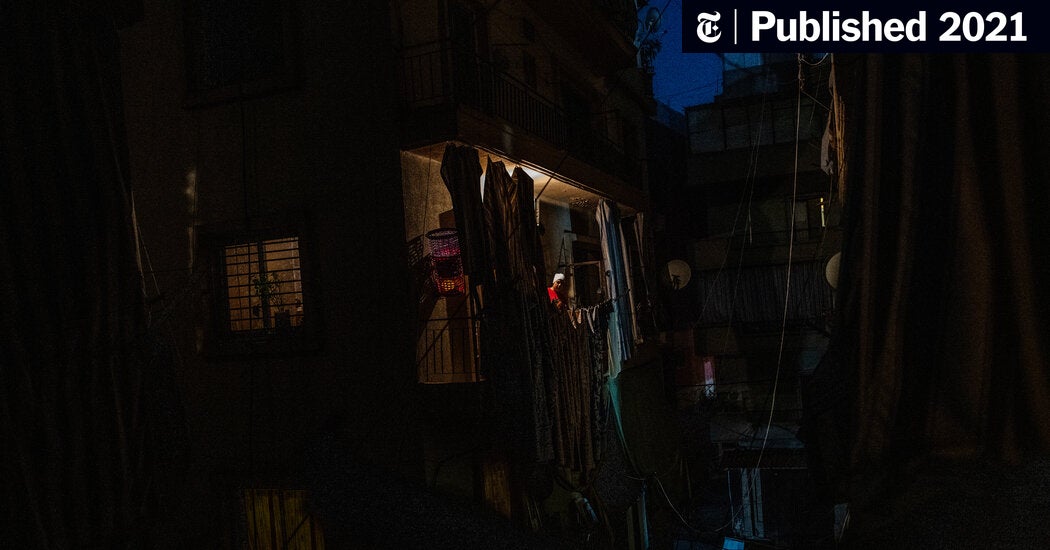
TRIPOLI, Lebanon — Rania Mustafa’s living room recalls a not-so-distant past, when the modest salary of a security guard in Lebanon could buy an air-conditioner, plush furniture and a flat-screen TV.
But as the country’s economic crisis worsened, she lost her job and watched her savings evaporate. Now, she plans to sell her furniture to pay the rent and struggles to afford food, much less electricity or a dentist to fix her 10-year-old daughter’s broken molar.
For dinner on a recent night, lit by a single cellphone, the family shared thin potato sandwiches donated by a neighbor. The girl chewed gingerly on one side of her mouth to avoid her damaged tooth.
“I have no idea how we’ll continue,” said Ms. Mustafa, 40, at home in Tripoli, Lebanon’s second-largest city, after Beirut.
Lebanon, a small Mediterranean country still haunted by a 15-year civil war that ended in 1990, is in the throes of a financial collapse that the World Bank has said could rank among the world’s worst since the mid-1800s. It is closing like a vise on families whose money has plummeted in value while the cost of nearly everything has skyrocketed.
Since fall 2019, the Lebanese pound has lost 90 percent of its value, and annual inflation in 2020 was 84.9 percent. As of June, prices of consumer goods had nearly quadrupled in the previous two years, according to government statistics. The huge explosion one year ago in the port of Beirut, which killed more than 200 people and left a large swath of the capital in shambles, only added to the desperation.
Thank you for your patience while we verify access. If you are in Reader mode please exit and log into your Times account, or subscribe for all of The Times.
Thank you for your patience while we verify access.
Already a subscriber? Log in.
Want all of The Times? Subscribe.