Live USOIL Chart
USOIL

Crude oil price started the week lower as traders assessed Washington’s efforts to contain fuel costs following the Iran war, while fresh Federal Reserve comments on inflation and interest rates added pressure to the broader commodity outlook.
Crude Oil Retreats After Friday’s Rebound
Crude oil opened lower on Sunday evening, extending its volatile trading pattern after staging a modest recovery from technical support late last week. WTI crude closed Friday around $88.50 per barrel before falling toward the $87.30 range as markets reopened on Monday.
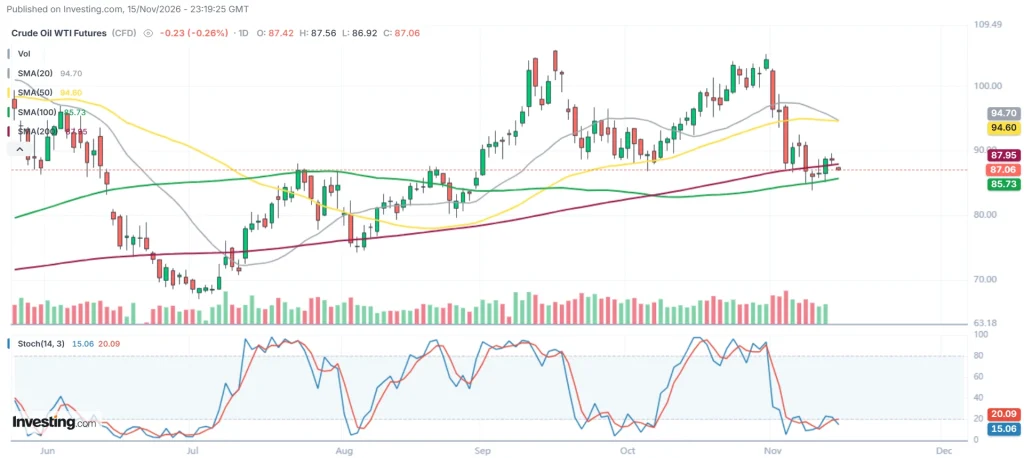
Investors are weighing potential supply relief from US government measures against continued geopolitical uncertainty and the inflationary consequences of the Iran conflict.
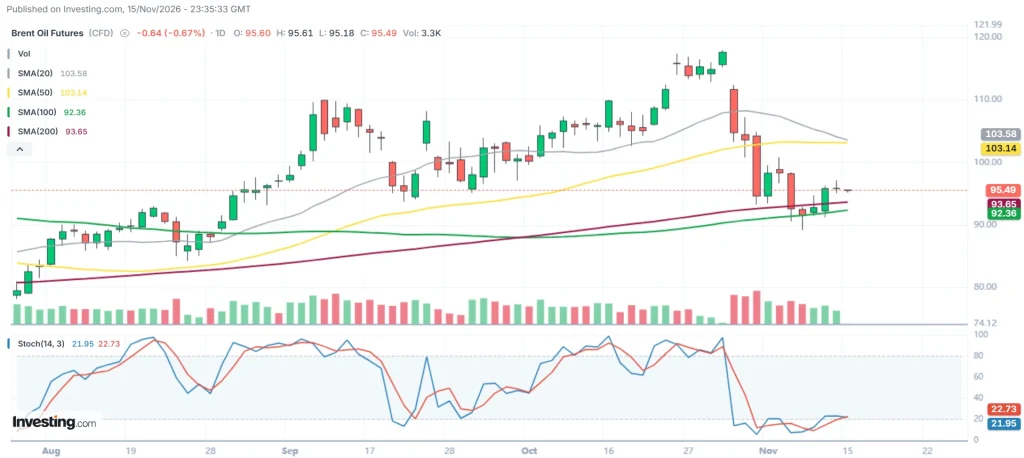
Brent Crude Futures Daily Chart
Trump Extends Jones Act Waiver to Ease Fuel Costs
President Trump extended the Jones Act waiver by another 90 days on Friday, allowing foreign-flagged vessels to transport oil and commodities between US ports in an effort to contain fuel prices.
Since March, approximately 90 million additional barrels have moved under the waiver. Although the measure does not increase global oil production, it improves distribution efficiency between US regions and could limit regional gasoline and diesel price spikes, particularly along the East and West coasts.
The additional supply movement is predominantly affecting refined products, meaning the impact may be more visible in regional fuel prices and refining margins than in international crude benchmarks.
However, the continued reliance on emergency measures highlights the pressure that elevated energy costs are placing on the US economy.
Hawkish Fed Comments Add Pressure to Commodities
Meanwhile, Boston Fed President Susan Collins said she favours gradual interest-rate increases but warned that persistent inflation and a stronger labour market could push the eventual peak in rates higher than previously anticipated.
Her comments temper expectations of an accelerated half-point increase while reinforcing the possibility of a longer tightening cycle.
Kansas City Fed President Jeff Schmid also warned that inflation remains uncomfortably above the Fed’s 2% target. He argued that inflation would remain close to 3% even without energy prices, suggesting that underlying price pressures remain persistent.
Dollar Strength and Interest Rates Remain Key Risks
The hawkish commentary supports the US dollar and Treasury yields, potentially limiting recovery attempts across commodities. For crude oil, this creates competing forces: geopolitical supply risks and fuel-cost pressures on one side, and tighter financial conditions and potential demand weakness on the other.

Skerdian Meta
Lead Analyst
Skerdian Meta Lead Analyst.
Skerdian is a professional Forex trader and a market analyst. He has been actively engaged in market analysis for the past 11 years. Before becoming our head analyst, Skerdian served as a trader and market analyst in Saxo Bank’s local branch, Aksioner. Skerdian specialized in experimenting with developing models and hands-on trading. Skerdian has a masters degree in finance and investment.