Sunday November 15, 2026 | MANILA, PHILIPPINES [Posted 10:55 pm PCT]
by Mary P Brooke | Island Social Trends
Canada has made an initial contribution of up to $560 million over four years to the Tropical Forest Forever Facility (TFFF).
The funding was announced by Prime Minister Mark Carney while at the Association of Southeast Asian Nations (ASEAN) in the Philippines on yesterday.
 Prime Minister Mark Carney addressed Canadian media in Manila, Philippines during his attendance at the ASEAN Summit, Nov 14, 2026. [livestream]
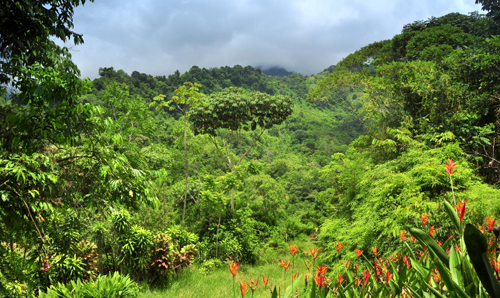
Co-led by Brazil and Norway, this innovative financing mechanism is mobilising public and private investment to protect tropical forests, preserve biodiversity, and support the communities that depend on these vital ecosystems.
About the fund:
Once fully operational, the TFFF will protect more than one billion hectares of tropical forests annually across more than 70 countries, with conservation payments tied to verified results.
At least 20% of these payments will be directed to Indigenous Peoples and local communities, recognising their essential role in protecting forests and biodiversity.
This pioneering model will also help shape new approaches to financing other global environmental and development priorities.

Helping with climate change & sustainability:
Rainforests face severe direct and indirect pressures primarily driven by human activities (like deforestation for large-scale agriculture to support corporate food systems) and shifting global climates (in 2021 it was reported that vast areas of the Amazon now emit more carbon than they absorb).
 Deforestation of the Amazon rainforest in Brazil. [web]
Canada’s contribution is part of Canada’s goal, announced in the 2026 Spring Economic Update, to deliver over $13 billion in climate-related support to developing countries by 2031.
Protecting tropical forests is essential to a stable climate, healthy ecosystems, and a resilient global economy.
Their conservation benefits countries around the world, including Canada, where the impacts of climate change threaten communities, infrastructure, and economic prosperity.
The prime minister’s office says that by mobilising new investment in nature and strengthening its partnership with Brazil, Norway, and other TFFF partners, that Canada will be helping safeguard vital ecosystems, reduce climate risks, and build a more sustainable and prosperous future for generations to come.

Protecting nature in federal budget:
This announcement to support TFFF builds on Canada’s broader efforts to protect nature, address climate change, and mobilise investment in conservation, including:
A Force of Nature, Canada’s Strategy to Protect Nature: Announced by Prime Minister Carney in March 2026, this $3.8 billion strategy will protect and restore critical habitats, support Indigenous-led conservation, and mobilise private investment to help Canada protect 30% of its lands and waters by 2030.
Historic investments in ocean conservation and stewardship in Canada: In September 2026, the Prime Minister announced $1.2 billion to strengthen conservation and stewardship of marine and coastal ecosystems in Canada, including investments in marine science, monitoring, and incident prevention and response; improve the protection of marine mammals and their habitats; modernise conservation enforcement; and advance Indigenous-led stewardship and restoration, including in the Great Bear Sea region and the Lower Fraser River Estuary.
International climate finance: In the Spring Economic Update 2026, Canada outlined its overall goal of delivering over $13 billion in international climate finance to developing countries by 2031, including nearly $6 billion in funding for Global Affairs Canada, Environment and Climate Change Canada, and FinDev Canada. Canada’s renewed climate finance package will aim to maximise climate impact and support developing countries in navigating more complex environmental, geopolitical, and economic realities.

Tropical plants in Canada:
Most of the tropical plants that people have indoors in their homes have been originally sourced from tropical regions of the world, though many are then further propagated in greenhouses and nurseries here in Canada.
 Tropical plants are decorative indoors in the Canadian climate. [web]
===== GOVERNMENT LINKS:
===== RELATED:
NEWS SECTIONS: BUDGET 2026 | 45th PARLIAMENT of CANADA