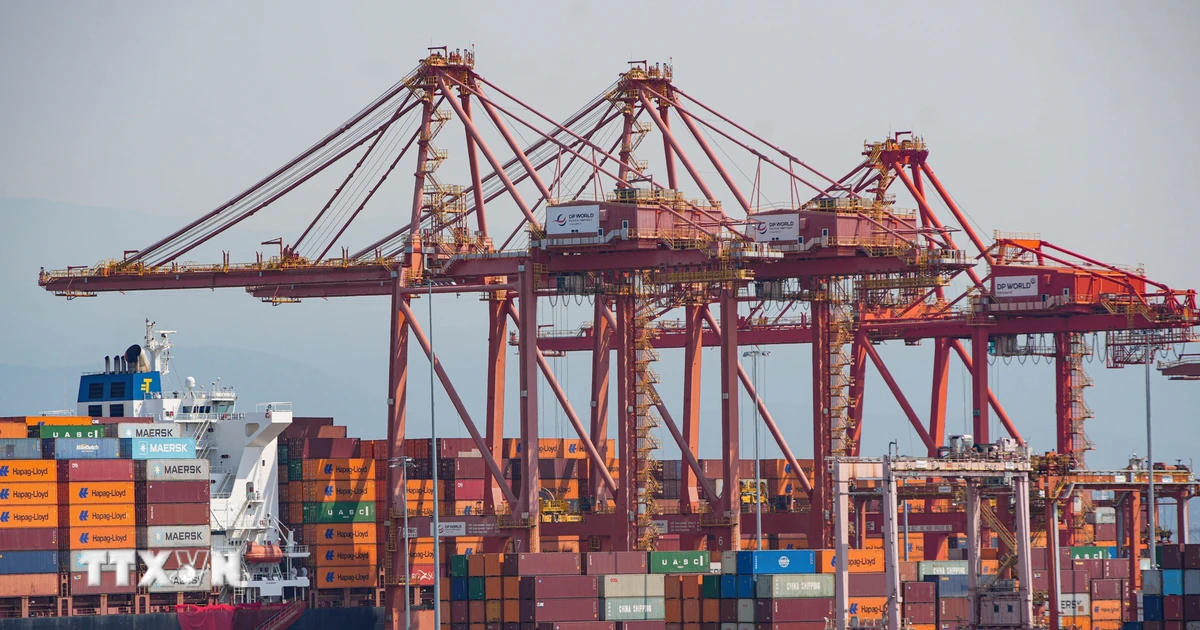
Canada and China agreed on November 17 to implement further tariff reductions on each other’s goods, in an effort to expand bilateral trade and improve economic relations after years of tension.
The agreement was announced following talks between Canadian Prime Minister Mark Carney and Chinese President Xi Jinping on the sidelines of the Asia-Pacific Economic Cooperation ( APEC ) summit in Shenzhen, China.
According to the Canadian Prime Minister’s Office, the new measures will help reduce tariffs on approximately CAD 400 million (nearly USD 280 million) worth of Canadian exports, mainly frozen pork, fish, and seafood. Of this, frozen pork exports account for approximately CAD 116 million, while fish and seafood exports reach approximately CAD 285 million.
In return, Canada agreed to extend for another two years the existing tariff exemptions on certain Chinese steel and aluminum products, which were scheduled to expire at the end of 2026.
This is the next step in the process of removing trade barriers that the two countries initiated earlier this year. Following Mr. Carney’s visit to Beijing in January 2026, the two sides reached an agreement to reduce tariffs on certain goods, including Canada lowering the 100% tariff on Chinese electric vehicles to 6.1%, while allowing initial imports of up to 49,000 vehicles per year. China committed to reducing tariffs on some Canadian agricultural products, including canola seeds.
According to details released by the Canadian government , the new agreement is part of an extension and expansion of the preliminary trade agreement between the two countries until December 2028. China will temporarily suspend the application of tariffs deemed discriminatory on certain Canadian goods from January 1, 2027, to December 31, 2028.
The list of items eligible for preferential treatment this time includes various seafood products such as frozen coldwater shrimp, mollusks, sea cucumbers, and Greenland halibut. On the Canadian side, the scope of tariff exemptions has been expanded to include an additional 32 groups of Chinese steel and aluminum products, including 23 steel groups and 9 aluminum groups.
Both sides also agreed to continue removing trade barriers, facilitating Canada’s exports of fava beans, chickpeas, and lentils to the Chinese market. Canada plans to host a large-scale trade delegation to China in 2027; the two countries have also designated this year as the “Canada-China E-commerce Year,” to support small and medium-sized enterprises in expanding their business operations on online platforms.
Speaking after the meeting, Prime Minister Carney said that bilateral trade relations are becoming “more stable and predictable.” He also said that Canada is ahead of schedule in its goal of increasing exports to China by 50% by the end of this decade.
President Xi Jinping assessed that improving bilateral relations is in the interests of the people of both countries and contributes to promoting regional and global stability and development.
The new agreements reflect Ottawa’s efforts to diversify its export markets and reduce its dependence on the United States, Canada’s largest trading partner, amid ongoing trade tensions with Washington. According to the Canadian government, merchandise trade between Canada and China is projected to reach CAD 125.6 billion (US$87.8 billion) in 2025.