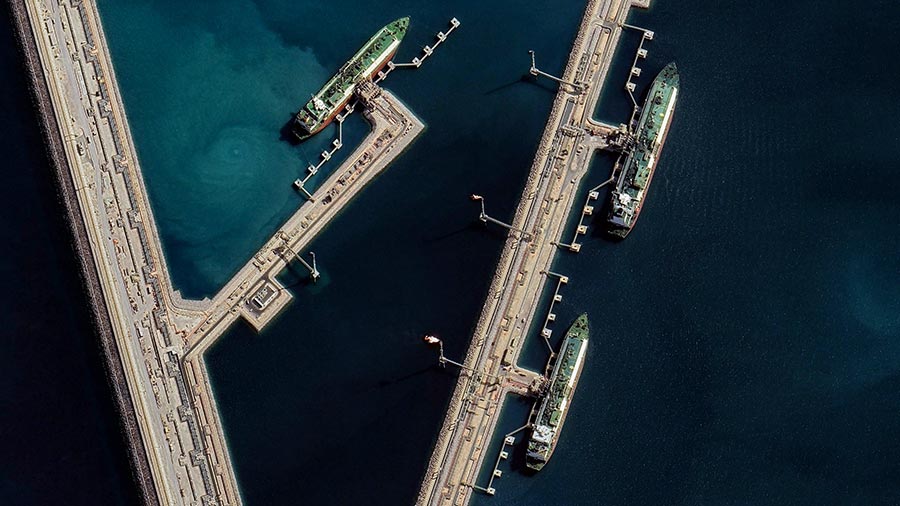
The 2026 escalation of conflict involving the United States, Israel, and Iran has pushed the Gulf region into a high-risk zone for global trade. While attention has centered on oil flows through the Strait of Hormuz, another major risk lies in non-oil supply chains—including fertilizers, ammonia, helium, liquefied natural gas (LNG), and petrochemical feedstocks.
The Gulf, particularly Qatar, Saudi Arabia, and the United Arab Emirates, plays an increasingly strategic role in global production systems as a capital provider, logistics hub, and upstream industrial supplier, with growing ambitions in advanced sectors such as semiconductors and healthcare.
Disruption here is not just an energy shock; it is a multi-sector supply chain shock with cascading global implications.
Fertilizers and ammonia: The agriculture shock multiplier
The Gulf is a major global supplier of nitrogen-based fertilizers, particularly ammonia and urea, which are critical inputs for crop yields.
Oman is the second largest exporter of urea (HS code 310210) globally, with a value of US$2.6 billion as of 2024.
Qatar has QAFCO (Qatar Fertiliser Company), one of the world’s largest single-site producers of ammonia and urea.
As of 2024, Saudi Arabia is the fourth largest global exporter of petrochemical-derived fertilizers (HS code 3105), worth a value of US$3.34 billion.
Why this matters
Fertilizers directly influence global food production. Any disruption in Gulf exports leads to:
Higher input costs for farmers
Reduced fertilizer application (especially in price-sensitive markets)
Lower agricultural yields
Rising global food prices
Impacted geographies
South Asia & Southeast Asia: Highly dependent on imported fertilizers
Sub-Saharan Africa: Vulnerable to both price shocks and supply shortages
Latin America: Large-scale agriculture exposed to input cost volatility
Top Asian Regions Importing Fertilizers in 2024
S. no.
Importers
Value imported in 2024 (US$ thousand)
1
India
7,829,707
2
China
4,615,419
3
Thailand
2,598,613
4
Indonesia
1,971,391
5
Vietnam
1,684,062
6
Bangladesh
1,525,500
7
Malaysia
1,162,216
8
Philippines
857,192
9
Pakistan
826,121
10
Japan
744,539
Source: ITC World Trade Map
Fertilizer disruption transmits faster than fuel shocks into food inflation, making agriculture one of the first sectors impacted globally.
LNG and gas feedstock: Industrial and power disruptions
The Gulf is central to global gas markets:
Qatar is the largest exporters of LNG as of 2024, with a total value of US$56 billion.
The natural gas produced in top gulf regions such as Qatar and Oman is critical for both power generation and industrial processes.
Industries exposed
Power utilities (especially in Asia and Europe)
Chemicals and fertilizers (gas as feedstock)
Steel, cement, glass, and ceramics
Industrial manufacturing reliant on heat-intensive processes
Transmission mechanism
A disruption leads to:
Power price spikes
Industrial production cuts
Export competitiveness erosion
What is gas feedstock?
Gas feedstock refers to natural gas (or its components) used as a raw material input in industrial production — not just as a fuel.
Common examples of gas feedstock applications:
1. Fertilizers (Agriculture)
Natural gas → hydrogen → ammonia → urea
This is why gas prices directly impact fertilizer costs and food systems
2. Petrochemicals (Plastics & Chemicals)
Gas (methane, ethane, propane) → ethylene, propylene
Used to make plastics, packaging, synthetic materials
3. Hydrogen production
Natural gas is reformed to produce hydrogen for:
Refining
Chemicals
Emerging clean energy applications
4. Industrial gases (e.g., helium extraction)
Certain gas fields contain helium, which is separated and used in:
Semiconductors
Medical equipment (MRI)
Aerospace
Gas as feedstock is thus strategic:
Disruptions affect entire value chains, not just power costs
Links directly to food security, manufacturing, and high-tech sectors
Countries with cheap and stable gas supplies (e.g., Gulf economies) have become global production hubs
Helium: The hidden choke point for semiconductors and healthcare
One of the least visible but most critical risks is helium:
Why helium matters
Helium is essential for:
Semiconductor manufacturing (cooling and controlled atmospheres)
MRI machines and medical imaging
Fiber optics and telecommunications
Aerospace and scientific research
Supply chain implications
Helium shortages can:
Disrupt semiconductor fabrication cycles
Delay electronics production (consumer electronics, automotive chips)
Impact hospital operations and diagnostics
Helium transforms a Gulf disruption into a technology and healthcare supply chain crisis, not just an energy issue.
Petrochemicals and industrial inputs: Inflation across goods
The Gulf is a major source of petrochemical feedstocks used in:
Plastics and packaging
Synthetic textiles
Automotive components
Consumer goods manufacturing
Impact pathway
Disruptions lead to:
Higher raw material costs
Increased packaging costs (affecting food and FMCG)
Rising prices for industrial and consumer goods
The disruptions to steady supply of petrochemicals creates broad-based inflation, extending from factory inputs to retail shelves.
Food systems: Dual pressure from inputs and logistics
Food systems face a double shock:
Input-side pressure
Fertilizer shortages raise production costs
Logistics-side pressure
Shipping disruptions increase freight costs
Gulf ports act as redistribution hubs for many regions
Result
Higher food prices
Supply volatility in import-dependent countries
Increased fiscal burden on governments (subsidies, food security programs)
Shipping, insurance, and trade finance: The amplification effect
Beyond physical supply, disruption in the Strait of Hormuz drives:
Higher war-risk insurance premiums
Shipping delays and rerouting
Increased freight costs
Trade finance tightening
These effects amplify across all sectors, especially for:
Commodity importers
Manufacturing exporters
Emerging markets with limited bargaining power
Sector-wide exposure: A global ripple map
Sector
Exposure channel
Key impact
Agriculture
Fertilizers (ammonia, urea)
Lower yields, food inflation
Food systems
Input + logistics
Price volatility, supply risk
Helium
Production bottlenecks
Healthcare
Helium
MRI and diagnostics disruption
Manufacturing
Gas + petrochemicals
Cost escalation, output cuts
Energy
Oil + LNG
Price spikes, supply insecurity
Consumer goods
Packaging inputs
Inflationary pressure
Shipping
Insurance + routing
Higher trade costs
A supply chain shock beyond energy
The Gulf’s importance to the global economy extends far beyond oil. It is a critical supplier of invisible but essential inputs — fertilizers that feed crops, helium that enables chips and healthcare, and gas that powers industries.
A disruption in the Strait of Hormuz therefore triggers a multi-layered supply chain shock:
Food systems are hit through fertilizers
Technology supply chains through helium
Manufacturing through gas and petrochemicals
Trade systems through logistics and insurance
For businesses and policymakers, the key risk is not just energy scarcity, but systemic disruption across interconnected global supply chains.
How is India impacted?
India faces a compounded exposure to Gulf disruptions due to its structural reliance on the Strait of Hormuz for energy imports, fertilizer inputs, and trade flows. With a sizeable share of its crude oil and LNG sourced from the Gulf — alongside dependence on imported ammonia and urea — any disruption transmits quickly into higher input costs, widening fiscal pressures through subsidies, and elevated inflation risks. These pressures are further amplified by India’s sensitivity to food prices, where fertilizer cost spikes can directly affect agricultural output and government spending.
Beyond inputs, India’s role as both a major exporter and importer makes it highly vulnerable to logistics disruptions and rising trade costs. A large portion of its trade routes intersect with Gulf shipping lanes, meaning war-risk premiums, rerouting, and delays can erode export competitiveness — particularly for sectors such as engineering goods, chemicals, textiles, and pharmaceuticals. At the same time, higher petrochemical and energy costs feed into domestic manufacturing and consumer prices, creating a broad-based inflationary effect. For investors, this positions India as a key “transmission economy,” where external shocks rapidly cascade across energy, agriculture, manufacturing, and trade systems.
ALSO READ: India’s Crude Oil Tracker 2026: Supply Diversification and Energy Security Measures
Morbi’s Ceramics Hub: A Bellwether for Industrial Supply Chain Disruptions
Morbi, Gujarat, India’s ceramics manufacturing hub, offers a sharp illustration of how Gulf disruptions cascade into unexpected industrial centers.
The cluster at Morbi is one of the largest globally integrated tile manufacturing hubs and produces 80 percent of India’s ceramics — mainly tiles and sanitaryware. It is highly energy-intensive and dependent on imported natural gas and petrochemical-linked inputs routed through Gulf supply chains. Any disruption affecting LNG flows or shipping through the Strait of Hormuz translates directly into higher fuel costs, kiln shutdown risks, and margin compression. At the same time, increased freight rates and delays undermine export competitiveness, particularly in price-sensitive markets across the Middle East, Africa, and Europe.
What makes Morbi important is not its direct exposure to conflict, but its position deep within global value chains — demonstrating how second- and third-order effects propagate. Rising energy and logistics costs ripple through production schedules, working capital cycles, and export pricing, forcing SMEs to either absorb costs or risk losing market share.
As a result, a geopolitical shock in the Gulf has triggered factory shutdowns across Morbi, impacting 400,000 workers linked to the sector, and highlighting how localized manufacturing ecosystems can become unintended casualties of global supply chain disruptions.
US-Israel war in Iran and Gulf disruptions: What this means for investors and businesses
Map hidden dependencies: Identify exposure to ammonia, urea, helium, and petrochemicals — not just oil and gas
Diversify sourcing: Reduce reliance on single-region inputs
Reassess inventory strategies: Buffer critical materials with low substitutability
Monitor second-order risks: Food inflation, semiconductor delays, and industrial slowdown
Firms with exposure to agriculture inputs, semiconductors, or industrial manufacturing should conduct immediate supply chain stress tests, focusing on Gulf-linked dependencies and contingency sourcing strategies to mitigate cascading disruptions. For business inquiries, reach our market intelligence experts here.
(With inputs from Archana Rao.)
About Us
India Briefing is one of five regional publications under the Asia Briefing brand. It is supported by Dezan Shira & Associates, a pan-Asia, multi-disciplinary professional services firm that assists foreign investors throughout Asia, including through offices in Delhi, Mumbai, and Bengaluru in India. Dezan Shira & Associates is part of the Ascentium Group, a global business services platform with over 2,900 professionals across 58 cities in 27 markets, strengthening the firm’s on-the-ground ability to support clients across Asia and globally.
For a complimentary subscription to India Briefing’s content products, please click here. For support with establishing a business in India or for assistance in analyzing and entering markets, please contact the firm at india@dezshira.com or visit our website at www.dezshira.com.