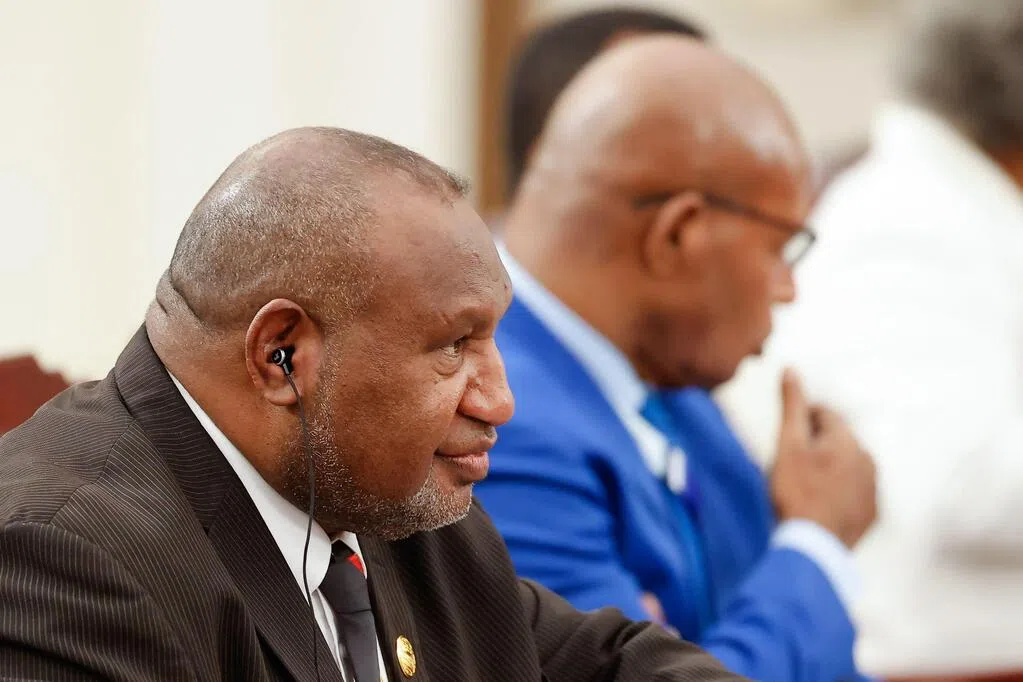
(Shenzhen, agencies) Papua New Guinea Prime Minister James Marape told Chinese President Xi Jinping that closing Taiwan’s representative office in his country “wasn’t easy”, acknowledging that he had faced domestic resistance. Taiwan had previously said Beijing had exerted pressure over the matter.
According to Reuters, Marape met Xi on Tuesday (17 November) ahead of the Asia-Pacific Economic Cooperation (APEC) summit in Shenzhen, China. He said: “We hope this assists you in your efforts for reunification … because when Chinese prosper, we all prosper together.”
Marape also said: “Papua New Guinea’s effort in acknowledging the fullest integrity of China in the effort to close Taiwan, it wasn’t easy. I faced challenges from within, because we also relate to many nations, but we were resolved.” He did not elaborate on the resistance he had encountered, and said China respected Papua New Guinea’s sovereignty, so Papua New Guinea must also fully respect China’s sovereignty.
Xi thanked Marape and praised Papua New Guinea, saying it “has actively developed relations with China and firmly adhered to the ‘one China’ principle”.
A readout of the meeting issued by China’s Ministry of Foreign Affairs did not mention the closure of Taiwan’s representative office. However, it quoted Xi as saying that the Papua New Guinea government’s “firm commitment to the one-China principle and concrete actions in support of China’s efforts to safeguard its territorial integrity and national reunification are just acts that accord with the tide of history”.
Papua New Guinea briefly established diplomatic relations with Taipei in 1999 before restoring ties with Beijing. In July this year, Papua New Guinea Foreign Minister Justin Tkatchenko announced that Taiwan’s official representative office in Port Moresby — the Taipei Economic Office in Papua New Guinea — would be closed. Taiwan’s Ministry of Foreign Affairs protested against Papua New Guinea’s unilateral decision without consultation, and stopped buying spot cargoes of liquefied natural gas from the country within a week of receiving the notification. The US State Department expressed concern, saying “this is yet another example of Beijing’s intimidation campaign against Taiwan and its supporters around the world”.
In early November, Taiwan’s Ministry of Foreign Affairs announced that it would close the representative office, withdraw all personnel stationed there and stop signing new contracts to buy spot cargoes of liquefied natural gas from Papua New Guinea. It also said Papua New Guinea had demanded the office’s closure under pressure from Beijing. Taiwan’s Deputy Foreign Minister Chen Ming-chi said on 12 November that the closure process would begin immediately and the withdrawal would be completed by the end of November.