Venezuela was badly tottering in 2015, when Rafael Ponce fled.
Basic items such as baby formula and diapers — his son was just 18 months old — were in extremely short supply. The 2015 National Survey of Living Conditions found that 76 per cent of households were living in poverty. Hyperinflation, shortages of food and medicine, and the collapse of public services made daily life increasingly difficult for millions.
The economic and humanitarian crisis, fuelled by years of mismanagement, corruption and political repression under Hugo Chávez and Nicolás Maduro, prompted one of the world’s largest displacement crises. By December 2025, nearly 7.9 million Venezuelans were living abroad — a quarter of the population.
“I always wanted to return,” says Ponce. “But I was waiting for a signal of a more concrete change.”
Then in January, American special forces ousted Maduro, and that was good enough for Ponce.
When he returned in July, state repression had eased, and there were signs of renewed interest from foreign investors. International tourism was also showing signs of recovery, with more passengers arriving from abroad.
Ponce says he has returned to an improved Venezuela — one with tangible changes, such as few shortages and improved security. “Not having to walk down the street constantly worried that you might be kidnapped, robbed or shot is fundamental,” he said. “For us, coming back has been wonderful in every way. We feel completely at home.”
Now, Ponce hopes to revive operations in Venezuela of the audiovisual production company he is a partner in.
“There is now more competition between brands, and advertisers are daring to try new things and produce more interesting work,” he said.
Editor’s Picks
He is among a number of Venezuelans returning, although it is not yet a flood. A 2026 survey by the Venezuelan Diaspora Observatory (ODV) found that 11.4 per cent of respondents intended to return in the short term, while another 9.6 per cent wanted to return but not immediately. A further 44.5 per cent said they would consider returning if conditions in Venezuela improved.
Not everyone has returned out of optimism. For some, the decision has been driven by hardline migration policies abroad, particularly in the U.S.
Antonio Perera arrived back in his Venezuelan hometown of Merida in October 2026, after leaving for the United States four years earlier. He sees an improved Venezuela, and has even reopened the family guesthouse.
He returned, though, because life in the United States became “unsustainable,” so he made the decision to self-deport.
“Donald Trump won the presidency, and the hunt began across the different states,” he told National Post, referring to the hardline crackdown by U.S. Immigration and Customs Enforcement (ICE.)
Despite arriving in the U.S. through the humanitarian parole program, which allowed Venezuelans to enter temporarily with a U.S.-based sponsor, Perera no longer felt safe after the Trump administration ended the program.
He left his job as a project manager at a construction company in the Republican state of Alabama and moved to Michigan, where he thought it would be safer.
“During those two years I tried to keep a low profile. But I watched relatives and friends in different states being taken on the highways for nothing more than racial profiling — and hunted down by their license plates.”
Producing and working is still very difficult, but at least now we are no longer being hunted
Tomas Paez, a sociologist and president of the Venezuelan Diaspora Observatory, says the change in U.S. immigration stance, such as the ending of humanitarian parole and Temporary Protected Status (TPS), which allowed eligible Venezuelans already in the U.S. to live and work there temporarily, has left many Venezuelans feeling afraid.
“The number of Venezuelans who have been arrested and pursued by ICE is enormous. Families have been separated, while some Venezuelans have even been sent to African countries — two of them.”
After the midterm elections, Trump acknowledged that his deportation policy had been “too tough” and had hurt him politically. But that will be little consolation to many.
Pedro Andres Montilla Acosta worked as a software testing supervisor at Samsung and as a shift supervisor and trainer at Toyota in Dallas, Texas, before being detained by U.S. immigration authorities in November 2025. He spent two months in a detention centre, then was sent to Mexico.
He lost his car and apartment, describing the experience as “extremely surreal and difficult.”
He hopes to return to Maracaibo in Venezuela in December.
“Now it’s seven years without returning to Venezuela and I have a mix of emotions,” he said.
“My father, mother and brother are still in Maracaibo, and I long to embrace them.”
Although he is unsure what life back home will look like, the changes this year have given him hope and he wants to play a part in the future of the country.
“I am a mechanical engineer and want to contribute my knowledge to rebuilding Venezuela, something that, for the first time in my 34 years, I see as a possible way forward.”
But many Venezuelans have built lives abroad and are reluctant to uproot again.
“Many people abroad, in other parts of the world, have managed to find good jobs, housing and schools for their children. Returning would mean giving up a great deal,” Paez said.

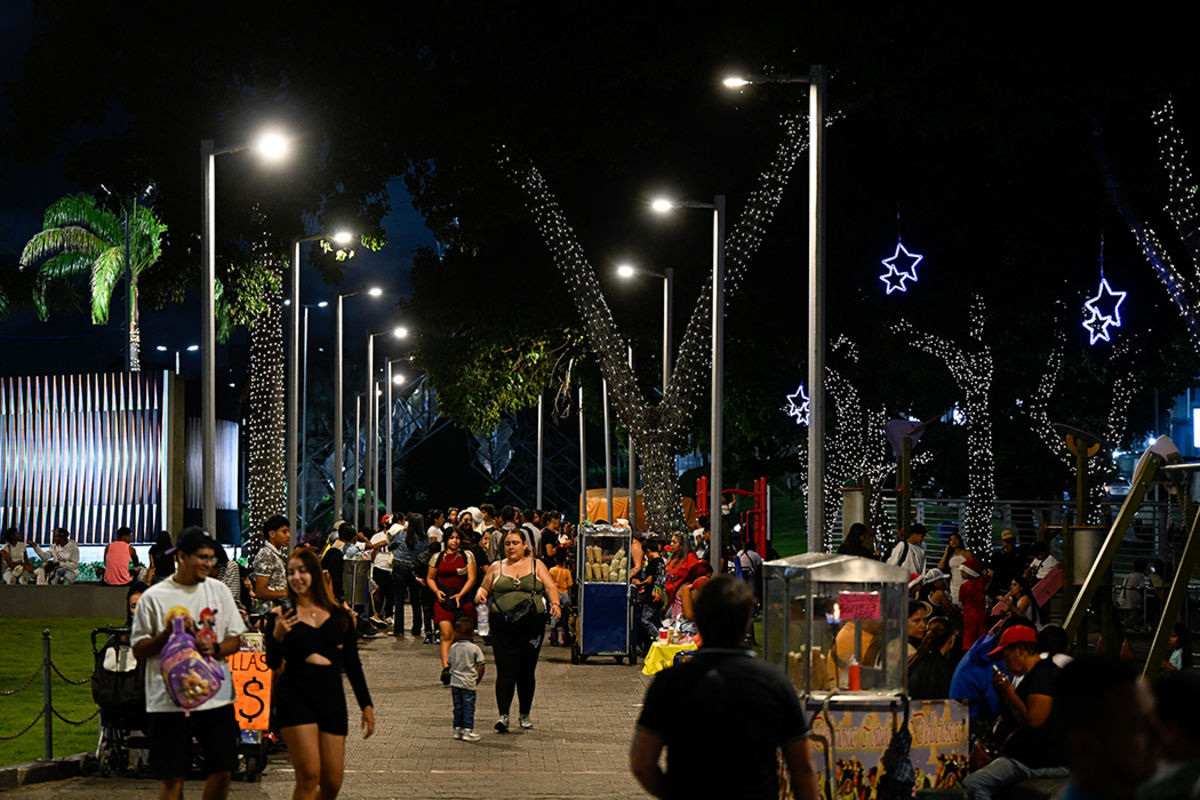
People walk under Christmas decorations at Venezuela square in Caracas on Nov. 1, 2026. Venezuela celebrated Christmas early for a third consecutive year under a decree issued by Venezuela’s interim President Delcy Rodriguez. Federico Parra/AFP via Getty Images
According to the International Organization for Migration (IOM), returns accounted for 57 per cent of monitored land-border movements in 2025, compared with 43 per cent of departures. This reversed the pattern in 2024, when departures accounted for 58 per cent of movements. The IOM links the shift partly to tighter U.S. immigration policies.
Maduro’s capture by U.S. forces in January 2026 appears to have intensified the trend towards returning migration. The former leader’s vice-president, Delcy Rodríguez, is now interim president, with the backing of the Trump administration. Although Rodríguez and many senior figures from the Chavista establishment remain in power, there have also been signs of change that have raised hopes among some Venezuelans.
Hundreds of political prisoners have been released, although more than 300 remain detained, and exiles who had warrants out for their arrests, including opposition leader and 2025 Nobel Peace Prize winner María Corina Machado, have returned.
The government has also begun talks with some opposition representatives on political reforms. They come two years after the disputed 2024 election which Maduro claimed he won despite opposition tallies showing the opposition candidate had won decisively.
New legislation has also opened the oil, mining and electricity sectors to greater foreign investment.
In the few weeks Antonio Perera’s been back, he’s found some comfort in being in his home country but says many of the same problems facing Venezuela when he left haven’t disappeared, including difficulties with basic services, like water and electricity, and a sluggish economy.
“Producing and working is still very difficult,” he said. “But at least now we are no longer being hunted. Weighed against what the United States became under Donald Trump’s presidency — a place of racial hatred — I would rather be here.”
Latin America Reports