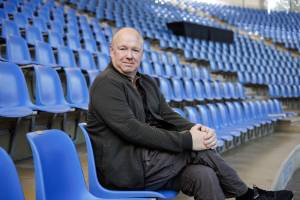
LJUBLJANA: FNE spoke with Martin Steblovnik, the new acting director of the Slovenian Film Centre (SFC), about his goals and challenges leading the main Slovenian film institution. Martin Steblovnik took over the Slovenian Film Centre as Nataša Bučar, who led the main film institution in Slovenia for a decade, has concluded her second mandate.
Martin Steblovnik graduated in Law and previously spent over 15 years in the SFC serving as the Head of Legal Affairs. His transitional term as acting director since 20 October 2026 is slated to run until a permanent director is officially named via a public open call, with a statutory limit lasting no later than 20 April 2027.
FNE: How would you describe the situation of Slovenian cinema and what are your main challenges managing the Slovenian Film Centre?
Martin Steblovnik: Slovenian cinema has made significant progress in recent years, as confirmed by the success of Slovenian films at international festivals, their increasing recognition in the European film sphere, and the diversity of domestic production.
As acting director of the Slovenian Film Centre, I will strive primarily for the smooth and transparent operation of the agency, the continuity of funding for film projects, and the continued support of the diversity of filmmaking. In doing so, I want to build on the successful policies and initiatives of the previous leadership and constructively participate in the planned systemic changes to improve the operating conditions of the Slovenian film and audiovisual sector.
FNE: Where do you see the opportunities to improve domestic film production and international collaborations?
Martin Steblovnik: I see the possibilities for further development of Slovenian film production primarily in ensuring stable and long-term predictable financing, improving production conditions and strengthening the supportive environment for filmmakers and producers.
The planned systemic changes in the field of film and audiovisual activity also represent an important opportunity. The key issue here is not only the issue of the organisational structure of the institutions, but above all the development of an efficient system that will enable appropriate financial and personnel conditions, as well as greater international competitiveness of the Slovenian audiovisual sector.
International cooperation is of exceptional importance for Slovenian cinematography. As a relatively small film market, Slovenia is deeply integrated into the European coproduction landscape, which is why we want to continue to encourage the connection of Slovenian producers with foreign partners and provide conditions for the development of high-quality international coproductions.
Another important instrument for strengthening international cooperation is the cash rebate scheme for foreign audiovisual productions, which contributes to the greater attractiveness of Slovenia as a film location, the involvement of domestic filmmakers in international projects and the development of the domestic audiovisual industry.
FNE: How do you evaluate the current international visibility of Slovenian film, and what are your ideas for increasing it?
Martin Steblovnik: I assess the international recognition of Slovenian film very positively. In recent years, Slovenian films have achieved significant success at prestigious international film festivals, which confirms the creative quality and diversity of Slovenian cinema. These achievements are the result of long-term efforts made by filmmakers, producers and institutions that support the development and promotion of Slovenian film.
It is important to understand this success as the foundation for further strengthening the international presence of Slovenian film. I see opportunities primarily in continued support for international coproductions, active presence at key film festivals and professional events, and in networking with international producers, distributors and other partners. Therefore, for next year, in addition to all planned international activities, we are also planning a Slovenian Film Week in Vietnam for the first time, which is a continuation of this year’s special international event “SloViet Connect: Film between Slovenia and Vietnam”, which was intended to connect the Slovenian and Vietnamese audiovisual industries, and to open up new opportunities for cooperation in the production, distribution and screening of films. The event took place at the Festival of Slovenian Film in Portorož.
At the same time, we also want to continue to promote Slovenia as an attractive and competitive film destination. In this area, the SFC successfully cooperates with the Slovenian Tourist Board, with which we strive to increase the international recognition of Slovenian film locations and production capacities. Part of these activities also includes participation in the international industry event FOCUS London, which represents an important opportunity for new business partnerships and connections.
FNE: Where do you see the Slovenian film industry in the coming years?
Martin Steblovnik: The Slovenian film and audiovisual industry has great potential, as proven by the international success of our films. For its further development, however, we primarily need stable funding and conditions that will enable filmmakers to plan and develop new projects in the long term.
I also see an important opportunity in the planned legislative changes that could improve working conditions and strengthen the competitiveness of Slovenian film.
I wish that Slovenian cinema will continue to maintain its creative diversity, open space for new generations of filmmakers, strengthen international cooperation and, above all, reach even more viewers at home and abroad.
FNE: How do you assess the government’s current attitude toward the film sector?
Martin Steblovnik: I understand the efforts to modernise the legislative and institutional framework in the field of film and audiovisual activities as an important step towards improving the conditions for the development of Slovenian film.
The SFC has already supported efforts in the past for a more modern legislative arrangement that would enable more efficient functioning of institutions and more stable financing. It is crucial that the planned changes ensure stable financial and personnel conditions, an effective supportive environment and long-term predictability of the film sector.
I also believe it is important that legislative changes are developed through constructive dialogue with industry professionals and all institutions affected by them. I believe that cooperation between the state, competent institutions and the film profession is of key importance for the formation of a long-term successful film policy that will enable the further development and international recognition of Slovenian cinematography.
FNE: What are your personal film preferences?
Martin Steblovnik: Slovenian cinema has an exceptionally rich and diverse creativity, so it would be difficult to single out just one film. Each period has produced works that have left their mark on Slovenian cultural space in their own way, from film classics to contemporary auteur films that successfully appeal to international audiences.