Anthropic has created its first dedicated position responsible for natural gas procurement for its data centers as it prepares for an initial public offering (IPO). According to the job posting, the salary ranges from $320,000 (approximately ¥51 million) to $405,000 (approximately ¥64 million). The unusual arrangement—bringing in energy-sector specialists at high pay to secure the power needed to expand AI infrastructure—has come into focus.
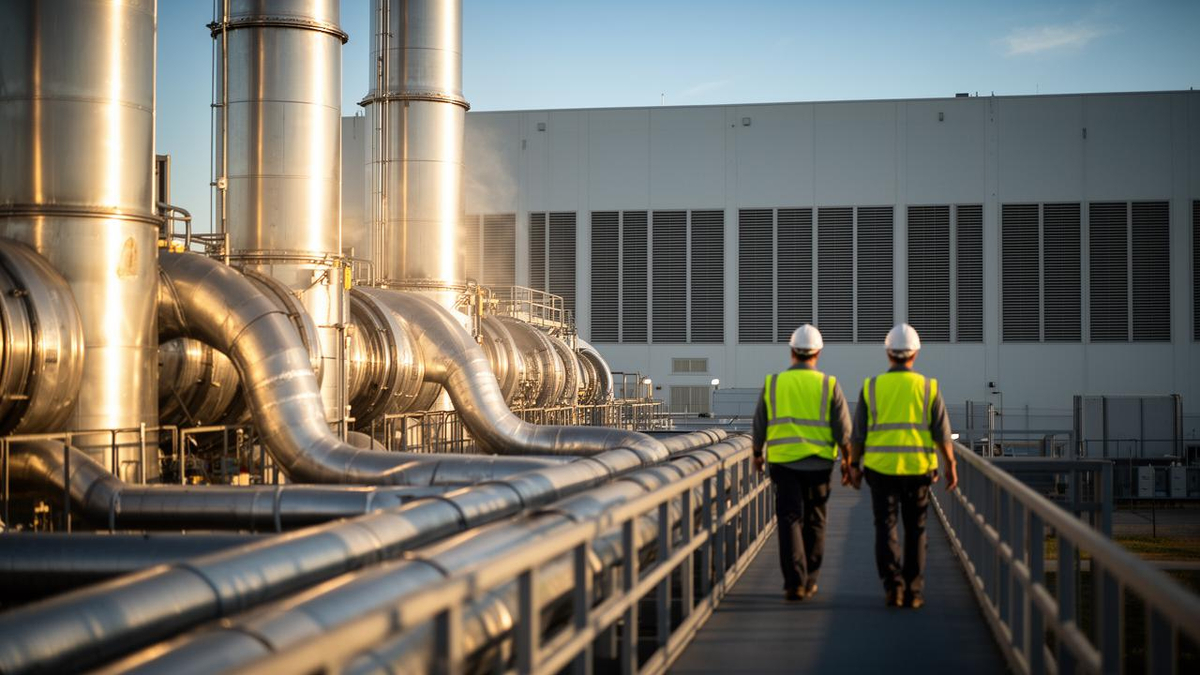
The role being recruited is “Gas Procurement and Transportation Lead.” Responsibilities include negotiating natural gas supply contracts, assessing whether fuel can be secured at new candidate construction sites, and managing transportation via U.S. interstate and intrastate pipelines as well as Canadian pipelines. Applicants are required to have at least eight years of hands-on experience in the natural gas industry. The job posting explains that some of the company’s data centers will use on-site power generation fueled by natural gas rather than drawing from the transmission grid, and states plainly that fuel supply is the lifeblood of the business: “Without natural gas delivered at the volume and pressure our generation equipment requires, we cannot run our computers.”
In its prospectus, Anthropic disclosed contracts to invest approximately $900 billion in infrastructure buildout, with about half to be paid by 2030. It also noted that in regions where it is advancing data center construction plans, it may face competition with other companies to secure the necessary natural gas.
Natural gas, unlike solar and wind, is not weather-dependent and can be procured relatively quickly. As customers demand round-the-clock, 365-day reliability, data center operators are increasingly adopting “behind-the-meter” configurations that generate power on-site or at nearby locations without going through large-scale transmission grids. On the other hand, burning natural gas emits greenhouse gases, leaving open the question of how this squares with the decarbonization targets major technology companies have set.
Reliance on SpaceX and Plans for an Additional 10 Gigawatts
Anthropic’s power strategy is inseparable from its procurement of external computing resources. In May 2026, it announced an agreement to receive several hundred megawatts of computing capacity from SpaceX’s “Colossus One” data center.
SpaceX CEO Elon Musk said on November 18 at an event hosted by The New York Times that Anthropic wants to procure additional computing resources from SpaceX. According to Musk, Anthropic has communicated that it “wants to procure an additional 10 gigawatts of computing capacity from SpaceX,” to which Musk remarked, “That’s a big number.” Some reports had suggested the contract between the two companies would not be extended at the middle of next year, but Musk’s comments contradicted that view.
SpaceX is racing to expand its computing base, with combined capacity at Colossus 1 and Colossus 2 expected to reach 2.7 gigawatts by the end of 2026. In the Rio Grande Valley in Texas, a 444-acre “Stargate” AI campus is under construction, and a 6-gigawatt-class campus in Arizona is also under consideration. Musk said SpaceX currently operates about 0.5 gigawatts of AI computing capacity per month (equivalent to roughly 220,000 GB300 GPUs) and plans to ramp up to a pace of 1 gigawatt per month by the end of 2027.
Musk repeatedly emphasized that power is the biggest constraint. At the Stargate facility in Cameron County, Texas, permits have already been obtained for 1,456 megawatts of on-site gas turbines.
ItemFigure / DetailsAnnual salary for gas procurement lead$320,000–$405,000 (approximately ¥51 million–¥64 million)Total infrastructure contractsApproximately $900 billionMonthly computing resource fee to SpaceX (from December 2026)$3.1 billionCombined capacity of Colossus 1 and 2 (expected end-2026)2.7 gigawattsPermitted gas turbine capacity at Stargate1,456 megawatts
Note: Figures are based on the conversion rates provided in the source material.
Power Constraints Reflect Structural Shift in the AI Industry
These developments show that the competitive axis in AI development is shifting from model performance to securing power and fuel. In the risk factors section of its prospectus, Anthropic noted that reliance on natural gas could cause cost fluctuations or business delays. It also stated that environmental standards for power generation could change due to shifts in public opinion and politics regarding climate change. It mentioned that rising temperatures could increase the power and water needed to cool facilities, potentially inflating operating costs.
Local opposition is also a real risk when it comes to natural gas-fired power generation. At SpaceX’s Colossus One, residents reportedly raised objections to gas turbine generation. Musk has also said that GPU loads during AI training can spike within milliseconds and could damage gas turbine shafts, underscoring the growing importance of power-smoothing systems.
Anthropic grew rapidly in 2026, so much so that CEO Dario Amodei joked the company was “growing too fast to keep up.” Securing processing capacity has become the company’s most critical business challenge, and in addition to procuring from major cloud providers, it is simultaneously building its own data centers in partnership with allies.
For investors eyeing the IPO, the focus is on how to value the energy procurement costs and regulatory and environmental risks that underlie growth expectations. Fluctuations in natural gas prices, pipeline constraints, and changes in environmental standards directly affect data center utilization rates and profitability. This job posting symbolizes that AI companies have entered an era in which they must build procurement operations resembling those of energy companies.