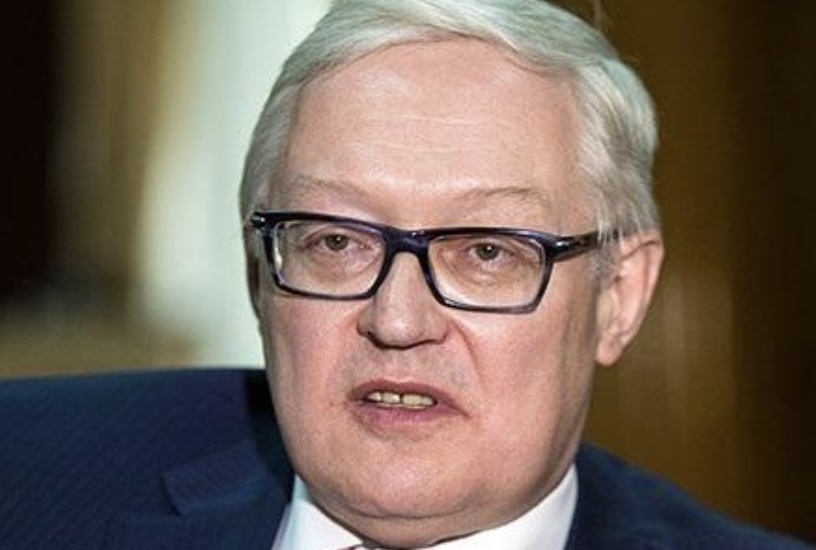
Russian Deputy Foreign Minister Sergei Ryabkov said on Friday, 20 November, that any arrangement amounting to indirect NATO membership for Ukraine would be unacceptable.
His remarks came a day after US presidential envoy Jared Kushner suggested that Russian officials were becoming comfortable with the concept of security guarantees modelled on Article 5 of the North Atlantic Treaty.
The conflicting positions highlight the difficulty facing Washington and European governments as they seek to establish a framework capable of preventing another Russian attack after a ceasefire.
Moscow rejects indirect NATO protection
Ryabkov’s comments, carried by Russian state media, reaffirmed Moscow’s longstanding opposition to Ukraine joining NATO.
The Russian deputy foreign minister rejected what he characterised as attempts to create a special arrangement giving Kyiv some of the protection associated with membership without formally joining the alliance.
He also repeated Russia’s demand that Ukraine permanently renounce its NATO aspirations.
Moscow’s position is significant because the question of future security guarantees remains one of the most difficult issues in the peace negotiations.
Ukraine wants commitments that would provide a credible response to any renewed Russian military offensive.
Russia, by contrast, has demanded limits on Ukraine’s future security alignment with Western countries.
The disagreement concerns not only the wording of a prospective peace agreement but also the balance of military power in Europe after the fighting ends.
Washington claims progress
The latest Russian statement contrasts with comments made by Kushner following Thursday’s meeting of Ukraine’s supporters in Berlin.
Kushner said he and fellow American negotiator Steve Witkoff had made progress in persuading Moscow to consider guarantees based on NATO’s Article 5.
The provision establishes the principle that an armed attack against one NATO member is considered an attack against them all.
It does not automatically require every member to undertake identical military action, but it creates a collective obligation to assist the country under attack.
For Ukraine, an arrangement inspired by Article 5 could provide an alternative to immediate NATO membership.
However, the effectiveness of any such guarantee would depend on the countries participating, their legal commitments and the military measures they were prepared to take.
A political declaration alone would not necessarily provide the same protection as formal membership of the alliance.
Ryabkov’s response suggests that Moscow may reject an arrangement if it considers its practical effect equivalent to NATO protection.
That position leaves considerable uncertainty over how an American-backed security framework could satisfy both Kyiv and Moscow.
European leaders seek stronger commitments
The dispute comes as European governments attempt to secure a greater role in negotiations involving Washington, Kyiv and Moscow.
At the Berlin meeting, French President Emmanuel Macron argued that Ukraine’s potential accession to NATO should be reconsidered.
The French position reflects concern that alternative security arrangements might be insufficient unless accompanied by enforceable commitments.
European leaders have also discussed a multinational force that could operate in Ukraine following a ceasefire, potentially supporting monitoring arrangements and helping deter renewed hostilities.
The proposed framework would include continued military assistance and legally binding security commitments, subject to national constitutional and parliamentary requirements.
According to the joint position developed by European leaders following the Berlin meeting, those arrangements could involve support from Washington alongside European military contributions.
Moscow has repeatedly opposed the deployment of Western troops to Ukraine as part of a post-war security settlement.
Consequently, the issue of foreign military personnel remains another potential obstacle to an agreement.
Ukraine’s position remains central
President Volodymyr Zelenskyy has sought clarity over precisely what the proposed guarantees would involve.
Kyiv’s principal concern is whether an agreement would create an effective response to renewed Russian aggression rather than simply another diplomatic assurance.
Ukraine has previously received political commitments concerning its sovereignty and territorial integrity, but those arrangements did not prevent Russia’s seizure of Crimea in 2014 or its full-scale invasion in February 2022.
Ukrainian officials therefore attach particular importance to practical military assistance, air defence, weapons supplies and the ability to maintain a capable national defence force.
Any settlement would also have to address the territorial questions arising from Russia’s occupation of Ukrainian territory.
The Ukrainian government maintains that internationally recognised borders cannot be altered through military force.
Those questions are closely connected to security guarantees, since Kyiv would have to consider whether an agreement could expose it to renewed pressure or further territorial losses.
A possible European diplomatic channel
Ryabkov also confirmed that discussions were taking place concerning a potential visit to Moscow by representatives of Britain, Germany and France.
Such a visit could provide European governments with a direct channel to the Russian leadership at a time when Washington has been conducting its own negotiations.
However, preparations for a visit do not establish that an agreement has been reached on the format or substance of future talks.
European governments face the challenge of influencing negotiations whose outcome would directly affect their security while avoiding commitments that they cannot enforce.
The unresolved question
The difference between Washington’s description of diplomatic progress and Moscow’s public rejection of NATO-style guarantees illustrates the uncertainty surrounding the peace process.
It remains possible that Russian officials distinguish between different types of security arrangements or are seeking to influence the terms under discussion.
However, no agreed formula has been publicly established.
For Ukraine and its European supporters, the central issue remains whether future guarantees would be sufficiently specific, credible and enforceable to deter another invasion.
Until that question is resolved, progress on other aspects of a peace settlement may prove difficult to translate into a lasting agreement.
Trading Donbas for NATO: The Dangerous Logic Behind Washington’s Latest Peace Proposal