Fatma Zehra Solmaz
20 November 2026•Update: 20 November 2026
The war in Iran has left global food systems “really exposed” to geopolitical disruptions because of their dependence on fossil fuel-based agricultural inputs, an Australian youth climate champion at COP31 warned.
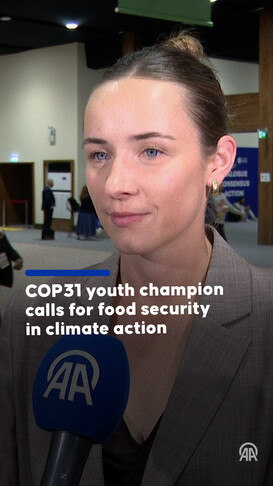
Speaking to Anadolu, Sally Higgins said the crisis highlighted the vulnerabilities of food production systems and the need to place food security, nutritious food and farming communities at the center of global climate action.
“Food security is a crisis all around the world, and we’ve seen with the war in Iran that the vulnerabilities our food systems have to the inputs of fossil fuel-based synthetic inputs in food production leaves us really exposed,” she said.
Higgins said COP31 should be a platform for integrating food systems and agricultural communities more prominently into climate policy implementation, particularly as countries face growing challenges to food security.
She said COP31 should put “food systems, nutritious food and farming communities” at the “front and centre” of climate policy implementation.
She also stressed the need to support young farmers, saying access to finance and markets remained among the biggest barriers preventing them from establishing sustainable and commercially viable agricultural businesses.
“What I heard from young people all around the world is that there’s no shortage of ideas and ambitions in food systems,” she said.
“Young people want to produce nutritious food using best practice technology and methods. But what they told me they lack is actually access to finance and those market pathways that help them to participate in supply chains and to use the best practices while being profitable and having a good life,” she added.
Higgins said she was launching Back Future Farmers, a global campaign aimed at identifying and promoting pathways that enable young farmers to build businesses that are both commercially viable and sustainable.
The initiative brings together international farming organizations, private sector partners, philanthropic funders, government policymakers and young farmers to identify successful financing models and expand opportunities for the next generation of agricultural producers.
She highlighted concessional financing and repayment arrangements adapted to agricultural production cycles as important mechanisms to support young farmers.
“Outcome-based repayment schedules that reflect that the realities of a farm mean that sometimes it’s difficult to make a monthly repayment because it’s seasonal,” she said, pointing to the unpredictability of rainfall and harvests.
Higgins also underlined the private sector’s role, particularly through off-taker agreements that guarantee markets for young producers and enable them to invest in the long-term future of their businesses and land.
Calls for flexible policy, youth ‘as key implementers’ in final text
Turning to the ongoing COP31 negotiations, Higgins said young people want an ambitious final outcome that would send a message of hope and optimism about global climate action.
She called for children and young people to be explicitly included in the final statements, with greater recognition of their role in climate action and commitments to provide the resources they need to contribute within their communities.
Higgins also stressed that agricultural policies should reflect the different circumstances of farming communities across countries rather than apply a one-size-fits-all approach.
“Our farmers are on the front lines of climate change in Australia, in Türkiye ,and all around the world,” she said.
She added that governments needed to listen to farmers and give them the flexibility to implement climate measures according to their local conditions.
“Farming is different in Türkiye than it is in my community in regional Australia,” she said, stressing that communities, individuals and agricultural businesses should remain at the center of international climate policymaking.
Higgins said the overarching message from COP31 should be that international cooperation remains essential to addressing the climate crisis.
“The concrete outcome I want to see is that we continue to push the agenda globally, that multilateralism is working, that countries continue to see the climate crisis as an important priority and that young people are key implementers and partners in implementing on that,” she said.