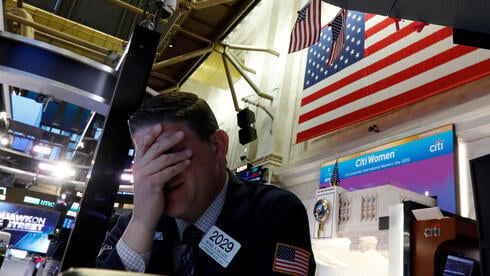
The Nasdaq fell 5.28% to close at 22,617 points, wiping out all its gains since the beginning of 2026. The index lost about 10% over the week, its steepest weekly decline since March 2020.

The S&P 500 also dropped 3.7%, marking its seventh consecutive day of losses. Along with the Dow Jones Industrial Average, it officially entered correction territory, defined as a decline of more than 10% from a recent peak.
Anthropic’s fortunes reversed within a single day. On Thursday, its shares opened at $111.50, well above the IPO price of $83, climbed to more than $115 and closed at $97.17. On Friday, the stock fell 8.5% to $88.91, hitting an intraday low of $83.05, just 5 cents above its offering price.
According to CNBC, the company’s decision to increase the size of its IPO a day before trading began reinforced the perception that its founders and early investors were cashing out, leaving retail investors holding the shares. That perception triggered a wave of selling.
The company’s financial figures also contributed to the decline. Anthropic’s revenue growth slowed to 47% in the third quarter, down from 144% in the second quarter. According to Reuters, the stock trades at roughly 40 times its revenue over the past 12 months. Morgan Stanley, the bank responsible for stabilizing the stock after the IPO, also closed the position established for that purpose, removing a potential safety net.
“Anthropic faded relatively quickly. I don’t think investors believe there’s something inherently wrong with the company, management or business. I think they’re just skeptical of this market,” Robert Pavlik of Dakota Wealth told Reuters.
Nvidia has already lost $2.7 trillion in market value
The chipmaking giant lost about $485 billion in market value on Friday alone and approximately $2.7 trillion since its shares peaked on October 6. Nvidia fell 23% over the past week, its worst weekly performance since October 2008.
Nvidia’s plunge dragged down the entire semiconductor sector. Micron fell nearly 14%, AMD dropped 13.3%, Broadcom and Marvell each lost about 12% and Intel declined 8%. The semiconductor index shed 11%.
Other technology giants also tumbled, with Meta falling nearly 6%, Amazon about 4% and Microsoft 3%.

Jensen Huang and his wife, Lori
(Photo: Carolyn Kaster\AP)
Beyond concerns about artificial intelligence, broader economic pressures are also weighing on the market. U.S. inflation remains well above the Federal Reserve’s target, and the central bank is expected to raise interest rates in December. According to Fortune magazine, futures markets are pricing in roughly a 95% probability of a rate hike in December.
Meanwhile, the VIX, commonly known as Wall Street’s “fear gauge”, surged 33% as investors fled to government bonds and defensive stocks. Strong demand for bonds pushed the yield on the 10-year U.S. Treasury note down to 4.93%.
The selloff extended beyond the United States. Taiwan’s benchmark stock index plunged 5.65% on Friday, capping its worst week since October 1997. Japan’s Nikkei and South Korea’s Kospi each fell about 5%.
What analysts recommend
Analysts are divided over what investors should do next.
“The market is finally cracked, and now we’re in the midst of a washout,” said Jay Woods of Freedom Capital Markets.
Others point out that the S&P 500 is in oversold territory and that November and December have historically been among the strongest months for stocks.
Katie Stockton of Fairlead Strategies advised clients against opening new positions.
“This isn’t a time at which we’re recommending new long positions,” she said, adding that investors should hold their existing investments and use market rallies to reduce their exposure.
Chris Larkin of E*TRADE from Morgan Stanley noted that only five of the 15 market corrections since 1983 have developed into bear markets.
Michael Hartnett of Bank of America recommends waiting until the Federal Reserve shifts from raising interest rates to cutting them before buying semiconductor and cyclical stocks.
Richard Saperstein of Treasury Partners remains optimistic about major cloud computing companies and cybersecurity firms.
As for Anthropic, Kaush Amin, head of private market investing at U.S. Bank Asset Management told Reuters, “We favor patience,” recommending that investors assess the company based on its upcoming earnings reports.