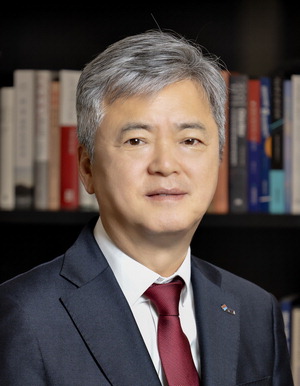
 사진 확대 Lee In-ho, full-time vice president of the Korea International Trade Association
Our exports finally topped $1 trillion last week. It achieved $1 trillion in trade in 2011 and $1 trillion in exports alone in 15 years. Only the United States, Germany and China have achieved $1 trillion in exports so far, and Korea has now opened the door to $1 trillion in exports for the fourth time in the world. If the current trend continues, it is worth looking at the world’s fourth-largest export for the first time this year.
Semiconductors are by far the main driver of this $1 trillion export. Until October, Korea’s total exports increased by $351.1 billion from the same period last year, of which 75% or $261.4 billion was attributed to semiconductor exports. In other words, semiconductors led about three-quarters of the total export growth this year.
Although it was somewhat overshadowed by strong exports of semiconductors, exports of non-semiconductors also performed well, increasing by more than 20%. This is the highest growth in the last 20 years, except during the recovery period immediately following the global recession such as the Lehman crisis or the pandemic. In particular, 15 non-semiconductor items, including cosmetics (32.3%) among the top 20 export items, drove the growth, and it is also significant that all-time export performances continued in small and medium-sized enterprises and three five-pole specialties (five ultra-wide areas and three special autonomous provinces).
The $1 trillion in exports is the result of the dedication of both Korean companies and workers, who have been fiercely knocking on the door to overseas expansion, and the government and support organizations that have been closely supporting export sites. The challenge ahead is to lay the foundation for sustainable growth so that today’s performance can lead to a greater leap forward.
The first step toward sustainable export growth is to upgrade and reorganize the export structure centered on future demand. Semiconductors should firmly maintain the technology gap with latecomers, but increase the competitiveness of the ecosystem as a whole, from design to packaging, beyond memory. The export base centered on intermediate goods such as semiconductors should be expanded to export industrial capital goods such as power and cooling facilities for data centers, K consumer goods, and even services to diversify future growth engines.
In terms of the market, ASEAN should be pioneered more widely and expanded to the Global South. After the U.S.-China trade conflict, ASEAN’s strategic importance, which is a neutral zone, is increasing, and competition for market preoccupation is becoming more intense. Now, it is necessary to diversify strategic markets to ASEAN regions other than Vietnam and the global South, including India and Africa, with differentiated quality competitiveness.
It is also important to create an internal and external business environment where companies can invest with confidence. Investment is the biggest source of corporate competitiveness. In particular, in future new industries such as next-generation semiconductors, it is necessary to reform the domestic regulatory system in a negative way to drastically lower the initial burden on companies and induce aggressive investment.
Various solutions are needed externally in line with the rapidly changing trade environment. In the increasingly fragmented trend of global trade, sustainable exports now depend not only on exports, but also on how wisely they solve the n-order equation that can coexist with trading partners such as local investment and supply chains. It is time for the government, companies and support organizations to gather wisdom to prepare to inherit the $1 trillion in exports with continuous vitality.
[Lee In Ho, vice president of the Korea International Trade Association]