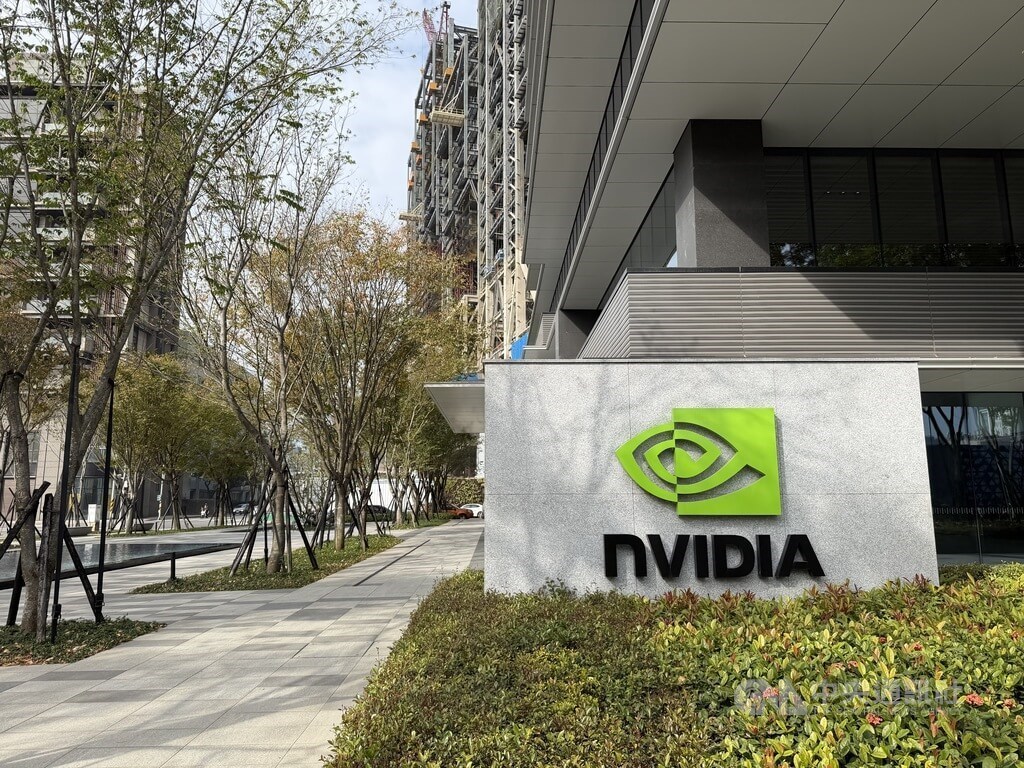
Taipei, Nov. 22 (CNA) Nvidia’s expanded commitments to its supply-chain partners are helping stabilize confidence in the artificial intelligence (AI) industry and provide greater order visibility for Taiwanese suppliers after the resignation of company co-founder Jensen Huang (黃仁勳)as CEO, an expert said.
Nvidia announced Tuesday that it was expanding its commitments to supply-chain partners, including Taiwan-based companies Taiwan Semiconductor Manufacturing Co. (TSMC), Hon Hai Precision Industry (known globally as Foxconn), Siliconware Precision Industries Co. (SPIL), Kinsus Interconnect Technology, King Yuan Electronics, and Unimicron Technology.
In a news release, Nvidia said the long-term agreements covering multiple critical inputs would position the company for sustainable growth.
The announcement also named partners Samsung Electro-Mechanics, Amkor Technology, and Ibiden.
The expanded commitments would entail additional substrate capacity, increased production at existing factories, and greater packaging capacity for current- and next-generation accelerated computing platforms, Nvidia said.
The company also said it would leverage TSMC’s 5-nanometer and 3-nanometer process technologies, as well as its Chip-on-Wafer-on-Substrate (CoWoS) advanced packaging technology.
Foxconn, meanwhile, would draw on its global production network to support Nvidia’s next-generation graphics processing unit (GPU) and networking platforms.
Expanded commitments strengthen suppliers’ competitiveness
Nvidia has entered into long-term contracts worth billions of dollars with Taiwanese companies involved in manufacturing its next-generation Vera Rubin chips, Taiwan Institute of Economic Research Industry Database Director Liu Pei-chen (劉佩真) told CNA in a telephone interview.
The move provides greater order visibility for Taiwanese suppliers and is expected to strengthen their competitiveness over the next few years in advanced manufacturing processes, advanced packaging, and substrates, Liu said.
Demand for AI computing power continues to far exceed supply, she said, adding that major cloud service providers and new AI cloud customers are expanding their infrastructure.
With Vera Rubin NVL72 platforms beginning volume shipments, Nvidia’s overall supply commitments have increased to US$390 billion, pointing to solid order visibility over the next few quarters, she said.
The expanded partnerships provide a stable foundation amid the company’s leadership transition, offering reassurance that Taiwanese suppliers can secure even larger orders and bolstering market confidence in the near-term progress of AI infrastructure development, Liu said.
She added that orders already placed and long-term supply commitments mean Taiwan’s semiconductor and AI-related orders are unlikely to be affected significantly in the short term by a leadership change.
Liu also noted that Nvidia’s interim CEO and CFO Colette Kress had said the company would continue working closely with Taiwan’s supply chain.
However, with Nvidia’s next leader yet to be determined, it remains to be seen whether that person will maintain Huang’s technological vision, bargaining power with suppliers, and ability to attract partners across the ecosystem, Liu said.
The industrial analyst suggested Taiwanese manufacturers pay attention to the new leader’s industry outlook, technology roadmap, and approach to supply-chain partnerships, as well as whether the United States will exert pressure on Nvidia.
These factors could test the resilience of Taiwanese suppliers and their ability to diversify risks, she said.
Liu pointed out that Huang had not only maintained close working relationships with Taiwanese suppliers but also had a personal connection to Taiwan.
With Huang’s departure, future cooperation between Nvidia and Taiwanese companies could become less personal, requiring the suppliers to demonstrate that they remain indispensable to the semiconductor and AI supply chains, Liu said.
International recognition of Taiwan’s semiconductor industry
Taiwan has also attracted investment and partnerships from several other international technology companies in recent months.
Advanced Micro Devices (AMD) announced plans in May to invest more than US$10 billion in Taiwan’s technology industry, while Amazon participated in a private placement by Taiwan-based AI server printed circuit board manufacturer Gold Circuit Electronics in September.
In March, memory manufacturer Nanya Technology secured private placement investments from international companies including Solidigm, a subsidiary of SK hynix, as well as Sandisk, Kioxia and Cisco. In November, silicon wafer manufacturer GlobalWafers also secured subscriptions for its convertible bonds from Micron.
Meanwhile, TSMC, through its subsidiary TSMC Partners, acquired a 0.03 percent stake in AI company Anthropic.
These developments demonstrate international recognition of Taiwan’s semiconductor ecosystem, including its technological capabilities and the scale of its businesses, Liu said.
(By Chung Jung-feng and Wu Kuan-hsien)
Enditem/cs