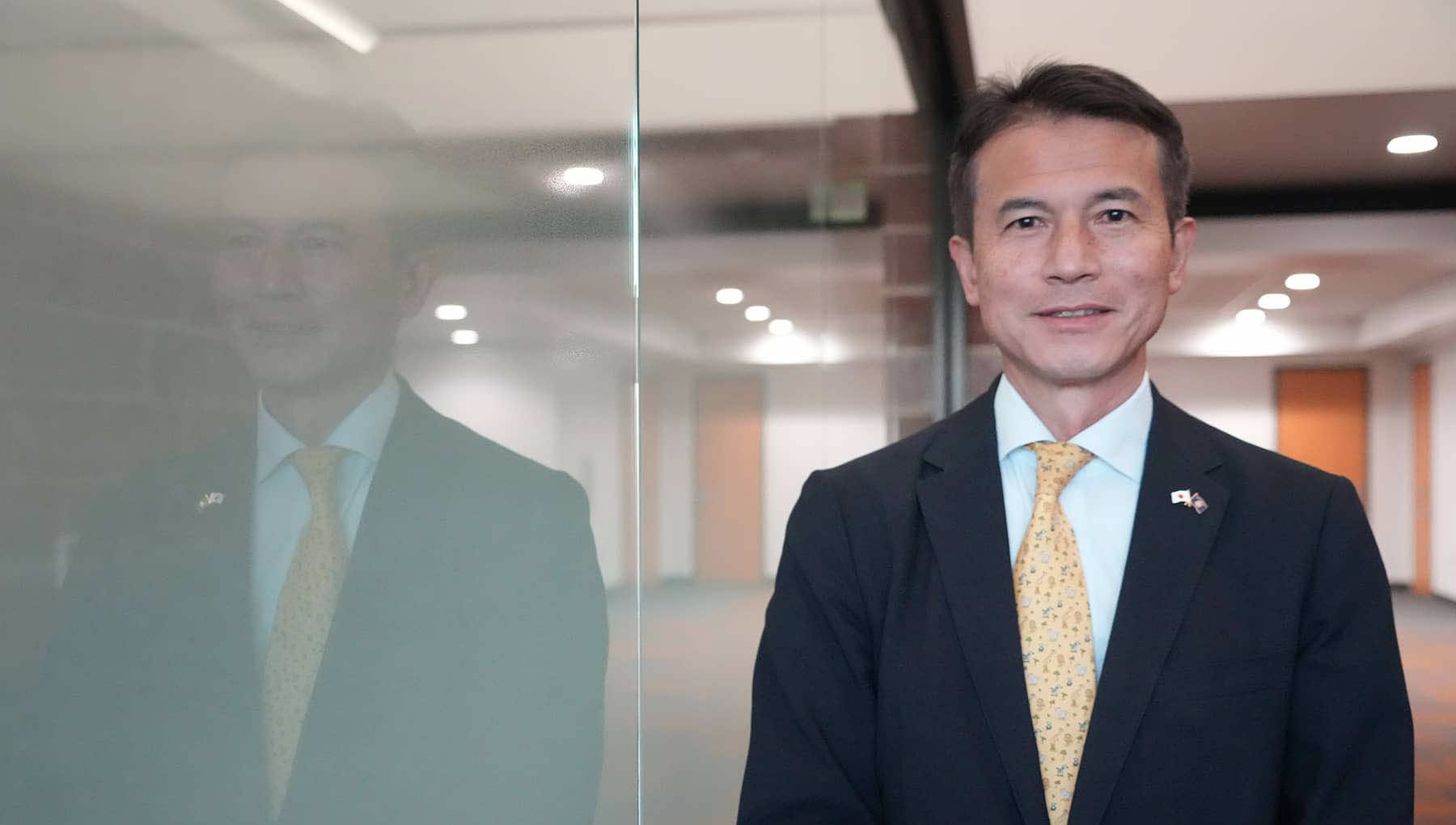
Milwaukee Independent: You were born in the city of Iwaki, in Fukushima Prefecture. What are your fondest memories of growing up there, and how did that environment shape your understanding of community?
Consul-General Oba: I grew up in the countryside of Iwaki, surrounded by mountains, the ocean, rivers, and rice fields, spending much of my childhood with friends outdoors and immersed in nature.
Looking back, what stands out most is the strong sense of community, where people naturally looked out for and supported one another.
Growing up in that environment shaped my belief that meaningful connections begin at the grassroots level, through everyday relationships, mutual support, and a shared sense of responsibility.
Milwaukee Independent: When you were a young student, how much did you know about the world beyond Japan? Was there a particular experience, person, or moment that first inspired you to pursue an international career?
Consul-General Oba: Where and when I grew up until 18 years old in my hometown Fukushima, opportunities to interact with people from different countries and cultures were quite limited. Even at the University of Tokyo where I studied, there were very few students from abroad at that time. It was not until I was 25 in 1995 that I had the opportunity to experience life outside Japan and study in the United Kingdom.
That experience opened my eyes to different ways of thinking and helped me see the world from perspectives beyond my own. It was a turning point that broadened my horizons and deepened my appreciation for international exchange and the value of learning from different cultures.
Upon my return to Japan from the United Kingdom in 1996, I was assigned with supporting peacebuilding and reconstruction of post-conflict Bosnia and Herzegovina. The world was facing a new situation after the end of the Cold War. Japan was pursuing a new and more active role to play for the peace and stability of the world. I was inspired by Madam Sadako Ogata, who was UN High Commissioner for Refugees, and Mr. Yasushi Akashi, who was Under-Secretary-General of the UN at that time.
Milwaukee Independent: For many people outside Japan, Fukushima became internationally recognized because of the March 2011 earthquake, tsunami, and nuclear disaster. As someone from the region, how do you wish the world understood Fukushima beyond that tragedy, particularly its people, culture, and history?
Consul-General Oba: Unfortunately, Fukushima became widely recognized around the world after March 11, 2011. While it is important to learn from this experience and continue our efforts to prevent and mitigate future disasters of this kind by sharing our experiences, there is so much more to the region than this tragedy.
Much like the American Midwest, Fukushima has rich agricultural heritage, known for its sweet peaches, high-quality rice, Japanese sake, dairy farming, fish, and many other local products that we are proud to share with Japan and the world.
Beyond its agricultural richness, Fukushima is also defined by its people, their connection to the land, and their strong sense of community. I hope many more people will come to discover and appreciate Fukushima for its culture, history, and people, rather than seeing it only through the events of 2011.
Milwaukee Independent: If you could give a Wisconsin family a tour of your hometown – or one particular city in Japan, what places would you show them, what local traditions would you introduce, and what would you want them to understand about Japan today?
Consul-General Oba: One thing I am particularly proud of is Japan’s incredible regional diversity. Each region has its own distinctive cuisine, traditional arts and crafts, and rich history and culture. That is why it is hard for me to single out just one place to recommend.
Instead, I hope visitors from overseas will come back to Japan again and again, exploring different parts of the country each time. No matter where and when you go, there is always something new to discover. In spring, you can enjoy cherry blossom viewing. In summer, you can join local festivals and watch fireworks. And in autumn, we have a wonderful expression, shokuyoku no aki, which literally means “autumn of appetite.” It’s a time when we celebrate the harvest and enjoy all kinds of seasonal foods. In winter, you can enjoy your stay in Japan in many ways, including skiing, beautiful gardens covered by snow, onsen (hot springs), and so on.
Milwaukee Independent: As a Japanese diplomat who has worked in different regions of the world, what have you learned about your own country by seeing Japan through the eyes of people from other cultures?
Consul-General Oba: Throughout my diplomatic career, I have been posted to the Netherlands, Egypt, and Thailand, and I have also had the opportunity to visit many other countries on official business.
One thing that has always struck me is that, wherever I go, I meet people who have a deep appreciation for Japanese culture and values, including discipline, respect for others, punctuality, and a commitment to keeping promises.
I am truly grateful that people around the world recognize and appreciate the values that the Japanese people have cherished and passed down through generations, sometimes over centuries. It means a great deal to me that these values are viewed in such a positive light and held in such high regard.
Milwaukee Independent: Japan’s relationship with the United States is often discussed in terms of Washington, Tokyo, and major coastal cities. What makes Wisconsin and the Midwest region economically and culturally important to Japan? Wisconsin also has longstanding strengths in manufacturing and agriculture. Which of these industries or other sectors offers the greatest potential for expanded cooperation with Japan, and what would meaningful progress look like?
Consul-General Oba: The Midwest is an agricultural and manufacturing powerhouse and a key hub for Japan-U.S. trade and investment. The region hosts approximately 1,200 Japanese business facilities, which have invested nearly $57 billion and created about 160,000 jobs, contributing deeply to local communities.
This strong bond is symbolized by Wisconsin’s history with Kikkoman, which opened its first U.S. plant in Walworth in 1973. Attending the grand opening of their third plant this September in Jefferson, I witnessed firsthand how Japanese companies succeed by growing together with local communities.
Building on this trust, our partnership is expanding into advanced fields like quantum technology and biotechnology. As strategic partners sharing core values, we look forward to deepening our collaboration with Wisconsin and the Midwest in areas critical to economic security to drive our mutual future growth.
Milwaukee Independent: Many Americans first experience Japanese culture through food, technology, or entertainment. How would you like to transform those initial curiosities into deeper exchanges and lasting friendships between young people in Japan and the Midwest?
Consul-General Oba: The Japan-U.S. alliance is a cornerstone of Japan’s foreign and security policy. But this alliance is sustained not only by agreements between our governments or business investments.
A truly strong bilateral relationship is built on connections between people. One of our greatest assets is the deep appreciation that so many Americans have for Japanese culture, along with the wide range of grassroots exchanges, including those fostered through sister-city partnerships.
The Consulate is committed to helping these vibrant connections continue to flourish for many years to come, ensuring that these people-to-people bonds remain a strong foundation of the Japan-U.S. relationship.
Milwaukee Independent: Your consulate serves 10 states with distinct histories, economies, and communities. How will you work to ensure that places beyond Chicago and other major metropolitan centers receive meaningful attention, especially smaller cities and rural communities that may have fewer established connections with Japan?
Consul-General Oba: One of my top priorities is to visit each of the ten states as often as possible and stay in close contact with local people who are involved in Japan-related activities or interested in building stronger ties with Japan. I hope to visit all ten states as soon as possible and meet with a wide range of people, including government officials, both Japanese and U.S. business leaders, cultural figures, educators, Japanese American communities, and those involved in grassroots exchanges.
I have been fortunate enough to visit Wisconsin five times already. Today I am participating in the Holiday Folk Fair International organized by the International Institute of Wisconsin. During my previous visits, I had the opportunity to meet with Governor Evers, attend events organized by the Japan America Society of Wisconsin (JASWI), take part in the Japan Fest organized by the Milwaukee Japanese Association (MJA), and visit Kikkoman, the International Institute of Wisconsin, and others. I also had the pleasure of visiting the Sterling North Museum where the very popular story of Rascal was created.
I am eager to build on these experiences and further strengthen Japan’s ties with the other states in our jurisdiction as well.