Taipei, Nov. 23 (CNA) Taiwan’s Mainland Affairs Council (MAC) warned Monday that China’s methods of interfering in Taiwan’s elections were becoming increasingly sophisticated with advances in technology, urging the public to remain vigilant ahead of Saturday’s local elections.
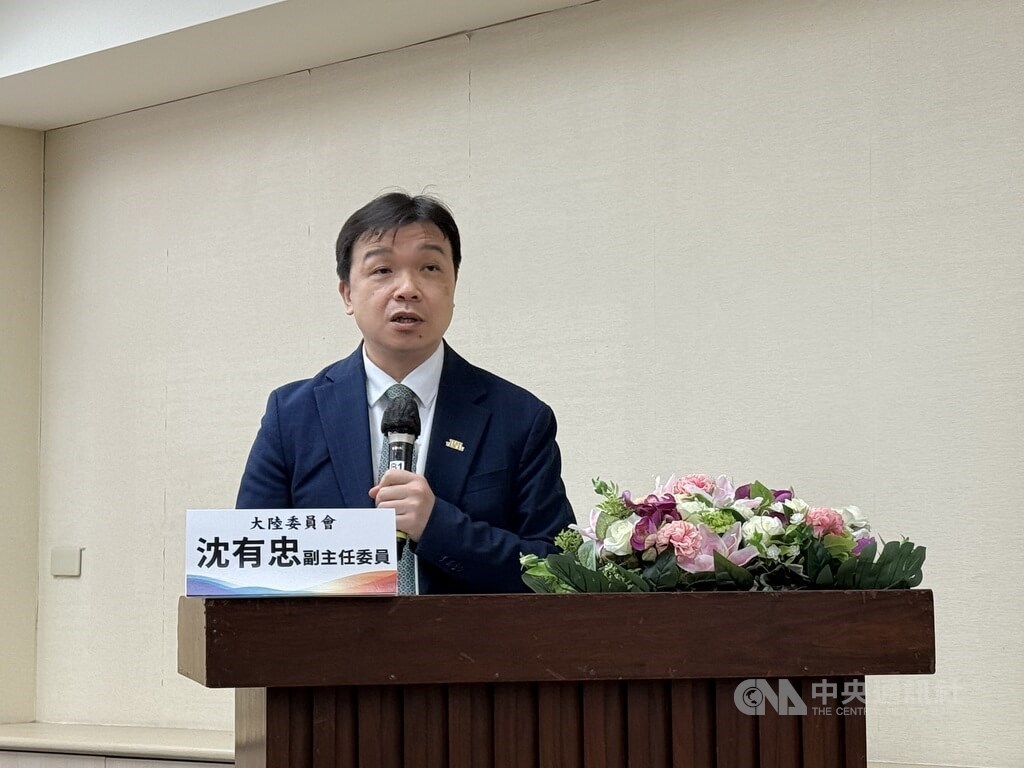
MAC deputy head Shen Yu-chung (沈有忠) made the remarks to reporters before attending a seminar in Taipei, five days before Taiwan’s Nov. 28 local elections.
“Chinese interference in Taiwan’s elections is nothing new,” Shen said, citing alleged efforts to finance candidates, influence public opinion through cognitive warfare and channel money into elections through underground betting operations.
However, Shen said China’s advances in artificial intelligence (AI) and facial recognition technology had made its methods of infiltration increasingly sophisticated, warning that information collection could extend beyond elections into people’s daily lives.
He said China’s attempts to undermine Taiwan’s democracy were not confined to election periods, urging Taiwanese people to remain vigilant while calling on Beijing to view Taiwan’s elections objectively and understand its democratic system.
Chou Hsiao-yun’s case
One case Shen particularly highlighted involved Taiwan People’s Party (TPP) Taoyuan City Council candidate Chou Hsiao-yun (周曉芸), who was indicted by New Taipei prosecutors on Nov. 20 on several charges, including Anti-Infiltration Act offenses.
“It has escalated into a very serious national security issue,” Shen said, referring to allegations that Chou helped collect Taiwanese people’s facial images for fake social media accounts.
According to prosecutors, Chou traveled to Xiamen, China, three times in 2025 through intermediaries linked to Taiwan’s Four Seas organized crime group.
During the visits, she met two men known as “Da Liu” (大劉) and “Xiao Liu” (小劉), who claimed to be Chinese Communist Party (CCP) officials, prosecutors said.
The men allegedly arranged free campaign support for Chou from a Chinese online operations team and introduced her to its members in Xiamen, they added.
A team member known as “the director” instructed Chou on how to use specific software to influence AI databases, prosecutors said.
Prosecutors alleged that Chou received US$10,000 from “Da Liu” and “Xiao Liu” in December 2025, which she used to cover the deposit and polling fees for her unsuccessful bid for the TPP’s New Taipei City Council nomination.
She also allegedly received NT$300,000 (US$9,109) per month in January and February 2026 through intermediaries to cover campaign expenses.
The payments stopped in March after she lost the primary in February; however, Chinese online support continued after she secured the TPP’s nomination for a Taoyuan City Council seat in May, prosecutors said.
According to prosecutors, members of the Chinese online operations team asked Chou to provide background information for 2,000 fake Taiwanese social media accounts and photographs of Taiwanese people for use as Facebook profile pictures.
Chou allegedly then instructed others to download photographs from the internet and take pictures of passersby to fulfill the request, according to a news release for the indictment.
The operatives allegedly ran around 20,000 fake Facebook accounts, using likes and comments to create the impression of widespread support for Chou.
Prosecutors are seeking a three-year, six-month prison sentence for Chou on charges of violating the Anti-Infiltration Act.
Chou disputes allegations, criticizes timing
In a Facebook statement Friday evening, Chou denied wrongdoing.
“I have never accepted instructions from any foreign forces, nor received ‘red money’ or foreign funds to conduct election activities,” she wrote.
She argued that prosecutors had improperly linked her personal relationships and the actions of others to alleged criminal wrongdoing.
“If prosecutors believe I had criminal intent, they should present concrete evidence,” Chou wrote, arguing that she should not be required to prove she was unaware of other people’s activities.
Chou also disputed allegations that she had received support from Chinese online operatives, noting that her Facebook following had only recently surpassed 10,000.
Chou also questioned the timing of the Nov. 20 indictment, eight days before the election, saying she had yet to receive the indictment while the allegations had already fueled media coverage and political attacks.
In a separate post on Saturday, Chou said she had outsourced her social media operations to professionals and that her interactions with Taiwanese businesspeople in China were normal campaign activities.
“An indictment does not mean guilt,” she wrote, saying the allegations must be examined in court.
TPP Chairman Huang Kuo-chang (黃國昌) said Saturday that he respected Chou’s right to defend herself but that party candidates must clearly address allegations and earn voters’ trust.