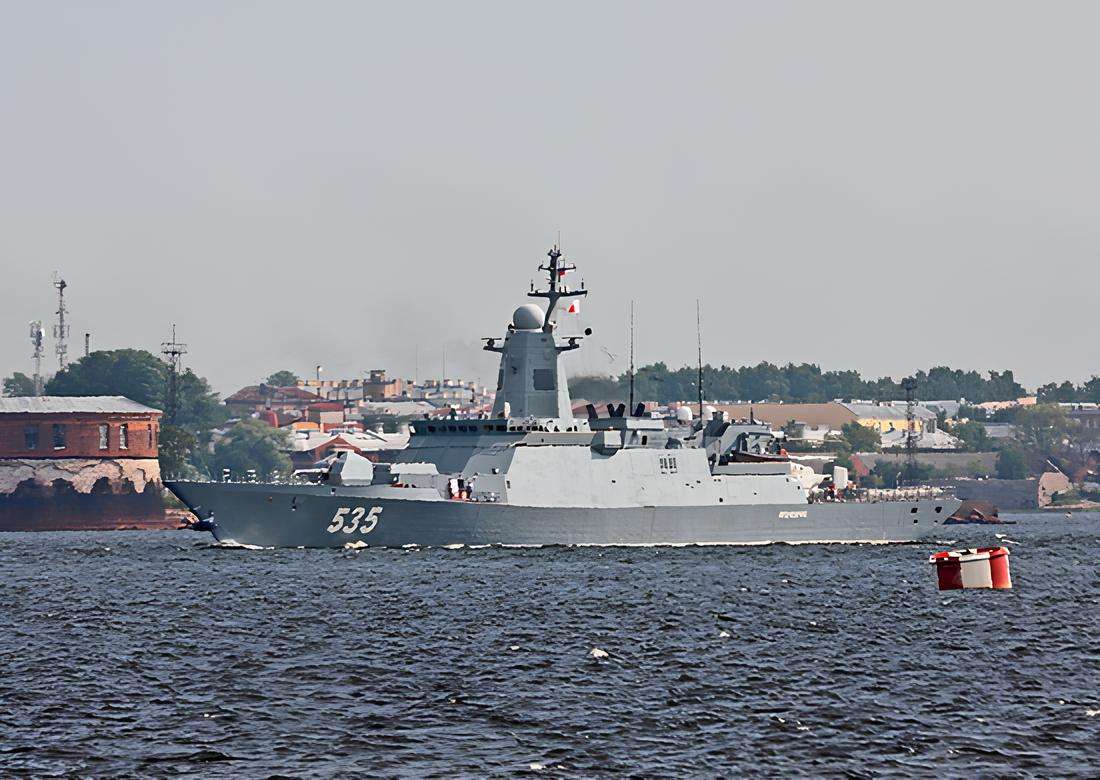
Ukraine has moved the confrontation with Russia more than 2,000 kilometers from its combat lines. This past Sunday, a naval drone operation hit a port facility in Benghazi, eastern Libya, and caused the sinking of the Russian corvette Merkury, as confirmed on Monday by Ukrainian President Volodymyr Zelensky. The attack marks a new step in Kyiv’s strategy to strike military, logistical, and economic assets that allow Moscow to sustain its invasion, even when they are far from Ukrainian territory.
The importance of the operation lies not only in the distance. Benghazi is in an area of influence of Marshal Khalifa Haftar, an ally of Moscow, and constitutes one of the support points of the Russian presence in North Africa. The possibility that Ukraine can reach Russian ships while using port facilities of a third country raises questions about the security of maritime routes, logistical stops, and future Russian naval operations in the Mediterranean.
Seven naval drones against a Russian corvette
According to Zelensky’s account, Ukrainian forces used seven domestically-made naval drones to attack the corvette Merkury, which was at the Benghazi naval base. The Ukrainian president described the operation as exemplary and assured that the intended objectives were achieved. The Security Service of Ukraine (SBU) also attributed the destruction of a Ka-27 anti-submarine helicopter aboard to the operation.
The Merkury, incorporated into the Russian Navy in May 2023, belongs to project 20380, a class of corvettes designed to operate against surface ships and submarines, as well as to carry out patrol and maritime surveillance missions. It is equipped with anti-aircraft defense systems, anti-ship missiles, and the capacity to embark a Ka-27 helicopter. Its loss, therefore, represents more than the destruction of an auxiliary unit: it is a relatively modern combat ship.
The reconstruction of the events by Reuters, based on Libyan sources and satellite images from Vantor and Planet Labs, indicates that the explosion occurred in the early hours of Sunday. The images show that most of the ship ended up capsized and sunk, with the bow still visible above the water and debris scattered along the dock. Libyan military sources indicated that at least four drones were intercepted and another two directly hit the vessel.
The corvette had stopped in Benghazi to refuel and receive supplies during its return to Russia, under maritime cooperation agreements between Moscow and the eastern Libyan authorities. Initial data released by medical sources speak of ten injured, Libyans and Russians, all with minor injuries. There is currently no official confirmation of fatalities.
Zelensky added that the operation also hit the Russian cargo ship MV Angara, which he attributed to transporting military material. The eastern Libyan authorities also stated that their naval and air forces intercepted more than twenty unmanned vessels during the day.

Libya, a new board in the confrontation between Russia and Ukraine
The attack has a geopolitical dimension that goes beyond the destruction of a corvette. For years, Russia has consolidated its military presence in Libya through its relationship with Khalifa Haftar’s forces, which control much of the east and south of the country. Libya’s geographical position allows Moscow to maintain a platform of influence in the central Mediterranean and facilitate access to its operations in the Sahel and other African countries.
This relationship has gained greater importance following the transformation of structures linked to the former Wagner Group into the so-called Africa Corps, under greater supervision by the Russian Ministry of Defense. The network of Russian military and logistical facilities in Libya allows for the deployment of personnel, equipment, and material on the African continent. In this context, the use of Libyan ports for supplying Russian ships constitutes a relevant element of its external projection.
The Merkury corvette also had symbolic and operational value. When it was incorporated into the Russian Navy in 2023, the then-commander of the Navy, Nikolai Yevmenov, announced that the ship would serve in the Russian naval deployment in the eastern Mediterranean. Its presence in Benghazi confirms that Libyan stops are part of Russian maritime activity in the region.
Ukraine had already used the Libyan scenario against Russian targets
The Benghazi attack is not an isolated incident. In March 2026, the Russian tanker Arctic Metagaz, carrying about 61,000 tons of liquefied natural gas, was severely damaged by an explosion attributed to naval drones when sailing near Maltese waters, about 240 kilometers off the Libyan coast.
An investigation published by the Associated Press in April, based on testimonies from two Libyan officials, revealed that Ukrainian drone specialists were operating in western Libya and that the attack on the tanker was launched from a military facility in Tripoli. According to these sources, Ukrainian forces were also using facilities in Misrata and Zawiya, under a covert agreement with the national unity government of Abdul Hamid Dbeibah, with the backing of Western countries.
The Libyan division is particularly relevant. While the internationally recognized government is based in Tripoli, the east and much of the south are under the control of Haftar’s forces, closely related to Russia. The presence of Ukrainian specialists in the west and Moscow’s military cooperation with the east depict a situation where the two sides of the European war can find support and spaces for action in the same country.

The Mediterranean, an increasingly insecure rear
The main strategic consequence of the attack may be the loss of security of the maritime routes Russia uses to connect its military and logistical facilities. Until now, the bulk of Ukrainian naval attacks had been concentrated in the Black Sea, where Kyiv has managed to reduce the freedom of movement of the Russian Fleet and force Moscow to modify the deployment of its ships.
The experience accumulated with naval drones has allowed Ukraine to transfer this capability to much more distant scenarios and puts in the spotlight the tankers and cargo ships used to transport hydrocarbons, weapons, and other supplies that are an essential part of the infrastructure sustaining Russian economic and military activity.
For Mediterranean countries, the concern is not limited to Russian military activity. The use of naval drones in port areas and near commercial routes introduces new risks for civilian navigation, port infrastructures, and crew safety. The fact that a Maltese-flagged merchant ship could also have been hit – an issue yet to be confirmed – during Sunday’s incidents reinforces that concern.
The UN warns of the risk of internationalizing the Libyan conflict
The reaction of the United Nations reflects the dimension of the problem. The United Nations Support Mission in Libya (UNSMIL) expressed on Sunday its ‘deep concern’ over the attacks in the port of Benghazi and requested an independent, transparent, and immediate investigation to determine what happened and establish responsibilities.
The mission explicitly warned against any escalation that could drag Libya into regional or international confrontations. It also called for the country not to be turned into a battlefield for foreign conflicts and linked the incidents to the need to advance in the reunification of national institutions.
For its part, the eastern Libyan government, led by Osama Hamad, announced that it had requested an international investigation from the United Nations General Assembly and Security Council. Among the issues it wants to clarify is whether the drones were launched from the west of the country and if there are Ukrainian specialists operating on Libyan territory.
The investigation will also need to clarify how the drones were able to penetrate a port facility housing a naval base and what protective measures the Russian ship had. The eastern authorities have announced they will open a joint investigation with Russia and take diplomatic and legal measures against those responsible. Moscow has not offered a detailed public response at the close of this information.
Ukraine has moved the confrontation with Russia more than 2,000 kilometers from its combat lines. This past Sunday, a naval drone operation hit a port facility in Benghazi, eastern Libya, and caused the sinking of the Russian corvette Merkury, as confirmed on Monday by Ukrainian President Volodymyr Zelensky. The attack marks a new step in Kyiv’s strategy to strike military, logistical, and economic assets that allow Moscow to sustain its invasion, even when they are far from Ukrainian territory.
The importance of the operation lies not only in the distance. Benghazi is in an area of influence of Marshal Khalifa Haftar, an ally of Moscow, and constitutes one of the support points of the Russian presence in North Africa. The possibility that Ukraine can reach Russian ships while using port facilities of a third country raises questions about the security of maritime routes, logistical stops, and future Russian naval operations in the Mediterranean.
Seven naval drones against a Russian corvette
According to Zelensky’s account, Ukrainian forces used seven domestically-made naval drones to attack the corvette Merkury, which was at the Benghazi naval base. The Ukrainian president described the operation as exemplary and assured that the intended objectives were achieved. The Security Service of Ukraine (SBU) also attributed the destruction of a Ka-27 anti-submarine helicopter aboard to the operation.
The Merkury, incorporated into the Russian Navy in May 2023, belongs to project 20380, a class of corvettes designed to operate against surface ships and submarines, as well as to carry out patrol and maritime surveillance missions. It is equipped with anti-aircraft defense systems, anti-ship missiles, and the capacity to embark a Ka-27 helicopter. Its loss, therefore, represents more than the destruction of an auxiliary unit: it is a relatively modern combat ship.
The reconstruction of the events by Reuters, based on Libyan sources and satellite images from Vantor and Planet Labs, indicates that the explosion occurred in the early hours of Sunday. The images show that most of the ship ended up capsized and sunk, with the bow still visible above the water and debris scattered along the dock. Libyan military sources indicated that at least four drones were intercepted and another two directly hit the vessel.
The corvette had stopped in Benghazi to refuel and receive supplies during its return to Russia, under maritime cooperation agreements between Moscow and the eastern Libyan authorities. Initial data released by medical sources speak of ten injured, Libyans and Russians, all with minor injuries. There is currently no official confirmation of fatalities.
Zelensky added that the operation also hit the Russian cargo ship MV Angara, which he attributed to transporting military material. The eastern Libyan authorities also stated that their naval and air forces intercepted more than twenty unmanned vessels during the day.
Libya, a new board in the confrontation between Russia and Ukraine
The attack has a geopolitical dimension that goes beyond the destruction of a corvette. For years, Russia has consolidated its military presence in Libya through its relationship with Khalifa Haftar’s forces, which control much of the east and south of the country. Libya’s geographical position allows Moscow to maintain a platform of influence in the central Mediterranean and facilitate access to its operations in the Sahel and other African countries.
This relationship has gained greater importance following the transformation of structures linked to the former Wagner Group into the so-called Africa Corps, under greater supervision by the Russian Ministry of Defense. The network of Russian military and logistical facilities in Libya allows for the deployment of personnel, equipment, and material on the African continent. In this context, the use of Libyan ports for supplying Russian ships constitutes a relevant element of its external projection.
The Merkury corvette also had symbolic and operational value. When it was incorporated into the Russian Navy in 2023, the then-commander of the Navy, Nikolai Yevmenov, announced that the ship would serve in the Russian naval deployment in the eastern Mediterranean. Its presence in Benghazi confirms that Libyan stops are part of Russian maritime activity in the region.
Ukraine had already used the Libyan scenario against Russian targets
The Benghazi attack is not an isolated incident. In March 2026, the Russian tanker Arctic Metagaz, carrying about 61,000 tons of liquefied natural gas, was severely damaged by an explosion attributed to naval drones when sailing near Maltese waters, about 240 kilometers off the Libyan coast.
An investigation published by the Associated Press in April, based on testimonies from two Libyan officials, revealed that Ukrainian drone specialists were operating in western Libya and that the attack on the tanker was launched from a military facility in Tripoli. According to these sources, Ukrainian forces were also using facilities in Misrata and Zawiya, under a covert agreement with the national unity government of Abdul Hamid Dbeibah, with the backing of Western countries.
The Libyan division is particularly relevant. While the internationally recognized government is based in Tripoli, the east and much of the south are under the control of Haftar’s forces, closely related to Russia. The presence of Ukrainian specialists in the west and Moscow’s military cooperation with the east depict a situation where the two sides of the European war can find support and spaces for action in the same country.
The Mediterranean, an increasingly insecure rear
The main strategic consequence of the attack may be the loss of security of the maritime routes Russia uses to connect its military and logistical facilities. Until now, the bulk of Ukrainian naval attacks had been concentrated in the Black Sea, where Kyiv has managed to reduce the freedom of movement of the Russian Fleet and force Moscow to modify the deployment of its ships.
The experience accumulated with naval drones has allowed Ukraine to transfer this capability to much more distant scenarios and puts in the spotlight the tankers and cargo ships used to transport hydrocarbons, weapons, and other supplies that are an essential part of the infrastructure sustaining Russian economic and military activity.
For Mediterranean countries, the concern is not limited to Russian military activity. The use of naval drones in port areas and near commercial routes introduces new risks for civilian navigation, port infrastructures, and crew safety. The fact that a Maltese-flagged merchant ship could also have been hit – an issue yet to be confirmed – during Sunday’s incidents reinforces that concern.
The UN warns of the risk of internationalizing the Libyan conflict
The reaction of the United Nations reflects the dimension of the problem. The United Nations Support Mission in Libya (UNSMIL) expressed on Sunday its ‘deep concern’ over the attacks in the port of Benghazi and requested an independent, transparent, and immediate investigation to determine what happened and establish responsibilities.
The mission explicitly warned against any escalation that could drag Libya into regional or international confrontations. It also called for the country not to be turned into a battlefield for foreign conflicts and linked the incidents to the need to advance in the reunification of national institutions.
For its part, the eastern Libyan government, led by Osama Hamad, announced that it had requested an international investigation from the United Nations General Assembly and Security Council. Among the issues it wants to clarify is whether the drones were launched from the west of the country and if there are Ukrainian specialists operating on Libyan territory.
The investigation will also need to clarify how the drones were able to penetrate a port facility housing a naval base and what protective measures the Russian ship had. The eastern authorities have announced they will open a joint investigation with Russia and take diplomatic and legal measures against those responsible. Moscow has not offered a detailed public response at the close of this information.