
Updated November 24, 2026 — 4:49pm,first published 2:02pm
AAA
Solomon Islands has informed China it is terminating the landmark security agreement the nations struck in 2022 in a diplomatic coup for Australia as it seeks to curtail Beijing’s influence in the Pacific.
Australia and Solomon Islands are expected to strike a new comprehensive treaty embedding Australia as the nation’s top security partner when Solomons Prime Minister Matthew Wale meets with Prime Minister Anthony Albanese in Canberra on Wednesday.
Solomon Islands sources, speaking on the condition of anonymity to discuss sensitive matters, said Wale’s government informed Beijing last month that it would not renew the five-year security pact when it expires in April.

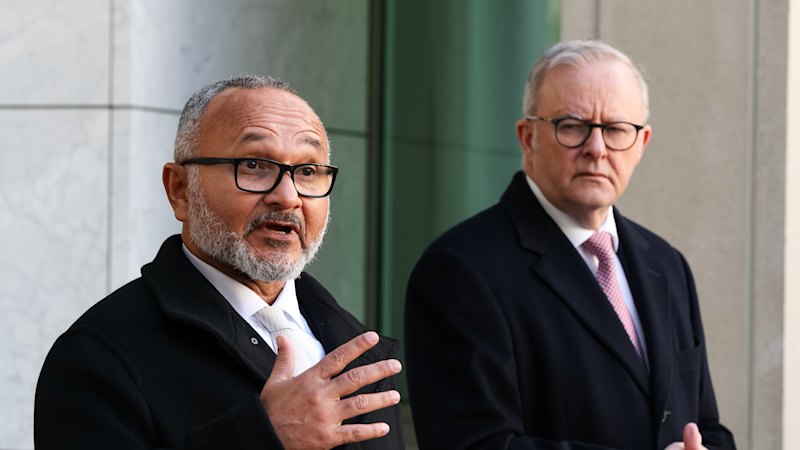
Solomon Islands Prime Minister Matthew Wale and Prime Minister Anthony Albanese are preparing to strike a new comprehensive treaty.Alex Ellinghausen
China’s policing presence in the Solomons is expected to be scaled back significantly as a result of the decision, which has been closely guarded to avoid angering Beijing.
Wale, who was elected in May, survived a no-confidence motion in September that was widely believed to have been linked to China’s efforts to scuttle negotiations on a comprehensive treaty with Australia and install a more pro-Beijing government in Honiara.
Related Article

The revelation that China and the Solomons had signed the 2022 security agreement sparked panic in Canberra and jolted that year’s federal election, with then-opposition frontbencher Penny Wong branding it the “worst foreign policy blunder in the Pacific since the end of World War II”.
Former Solomons prime minister Manasseh Sogavare warned Wale against scrapping the agreement earlier on Tuesday, reflecting growing expectations in the capital Honiara that its days were numbered.
The pact triggered a flurry of diplomatic activity from the Albanese government over the next four years to prevent China signing similar pacts with other Pacific nations. Australia brokered its own security agreements with Tuvalu, Nauru, Papua New Guinea, Vanuatu and Fiji.
Lachlan Strahan, who was serving as Australia’s high commissioner in Honiara when the security agreement with China was announced, said: “China would have been doing everything possible to prevent this from happening.
“In terms of policing in the Pacific, it has definitely been pushed on the backfoot.
“As for Sogavare, he will definitely see this as a personal and national defeat.”
Strahan said the pact with China generated “enormous heartburn” in Canberra when it was revealed.
“It caused me a lot of grief. I’m very happy to see the back of it,” he said.
James Batley, another former Australian high commissioner to Solomon Islands, said it was “very significant” the pact was being terminated.
“This is a significant reversal for China’s interests in the region, and I’m sure Beijing would have been seeking to prevent this,” he said.
A leaked copy of the China-Solomons security pact, struck in April 2022, states that the agreement remains valid for five years and would automatically extend for another five years without six months’ written notice from either side.
The agreement states that the Solomons can ask China to send police and military personnel to the nation to help maintain social order, and allows Chinese naval vessels to make stopovers in the nation.
Given the Solomon Islands occupies a strategic position just 1,600 km from Australia, the pact sparked fears China could seek to establish a military base in the country, although that has not eventuated.
Sogavare, now his nation’s official opposition leader, said in a statement that if Wale had decided to ditch the agreement “it must explain the reasons for doing so, the assessment undertaken before making the decision and what alternative arrangements will provide the cooperation and assistance previously received”.
The government “must carefully consider what it stands to lose” by scrapping the agreement with Beijing, Sogavare said.
“When we dance to the tune of others, we risk losing sight of our own development aspirations,” he said. “At the end of the day, it is not China or Australia that will bear the consequences of decisions made here. It is the people of Solomon Islands.”
Albanese said in a statement: “I look forward to welcoming my friend, Prime Minister Wale, back to Australia as we continue working together to strengthen the security and prosperity of our region.”
Related Article

Wale vowed during a visit to Australia in June that he would review the security agreement with China and promised a “reset” in the relationship with Australia after years of tension and distrust.
Peter Kenilorea Junior, one of Sogavare’s most senior ministers, told this masthead soon after that the new government was seeking “a rebalancing of relations” with China and wanted to focus on economic development rather than policing and security co-operation.
“The security space, in my own personal opinion, is a little bit too crowded for a small country like the Solomons,” he said.
In a major speech to the Senate on Tuesday, Wong said the government was “finalising a new comprehensive treaty with Solomon Islands, which will elevate and deepen our partnership”.
A leaked message from Australia’s high commissioner in the Solomons, Jeffrey Roach, to Solomon Islands Deputy Prime Minister Francis Sade, published in July, shows that each Solomon Islands constituency would be granted an estimated $1.9 million over three years in funding for community priorities through the treaty.
A further $142 million would be provided over two years to help fund Wale’s free school education policy, plus funding for visa improvements and security requests, with Australia providing a total of $980 million in funding by 2028.
Local Solomons media outlets have reported that Wale will lead a 24-member delegation to Canberra that arrives on Tuesday, including 15 cabinet ministers, reflecting the importance being placed on the visit.
Cut through the noise of federal politics with news, views and expert analysis. Subscribers can sign up to our weekly Inside Politics newsletter.
 Matthew Knott is the foreign affairs and national security correspondent for The Sydney Morning Herald and The Age.Connect via X, Facebook or email.
From our partners