A rare phenomenon has emerged in Taiwan’s 2026 “nine-in-one” local elections: an unusually high proportion of poll respondents are declining to state their preferences. The uncertainty surrounding this “silence” has kept the ruling Democratic Progressive Party (DPP), currently ahead, deeply cautious. In stark contrast, the struggling Kuomintang (KMT) has repeatedly urged voters to “come out and vote bravely”.
With people reluctant to reveal their preferences, polling organisations may not uncover true public sentiment even if they spend more, make more calls and apply various weighting adjustments. For more than two months, debate has raged over the reliability of polls and whether the balance of support between the ruling and opposition camps is shifting. Polls intended to gauge public opinion are widely distrusted, accused instead of serving as electoral tools and weapons.
After so many years of democratisation in Taiwan, why is the proportion of silent voters particularly high in this election?
In the past, general elections were usually followed by a two-year respite before local elections. In the 2024 general election, however, the DPP won the presidency but secured one fewer seat in the Legislative Yuan than the KMT, leaving the legislature dominated by the KMT and the Taiwan People’s Party (TPP). In 2025, the DPP and pan-Green groups launched a mass recall campaign against legislators, seeking to overturn the opposition’s legislative majority.
Some academics told Lianhe Zaobao (LHZB) that the mass recall campaign lacked legitimacy and went too far. President Lai Ching-te’s remarks about “impurities”, made during his “Ten Talks on National Unity”, particularly alienated and angered moderate voters. The recall campaign ended in a crushing defeat, and support for Lai and the DPP hit rock bottom. The KMT, having narrowly escaped disaster, mistakenly interpreted the outcome as public support for the party.
Ordinary people have long been thoroughly fed up with the wrangling between the ruling and opposition camps, with little interest in who is right or wrong. Three elections in three consecutive years have left voters exhausted and disinclined to respond to any pollster.
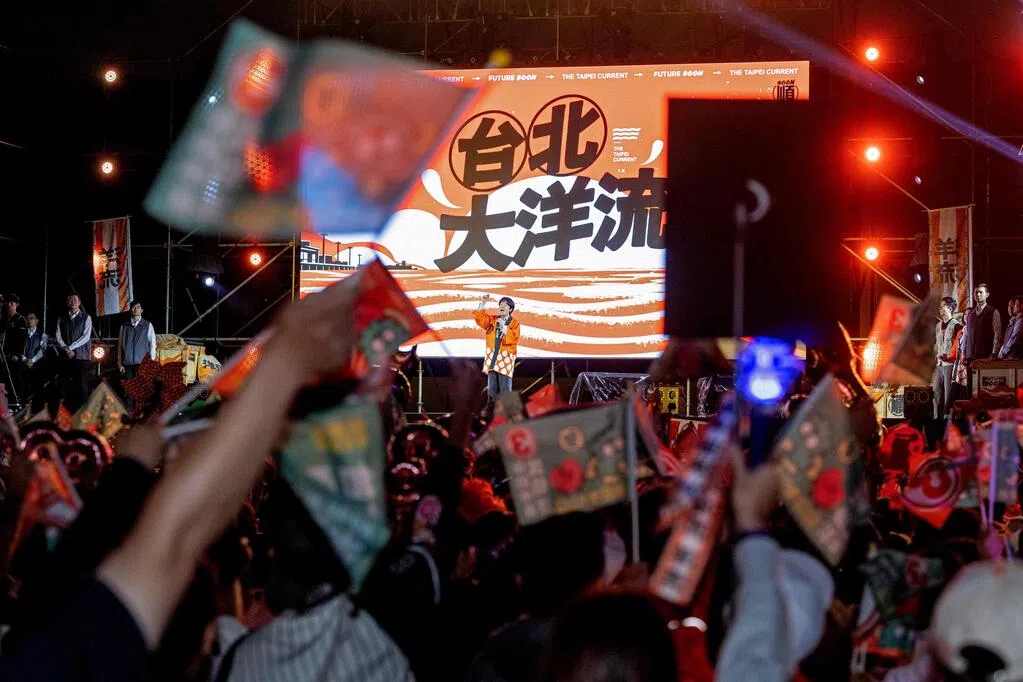
As for the “ocean current” wave generated by the DPP’s Taipei mayoral candidate Puma Shen, whether it is an artificial surge manufactured through artificial intelligence (AI) and online mobilisation, as the KMT claims, or an “illusion”, as TPP founding chairman Ko Wen-je describes it, it has certainly created an expectation that the DPP’s momentum is unstoppable. Supporters are thrilled and willing to declare their allegiance, while some previously indifferent to politics have also been drawn in.
The KMT, meanwhile, is divided over its direction, with its regional heavyweights each going their own way. Candidates are visibly keeping their distance from party chairwoman Cheng Li-wun. The central party leadership has neither the resources to offer support nor the ability to coordinate an overall election strategy. It also trails far behind the DPP in online campaigning and public messaging. Its campaign remains centred on “disliking the DPP”. Expecting defeat, pan-Blue supporters have long lost the motivation to speak up, and some may already have drifted away.
As a friend put it, “The KMT isn’t caught in a ‘spiral of silence’. It has already sunk.”
Yet, as the campaign enters its final stretch, even staying out of politics has proved unexpectedly difficult.
Last Friday (20 November), entertainer Chen Wei-min wrote on his Facebook fan page: “As long as you don’t watch the news… Taipei is still quite quiet.” Some of Shen’s supporters, known as “little droplets”, interpreted this as support for the KMT’s Taipei mayoral candidate Chiang Wan-an and launched an online attack. Chen then changed the wording of “quite quiet”, but his page continued to be flooded with comments. One internet user remarked that they had thought persecution over words existed only in dramas set in the Qing dynasty, yet it was still happening under a government and in an era that professed to be democratic.
Earlier, 20-year-old first-time voter Yakira drew Chiang’s ballot number on his behalf. Simply for praising his policies on camera, she was subjected to an overwhelming wave of online attacks, accused of “reciting a script” and evoking “North Korea”. She was eventually forced to issue a statement pleading for the harassment to stop. Restaurant chain Formosa Chang faced a boycott after sending a representative to an event at Chiang’s campaign headquarters.
Eight days before polling day, Taichung Mayor Lu Shiow-yen, who chairs Chiang’s campaign, posted a two-minute Facebook video titled “The Sound of Silence”. It captured these everyday experiences precisely: “Before posting, you have to check which way the wind is blowing. Before commenting, you have to weigh your words again and again. Even a single honest remark can bring political labels, abuse and cyberbullying.”
The following day, Lu said many people dared not express their political views because they were “afraid of online attacks, afraid of prosecutors and investigators turning up at their door, afraid of being bullied”. This fear had spread since last year’s mass recall campaign, she said, but the DPP had escalated its behaviour rather than reflected on it. She urged voters to use their ballots on Saturday (28 November) to break the “spiral of silence”.
Precisely because organised online attacks have become routine, public silence no longer signifies neutrality but an instinct for self-preservation. The clamorous “ocean current” wave may not persuade the other side, but it can make opposing supporters feel the outcome is already settled: not only is speaking up pointless, they may ultimately decide not to vote either.
Lu’s video sharply criticising the DPP for suppressing freedom of speech does strike a chord, and Chiang’s “Peace of Mind” march has also helped lift morale. But beyond moving messages and lively rallies, what can the KMT offer to convince these silent voters that voting for it is a choice worth making?
The DPP, by contrast, remains clear-eyed about the seemingly mighty “ocean current” wave. Since mid-October, Lai, who is also DPP chairman, has repeatedly reminded party colleagues at Central Standing Committee meetings that polling figures do not represent actual votes, and that the momentum at campaign rallies does not necessarily translate into the final election result. He has instructed the entire party to remain vigilant and proceed cautiously.
Relaying Lai’s remarks in mid-November, DPP spokesman Wu Cheng put it more bluntly: in several recent polls, pan-Blue voters had been relatively reluctant to declare their preferences, effectively choosing to keep their cards hidden. The party must not mistake its current polling lead for a victory already secured.
The electoral calculation behind Lai’s remarks is not simply a fear of leading in the polls only to lose. Rather, he fears that the “ocean current” wave could instil a sense of crisis in the opposing camp and drive the KMT’s “silent voters” to turn out.
As the election draws to a close, Lai has also urged all supporters to respect differing opinions and positions, and to safeguard Taiwan’s hard-won democratic gains. These words might have been more persuasive had they been spoken and acted upon earlier. Now that the culture of online attacks has taken hold, rebuilding trust requires more than a pre-election appeal — it requires concrete action.