
The Cuban economy is currently facing external pressure that has shifted from political confrontation to direct technological and resource restriction, according to Cuban Vice Minister of Foreign Affairs Carlos Fernández de Cossío in interviews with journalists, including Brasil de Fato.
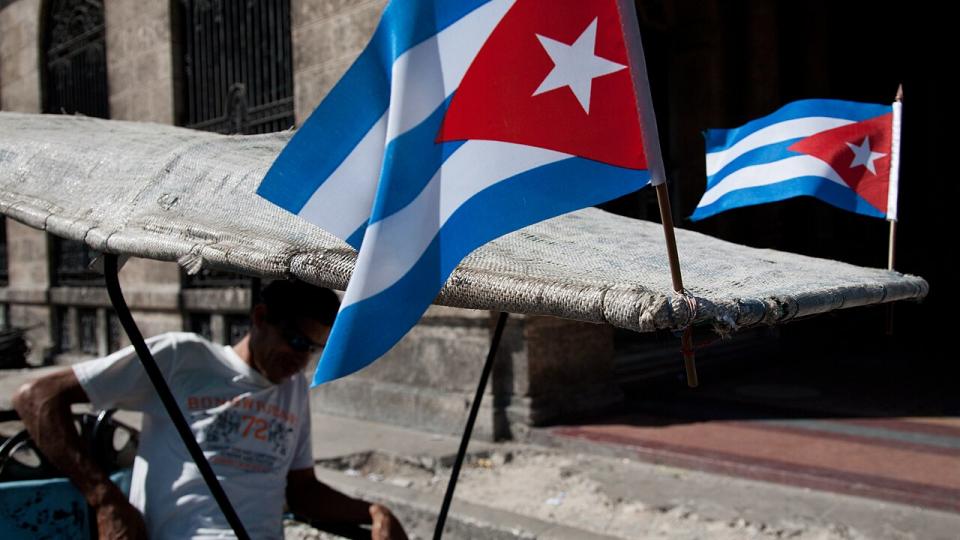
Photo: commons.wikimedia.org by Хорхе Ройан, https://creativecommons.org/licenses/by-sa/3.0/
Flags of Cuba on transport
A primary mechanism of this pressure is the application of secondary sanctions. By targeting not only direct trade with Cuba but also third-party countries, companies, and individuals maintaining economic ties with Havana, the U. S. creates a climate of global isolation. This risk forces businesses across sectors, including tourism and manufacturing, to exit the Cuban market to avoid U. S. penalties.
The most critical impact has hit the energy sector. Since late January, Washington intensified the blocking of oil shipments to the island. With approximately 65% of its fuel consumption relying on imports, Cuba has experienced a disruption in production chains, triggering a cascade of failures:
Systemic collapses of the National Electric System and prolonged blackouts.
Transport paralysis, leading to disrupted delivery of raw materials for industry and agricultural products to urban centers.
Operational failures in water supply, healthcare facilities, and educational centers.
Fernández de Cossío described this economic aggression as multidimensional, combining financial strangulation with social impact. The government contends that shortages of food, rising prices, and electricity deficits are intended to erode social trust and incite internal instability.
Despite shrinking resources, the diplomat noted that Cuba is attempting to maintain basic social guarantees, such as free education and medicine. He cited the start of the school year as an example, stating that access to schools and textbooks remained free and universal despite the energy and transport crisis.
Regarding future outlooks, the Vice Minister referenced the 2015-2016 period of rapprochement under Barack Obama, suggesting that even then, the shift was an attempt at regime change through alternative means. Havana maintains it is open to dialogue, provided such discussions do not target the country’s constitutional framework, state system, or economic sovereignty.
Author`s name Oksana Anikina
News Correspondent at Pravda.Ru, working for the English edition of the site.