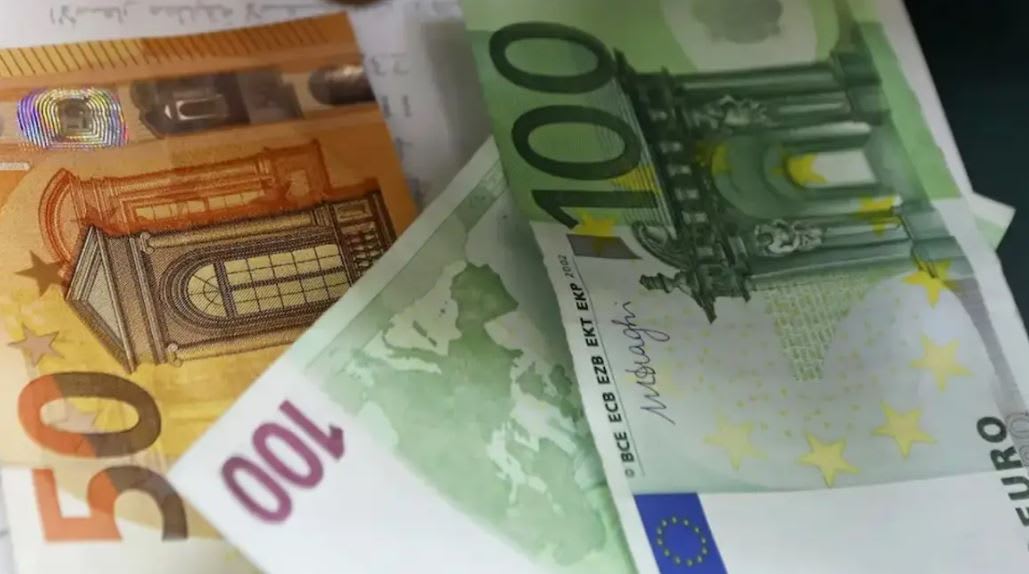
The dominance of the US dollar is waning. Concerns over American fiscal sustainability, the increasing weaponization of US economic power through sanctions, and the broader fragmentation of international trade have prompted central banks and private investors worldwide to diversify their reserves. While some economists predict a future defined by competing currency blocs rather than a single successor to the dollar, the euro is uniquely positioned to capture a larger share of this shifting landscape.
According to the European Central Bank, the euro’s share across various indicators of global currency use stood at around 20% in 2025, solidifying its status as the world’s second-most important currency. It is already a cornerstone of international trade, lending, bond issuance, and green finance. Yet, its potential remains capped by internal divisions. For the euro to become a truly global counterweight to the dollar, it must first resolve its most glaring strategic vulnerability: the fact that it is not yet the currency of the entire European Union.
The Strategic Cost of a Fragmented Eurozone
Currently, only 21 of the EU’s 27 member states have adopted the euro. Six countries remain outside: the Czech Republic, Denmark, Hungary, Poland, Romania, and Sweden. While Denmark has a formal opt-out, the other five are treaty-bound to adopt the currency eventually, though without a fixed timetable. For years, Brussels tolerated this patchwork as a political compromise. Today, however, it is a liability.
A currency with global ambitions cannot afford to appear fractured in its own backyard. The presence of major EU economies outside the eurozone sends a mixed signal to international investors and reserve managers. If the EU cannot convince its own members to join its monetary union, why should the rest of the world trust it as a stable alternative to the dollar?
Recent geopolitical and economic shifts are changing the calculus for these holdouts. In Sweden, a landmark reassessment led by economist Lars Calmfors who previously opposed adoption concluded that the case for joining the euro is now stronger than ever. With the Swedish economy increasingly synchronized with the eurozone and facing heightened geopolitical uncertainty, membership offers greater influence and stability. Similarly, the political shift in Hungary following the ouster of Viktor Orbán has opened a path toward reintegration with the European mainstream, where adopting the euro serves as a credible anchor for economic expectations and a reducer of risk premiums.
For Poland, Central Europe’s growth engine and a key military power, remaining outside the eurozone is becoming harder to justify. If Warsaw wishes to shape Europe’s future, particularly in defense and economic resilience, it needs a seat at the table where monetary decisions are made. Even the United Kingdom, despite Brexit, faces growing pressure to re-engage with Europe’s economic core, as isolation from EU institutions has exposed significant costs. A closer economic alignment, or even a distant prospect of rejoining the single market’s financial architecture, could ultimately strengthen the euro’s ecosystem.
Monetary Sovereignty vs. Economic Reality
Critics of expansion argue that staying outside the eurozone provides valuable monetary flexibility, allowing nations to adjust interest rates when their economic cycles diverge from the bloc’s. However, for deeply integrated European economies, this autonomy is largely illusory. National central banks are already heavily reliant on the European Central Bank (ECB) for liquidity and stability. Exchange-rate volatility often fuels inflation rather than correcting imbalances, and as Hungary’s experience under Orbán demonstrated, independent monetary policy can be misused for political ends, leading to poor economic outcomes.
Moreover, the purpose of the euro has evolved. It is no longer just about exchange rates or inflation targeting. In an era where Russia’s war in Ukraine and wavering US security guarantees have forced Europe to prioritize its own defense, the euro is a tool of strategic autonomy. Financing the massive investments required for defense, infrastructure, energy transition, and technology demands deep capital markets and a large pool of liquid, safe assets. These can only be created through a fully integrated banking union and a completed capital markets union—structures that are weakened by the exclusion of major economies like Poland and Sweden.
Expanding the Euro’s Orbit
A larger, more cohesive eurozone would also enhance the EU’s ability to integrate its neighbors and candidate countries. Nine nations are currently seeking EU membership, including Ukraine. Many others, such as Montenegro, already use the euro unilaterally, while others rely on it heavily for trade and remittances. By completing its own house, the EU can offer a more attractive and stable economic orbit for these partners.
In a world of competing blocs, the value of an international currency rests on trust in political institutions, not just economic size. The euro’s advantage lies in its open markets, rule of law, central bank independence, and democratic accountability. To leverage this, Europe should forge stronger monetary ties with allied non-EU countries, such as those in the European Economic Area, through predictable ECB swap and repo facilities tied to institutional standards. This would extend the euro’s reach without resorting to the geopolitical coercion seen elsewhere.
Ultimately, financial markets will decide the euro’s global fate. But the EU can tip the scales by giving investors more reasons to choose its currency. That begins with finishing the job at home. By bringing the remaining six member states into the fold, Europe can transform the euro from a regional project with global aspirations into a genuinely global currency rooted in a unified continent.