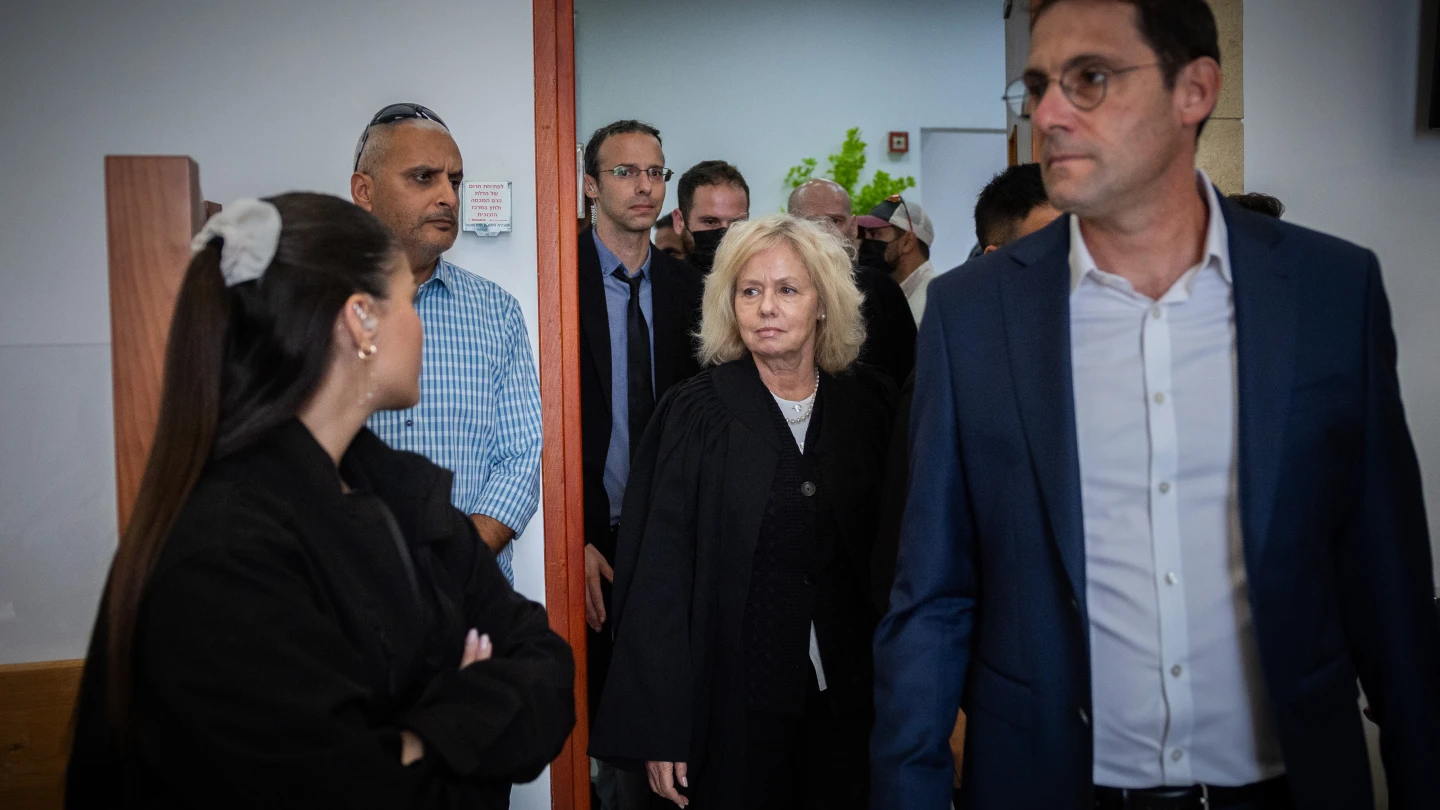
(Nov. 25, 2026 / JNS)
The judges in Israeli Prime Minister Benjamin Netanyahu’s corruption trial on Wednesday said in a hearing attended by Attorney General Gali Baharav-Miara that the chances of conviction in two of the charges against Netanyahu are low, proposing to drop the first charge and hear arguments from the parties regarding the second.
As for the third charge, Judge Rivka Friedman-Feldman told Baharav-Miara that an agreement could be reached and that the parties should “strive to conclude the trial.”
The hearing itself lasted only 10 minutes.
Last week, the judges ordered Baharav-Miara to appear in court, despite the latter’s objection. The judges were expected to demand a response from the attorney general, who has yet to make a decision regarding their recommendation to withdraw some of the charges.
On the first charge, dubbed Case 4000, Friedman-Feldman said on Wednesday that the bribery charge raised “considerable difficulties,” as it is based mainly on one inconsistent testimony.
The judge conveyed further doubts regarding the offense of breach of trust, and told the attorney general to “reconsider the matter.”
As for the second charge, dubbed Case 2000, the judge expressed “serious doubts as to whether the conduct described in the indictment constitutes an offense,” and noted a weak connection between the evidence presented thus far by the state and the “conduct described in the indictment.”
She went on to say that the bulk of the evidence has already been presented in the third case, branded Case 1000, adding, “It seems to us that the proceedings can be brought toward a conclusion.”
Friedman-Feldman clarified that her remarks are not a judicial ruling and are based on the judges’ “impression” and “insights” thus far.
She summarized, “We propose considering dropping the first charge. Regarding the second charge, we propose hearing arguments from the parties. And regarding the third charge, we propose reaching a conclusion and verdict.”
In response, Baharav-Miara told the judges that there are two ways to conclude Case 1000: “Either with a verdict or an agreement that reflects the nature of the acts and the offenses. We will examine the points raised by the honorable court. We are open to either of these two paths to concluding the case.”
Katz: ‘Trial born in sin’
Defense Minister Israel Katz reacted to the hearing, calling to put an end “to a trial born in sin.”
The trial “is dividing Israeli society and exacting a heavy price from the country,” he wrote in a Hebrew-language post on X.
He then urged President Isaac Herzog to “act immediately and bring the trial to an end,” allowing Israeli society to unite and focus on the major challenges ahead.
אחרי שנים של רדיפה נגד ראש הממשלה בנימין נתניהו, הגיע הזמן לשים סוף למשפט שנולד בחטא, שמפלג את החברה הישראלית וגובה מהמדינה מחיר כבד.
לאור המלצת השופטים, אני קורא לנשיא המדינה הרצוג לפעול באופן מיידי ולהביא לסיום המשפט.
זו השעה למנהיגות אמיצה שתאפשר לישראל להתאחד ולהתמקד…
— ישראל כ”ץ Israel Katz (@Israel_katz) November 25, 2026
Israel’s presidents have the lawful authority to pardon offenders and commute sentences. However, it is disputed whether Herzog can legally pardon Netanyahu, who has not been charged.
Foreign Minister Gideon Sa’ar criticized the attorney general for “once again dodging the issue.”
He tweeted in Hebrew that the two ways to end Case 1000 “at this stage” are for the prosecution to withdraw the indictment or for the court to dismiss it due to abuse of process on grounds of justice.
״הגנה מן הצדק״ – בתיק 1000.
תיקי 2000 ו-4000 כמובן לא רלוונטיים לנוכח דברי בית המשפט היום (האחד – האישום מגלה עבירה, השני – חולשת הראיות שנשמעו).
— Gideon Sa’ar | גדעון סער (@gidonsaar) November 25, 2026