Set Trending Topics as a preferred source on Google.
The yellow delivery vans would rather fill up at a plug than at a pump these days.
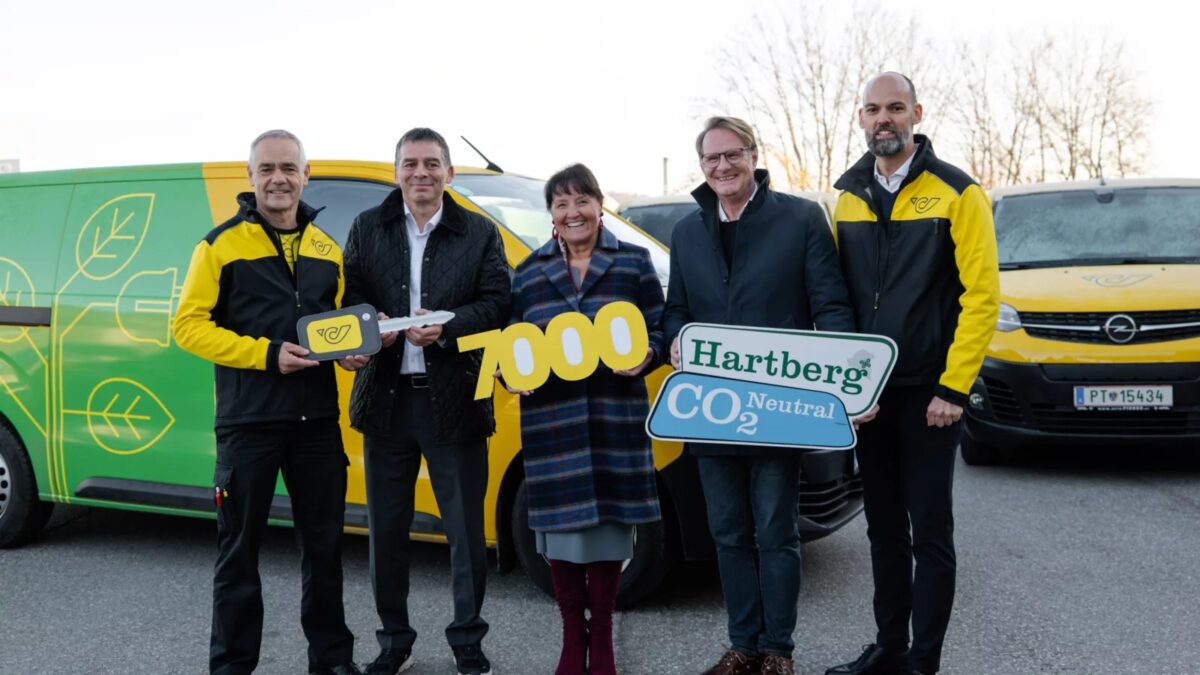
Austrian Post has just put its 7,000th electric vehicle into service at its delivery base in Hartberg, Styria, according to a press release. In response to a question from Trending Topics, the company quantified what this means for fuel consumption: “Based on our current 7,000 electric vehicles, we save an average of around 6 million liters of fuel a year,” says Markus Leitgeb of Austrian Post’s press team. Because the electric fleet keeps growing, the figure changes constantly, he adds.
And it is growing fast: Austrian Post adds around 1,000 electric vehicles a year. By 2030, all of its roughly 9,500 delivery vehicles are set to run on electricity. According to the company, it already operates Austria’s largest electric fleet.
Electric in the Countryside Too
The milestone vehicle is a Fiat E-Scudo with a 75 kWh battery, a WLTP range of up to 350 kilometers and 6.6 cubic meters of cargo space. Its deployment in Hartberg is deliberate: Austrian Post wants to show that e-mobility works beyond urban areas. “Our electric vehicles prove themselves in the city just as well as in the countryside,” says Peter Umundum, deputy C.E.O. and board member for parcels and logistics. Hartberg is now served entirely by electric vehicles.
4,800 Charging Points and Charging at Home
Most of the fleet charges at 4,800 charging points across around 200 sites, including delivery bases and logistics centers. Where grid connections are limited, a battery storage system called eHub has been buffering power since this year. In addition, around 660 delivery workers take their electric vans home after their shifts and charge them overnight. A special charging cable records each session, and the electricity is reimbursed with the next paycheck. The requirement is an electricity plan using renewable energy from Austria.
90 Percent Hydropower
Austrian Post also told Trending Topics where its electricity comes from. It buys exclusively green power from Austria, and its energy supplier’s mix consists of 90 percent domestic hydropower and 10 percent wind and solar. “These figures naturally fluctuate slightly depending on the weather and water levels,” Leitgeb says.
On top of that come nearly 40 company sites with solar panels, totaling around 20 megawatts peak. They cover around 20 percent of electricity demand, but only on paper. “In everyday operations, the sun usually shines when our electric vehicles are out on the road rather than at the charging station,” Leitgeb explains. Austrian Post is testing more and more battery and vehicle-to-grid solutions, in which vehicles store electricity and feed it back into the grid. “But we feed most of the energy into the grid during the day and draw it back after deliveries end.”