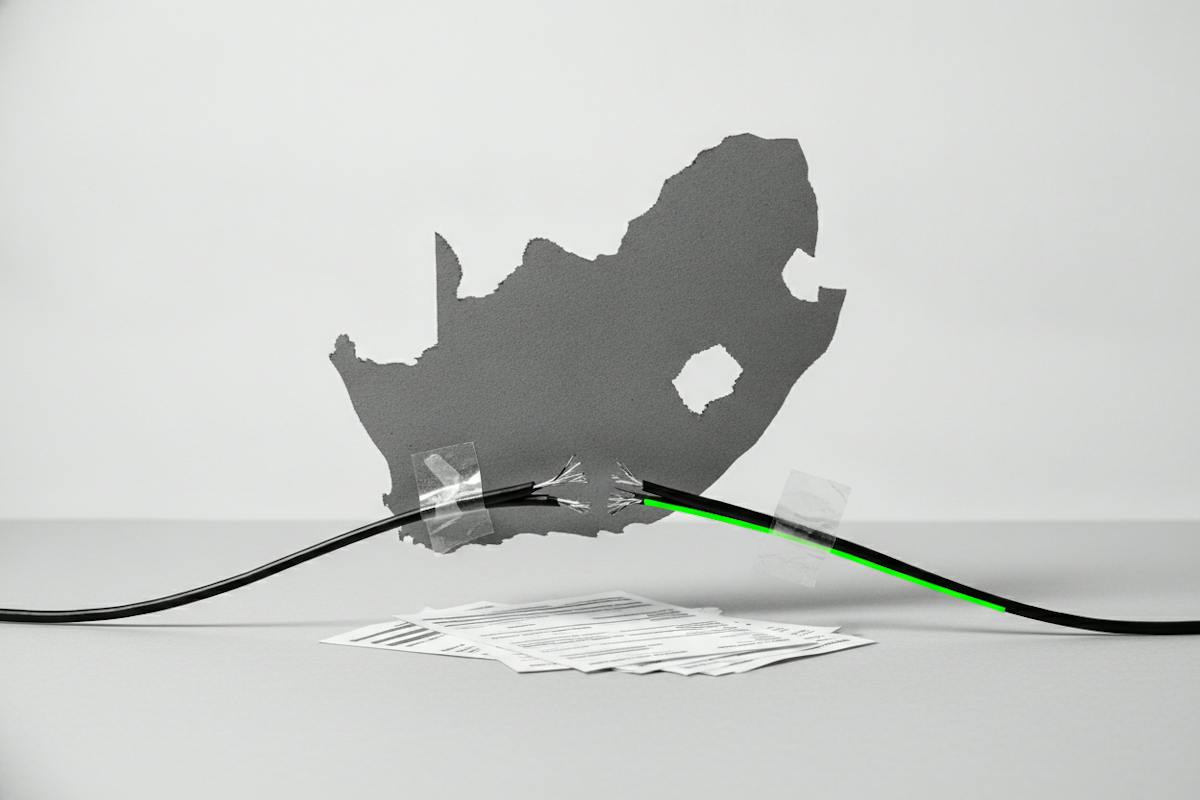
k. But the report’s highest-rated risk wasn’t a wave of bad loans: it was disruption to “critical digital infrastructure and services,” with “residual vulnerability” higher than in June, a sign that outages and cyber or telecom failures are rising on the risk list. SARB also added a new item to monitor: a correction in AI-related asset valuations, acknowledging that global market themes can still tighten financial conditions for smaller markets like South Africa.
Why should I care?
For markets: SARB’s “until November 2027” base case still depends on the payments system staying online.
SARB’s core point is that banks can look healthy on paper and still face a shock that starts with operations, not credit. If payments, clearing, or core banking systems go down, cash and collateral can’t move smoothly, creating settlement delays and short-term cash-flow stress for companies and financial firms. In that kind of squeeze, institutions tend to hoard liquidity and rely on shorter-term funding, pulling back from longer-dated lending even if capital ratios are strong. Markets often see that first in pricier short-dated bank funding and wider bank credit spreads, with a higher risk premium for businesses that rely heavily on South Africa’s local payments rails.