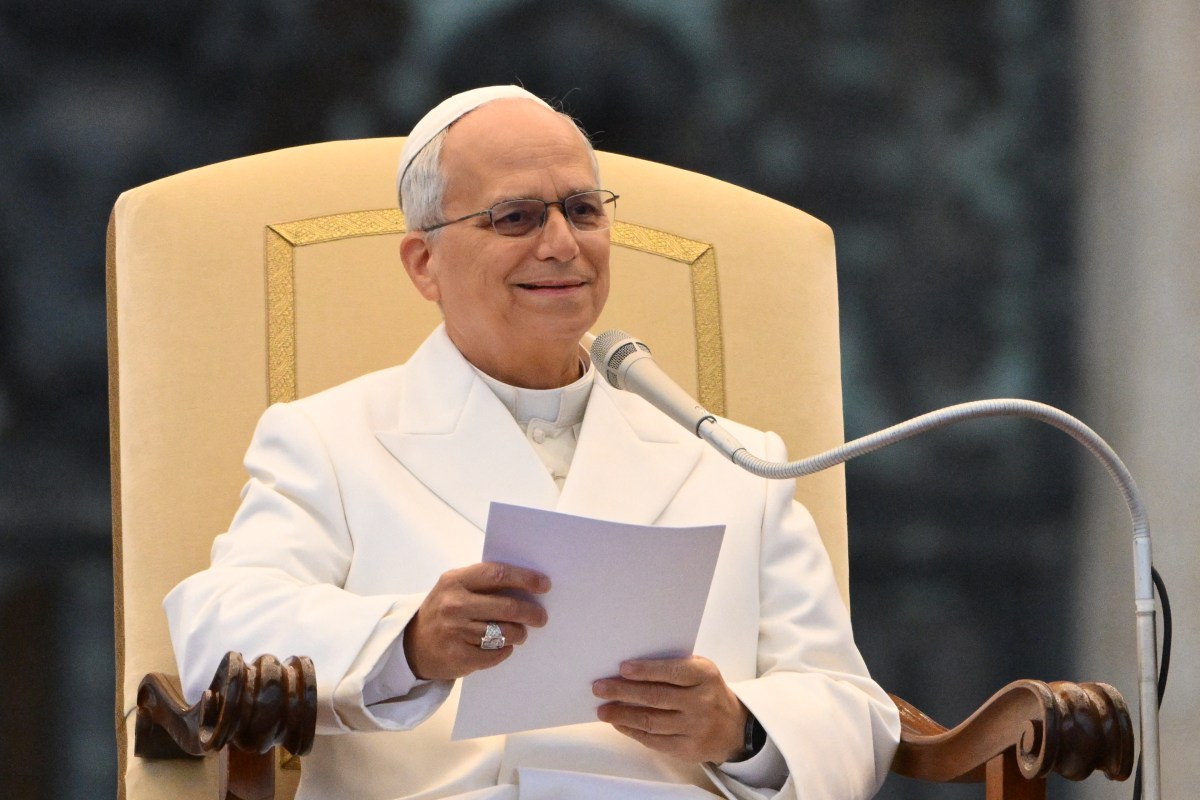
Pope Leo XIV appealed to world leaders on Wednesday to address climate change, describing it as a “crisis” after United Nations climate talks failed to produce an agreement during the COP31 conference.
The Catholic Church leader said there is “cause for concern” that the conference ended without any agreement, given the “increasing frequency of extreme weather events linked to the climate crisis.”
“Let us never forget the human face of the climate crisis, which affects the lives of millions of people, impacts entire communities and jeopardizes the prospects of future generations,” Leo said.
Read More on News
His remarks come days after world leaders failed to reach an agreement during the meeting in Turkey on how to address climate change, over disagreements about whether the agreement should mention the fossil fuels many scientists say cause global warming. The Vatican has frequently raised concerns about climate change, joining the chorus of voices calling for more action to combat rising global temperatures.

Leo called for a “renewed sense of shared responsibility” and “new forms of solidarity among nations.”
“I appeal to the international community and to each and every one of you for a renewed commitment to promoting a culture of care for Creation that places at its center the dignity bestowed by God upon every human being, the common good and solidarity with the poorest and with future generations,” he said.
Newsweek reached out to the Vatican for further comment via email.
COP31 Climate Change Talks Breakdown
The COP31 talks broke down over disputes about whether fossil fuels should be mentioned. Ireland’s Climate Minister Darragh O’Brien said the deal failed “to meet the moment.”
“We will not endorse a decision that does not respond to the science, that disregards the implementation gap and that actually risks deepening the chasm between global commitments and the action required to correct the overshoot and bring 1.5 degrees back to within reach,” he said.
He said European negotiators would not support a pact that “does not even mention fossil fuels,” describing them as the “key driver of climate change.”
“We will not accept a COP that greenwashes fossil fuel,” he said.
Three years earlier during the COP28 conference in Dubai, nearly 200 nations agreed to a U.N. climate deal stating a goal to “transition away from fossil fuels in energy systems, in a just, orderly and equitable manner” to achieve net zero emissions by 2050.
Panama Minister of Environment Juan Carlos Navarro said the world has been “held hostage by the petroleum mafia.”
“Not only that. We have all been stricken by Stockholm disease. We are in love with our kidnappers. We are in love with the petroleum guys,” he said while speaking at COP31.
United Nations Secretary-General António Guterres wrote in a post to X that he was “deeply disappointed” that the conference ended without reaching a consensus on “an overarching outcome.”
“I share the very profound frustration of all those who expected governments to rise to the moment the climate crisis demands. But this setback does not change the facts. There may be no consensus in the negotiating room, but there is no ambiguity in the science,” he wrote.
How to approach the fossil fuel issue is now a question negotiators will face in next year’s conference in Ethiopia.
Pope Leo Echoes Pope Francis’ Calls for Climate Action
Leo has consistently called for climate action even before becoming head of the Catholic Church.
He said in 2024, then a cardinal, that he believed it was time to shift “from words to action” and that humanity should have a “relationship of reciprocity” with the world’s environment.
His predecessor, Pope Francis, made climate change central to his papacy, frequently calling for more action from world leaders. In 2015, he issued his first encyclical dedicated to the environment. He argued that social inequality and the protection of the environment are inseparable.
Eight years later in 2023, he issued Laudate Deum, an apostolic exhortation raising greater concern about climate change, saying the response to his encyclical had “not been adequate” and that the “world in which we live is collapsing and may be nearing the breaking point.”
“Despite all attempts to deny, conceal, gloss over or relativize the issue, the signs of climate change are here and increasingly evident,” he wrote. “No one can ignore the fact that in recent years we have witnessed extreme weather phenomena, frequent periods of unusual heat, drought and other cries of protest on the part of the earth that are only a few palpable expressions of a silent disease that affects everyone.”
Latest Climate Change Projections
In September, the United Nations Environment Program (UNEP) announced that global temperatures are set to cross the 1.5°C threshold “likely within the next few years.”
Inger Andersen, Executive Director of UNEP, said there would be “no good outcomes” in that scenario.
“Across the globe, extreme heatwaves are already proving that climate impacts will strike faster, hit harder, and last longer – costing more lives and causing deeper disruption,” Andersen said. “Now is the time we must double down on climate action. We can – and must – get on the right path. By cutting greenhouse gas emissions, strengthening resilience and adaptation, and ensuring exceedance of 1.5°C is as small and short as possible.”
Rising temperatures would pose threats to “human health, food security, water supplies, nature, cities, infrastructure, and economies,” according to the report.
Contact Newsweek editors on this story: Jason Lemon and Geoffrey Rowland.