Key Takeaways:
The essay highlights Pakistan’s civilian nuclear programme, which began with KANUPP-1 in 1972 and now comprises six reactors with 3,530 MW capacity that generated about 23.6 billion units (18.5 percent of national electricity) in 2025, with the 1,200 MW Chashma-5 unit expected online in 2030.
Beyond power, PAEC institutions have developed more than 150 crop varieties and operate 19 cancer hospitals that handle roughly one million procedures a year, covering about 80 percent of the country’s cancer-care burden, while also supporting isotope hydrology and industrial self-reliance.
The piece notes Pakistan’s long-standing IAEA membership, the 2026–2031 Country Programme Framework and the Chashma-5 safeguards agreement, and calls for non-discriminatory access to civilian nuclear cooperation given the 2008 NSG waiver granted to India.
Pakistan’s nuclear program is frequently examined through the lens of strategic deterrence and regional security, while its contribution to socio-economic development receives comparatively less international attention. Since the establishment of the Pakistan Atomic Energy Commission (PAEC) in 1956, Pakistan has progressively developed its scientific and institutional capabilities to utilise nuclear technology for peaceful purposes. Its applications in electricity generation, healthcare, agriculture, water management and industrial development demonstrate that the country’s nuclear programme extends well beyond strategic considerations. At a time when developing countries face growing challenges of energy insecurity, food shortages, climate change and public health, Pakistan’s experience offers an important example of how nuclear science can contribute to national development.
Pakistan’s civilian nuclear journey began with the establishment of Karachi Nuclear Power Plant (KANUPP-1), which commenced commercial operations in 1972 with a capacity of 137 MW. Despite the technical and financial challenges associated with its early development, the project laid the foundation for Pakistan’s subsequent nuclear energy programme. Today, Pakistan operates six nuclear power reactors at Chashma and Karachi, with a combined gross installed capacity of 3,530 MW. According to PAEC, these plants generated approximately 23.6 billion units of electricity in 2025, contributing around 18.5 per cent of the national electricity generation mix. Their contribution is particularly significant given Pakistan’s persistent energy challenges and dependence on imported fossil fuels.
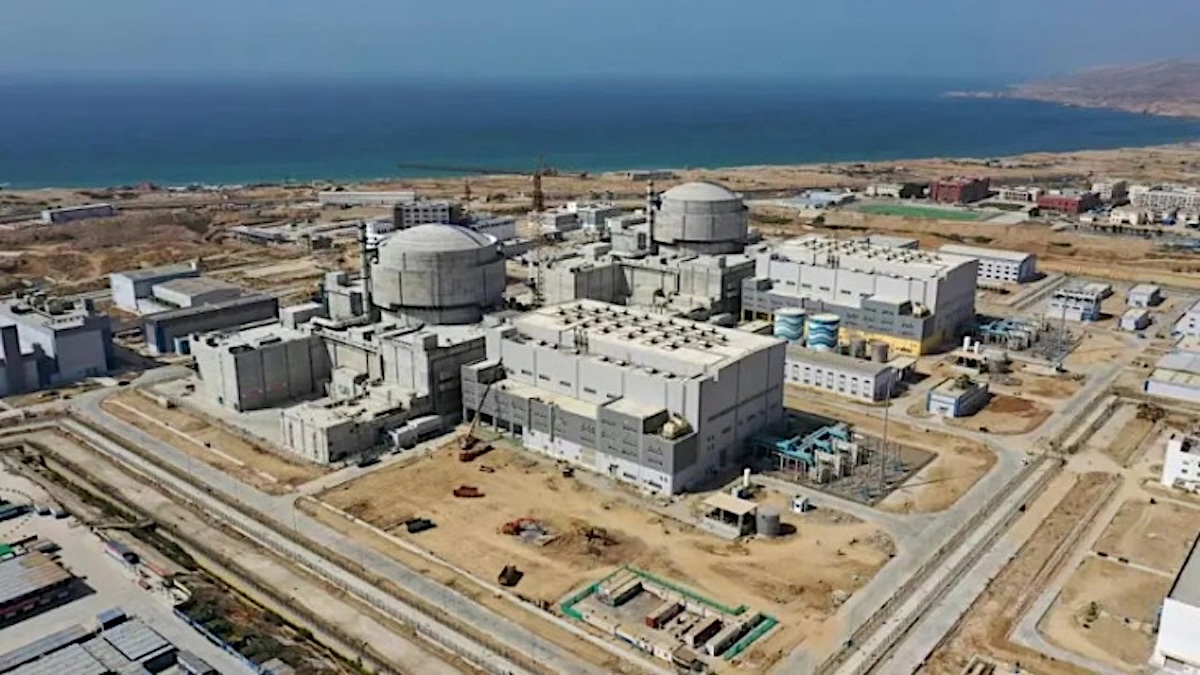
A major recent development is the advancement of Chashma Nuclear Power Plant Unit-5 (C-5), a 1,200 MW project being developed in cooperation with China. On 10 November 2026, PAEC achieved an important construction milestone through the successful placement of the reactor dome. The project is expected to begin electricity generation in September 2030. Its completion will further strengthen Pakistan’s low-carbon electricity generation capacity and deepen its indigenous technical expertise. Pakistan’s long-term nuclear energy vision, which envisages expanding nuclear power capacity to 40,000 MW by 2050, reflects the importance attached to nuclear energy in meeting future electricity requirements. However, achieving this ambition will require sustained investment, technological cooperation and an enabling international environment.
Beyond electricity generation, nuclear technology has made significant contributions to Pakistan’s agricultural sector. Through specialised research institutions, including the Nuclear Institute for Agriculture and Biology (NIAB), Nuclear Institute of Agriculture (NIA), Nuclear Institute for Food and Agriculture (NIFA) and National Institute for Biotechnology and Genetic Engineering (NIBGE), PAEC has introduced advanced techniques to improve crop productivity and agricultural resilience. These institutions employ mutation breeding, biotechnology and genetic improvement techniques to develop high-yielding, disease-resistant and stress-tolerant crop varieties. PAEC reports that its agricultural research institutes have developed more than 150 crop varieties, benefiting farmers and contributing to national food security.
Other applications include food irradiation, pest control, soil improvement and water resource management. The use of beneficial insects helps control agricultural pests and reduce dependence on chemical pesticides, while irradiation techniques improve food safety, extend shelf life and minimise post-harvest losses. Isotope hydrology also provides scientific methods for assessing groundwater resources, identifying sources of water pollution and supporting more efficient water management. These applications are particularly important for Pakistan, where climate change, water scarcity and agricultural pressures threaten long-term food security. Pakistan’s participation in the IAEA’s Atoms4Food initiative further demonstrates the potential of international nuclear cooperation in addressing these challenges.
Healthcare remains one of the most visible contributions of peaceful nuclear technology in Pakistan. Nuclear medicine and radiation-based techniques have become essential for cancer diagnosis, treatment and medical research. PAEC currently operates 19 Atomic Energy Cancer Hospitals across the country, with another facility under construction in Muzaffarabad. These hospitals handle approximately one million diagnostic and therapeutic procedures annually and cater to nearly 80 per cent of the country’s cancer-related healthcare burden. They provide specialised services, including radiotherapy, nuclear medicine, medical oncology and diagnostic imaging, often at subsidised rates or free of charge.
Pakistan’s international recognition in this field has also expanded. The Nuclear Medicine, Oncology and Radiotherapy Institute (NORI), Islamabad, was designated an International Atomic Energy Agency (IAEA) Anchor Centre under its Rays of Hope initiative in 2023. Furthermore, Pakistan’s participation in international technical cooperation programmes has facilitated professional training, research collaboration and access to advanced medical technologies. These achievements illustrate how nuclear science can directly improve public welfare, particularly in developing countries where access to specialised healthcare remains limited.
The peaceful applications of nuclear technology have also strengthened Pakistan’s industrial and engineering capabilities. Institutions such as Heavy Mechanical Complex (HMC), Taxila, and specialised PAEC research establishments contribute to equipment manufacturing, engineering, maintenance and technical services. PAEC has progressively developed the capacity to undertake reactor refuelling outages independently through increased reliance on local services and spare parts, reducing foreign exchange expenditure and strengthening operational self-reliance. Similarly, institutions such as the Pakistan Institute of Engineering and Applied Sciences (PIEAS) and Pakistan Institute of Nuclear Science and Technology (PINSTECH) continue to develop skilled human resources and advance scientific research. Such institutional capabilities are essential for sustaining Pakistan’s civilian nuclear infrastructure and supporting its broader technological development.
Pakistan’s achievements in peaceful nuclear applications must also be considered alongside its engagement with international institutions. Pakistan has been an IAEA member since 1957 and continues to cooperate with the Agency in nuclear safety, safeguards, security and technical development. Its civilian nuclear power plants operate under IAEA safeguards, while the Pakistan Nuclear Regulatory Authority (PNRA) provides regulatory oversight of nuclear and radiation safety.
An important recent development was the signing of Pakistan’s fifth Country Programme Framework with the IAEA in September 2025 for the period 2026–2031. The framework identifies five priority areas: food and agriculture, human health and nutrition, climate change and water resource management, nuclear power, and radiation and nuclear safety. It provides a practical basis for expanding nuclear technology’s contribution to Pakistan’s development priorities and the United Nations Sustainable Development Goals. Moreover, the IAEA safeguards agreement for Chashma-5, which entered into force in September 2026, reinforces the application of international safeguards to Pakistan’s expanding civilian nuclear programme.
Nevertheless, Pakistan continues to face restrictions in accessing international civilian nuclear cooperation, particularly through the Nuclear Suppliers Group (NSG). The 2008 NSG waiver granted to India, despite its non-membership of the Nuclear Non-Proliferation Treaty (NPT), established an exceptional arrangement that has raised questions about the consistency of international nuclear trade policies. Pakistan has consequently advocated a non-discriminatory, criteria-based approach towards civilian nuclear cooperation. Such an approach should consider objective factors, including safeguards commitments, export controls, nuclear safety and security standards, rather than geopolitical preferences. International arrangements intended to strengthen non-proliferation should not undermine the legitimate development aspirations of states seeking peaceful applications of nuclear technology.
Pakistan’s nuclear programme represents more than a strategic capability; it is also an instrument of scientific advancement, energy security and socio-economic development. Its contributions to electricity generation, cancer treatment, agricultural productivity, water management and industrial self-reliance demonstrate the wider benefits of peaceful nuclear applications. Moving forward, Pakistan must continue strengthening indigenous research, regulatory institutions, technical expertise and international cooperation. At the same time, the international community should recognise these achievements and promote equitable access to peaceful nuclear technology. A balanced approach that distinguishes between proliferation concerns and legitimate civilian applications is essential. Ultimately, nuclear science should not remain confined to strategic calculations; its greatest contribution lies in improving human welfare and supporting sustainable development.

About Sher Bano
Sher Bano is working as a Research Officer at the Strategic Vision Institute (SVI), a non-partisan think-tank based out of Islamabad, Pakistan.