This article is written by a student writer from the Her Campus at Casper Libero chapter and does not reflect the views of Her Campus.
Often, when analyzing aspects of our own country, we tend to look inward without understanding outside influences, as if each nation were an island isolated from the rest of the world. But international geopolitics has a complete influence on what happens inside each part of the earth. It is impossible to analyze a society or its structure in a more comprehensive way when its complexity is being limited solely to itself. The world is interconnected, no country can exist in isolation — and yet, from a purely individualistic perspective, most people are unaware of what happens beyond their own borders.
But why does an increasingly globalized world seem to be slipping into a kind of selfishness when it comes to thinking about other countries? In interview for Her Campus Casper Libero, Ph.D. in political science and professor Alex Maximilian talks about this contemporary contradiction of our historical era: “we have a world that is increasingly shaped into a global village, but at the same time it is a neoliberal ideology or subjectivity, in which we adopt the perspective of individualism, no longer thinking about a society with collective constructs as forms of politics”.
Who chooses the narratives we consume?
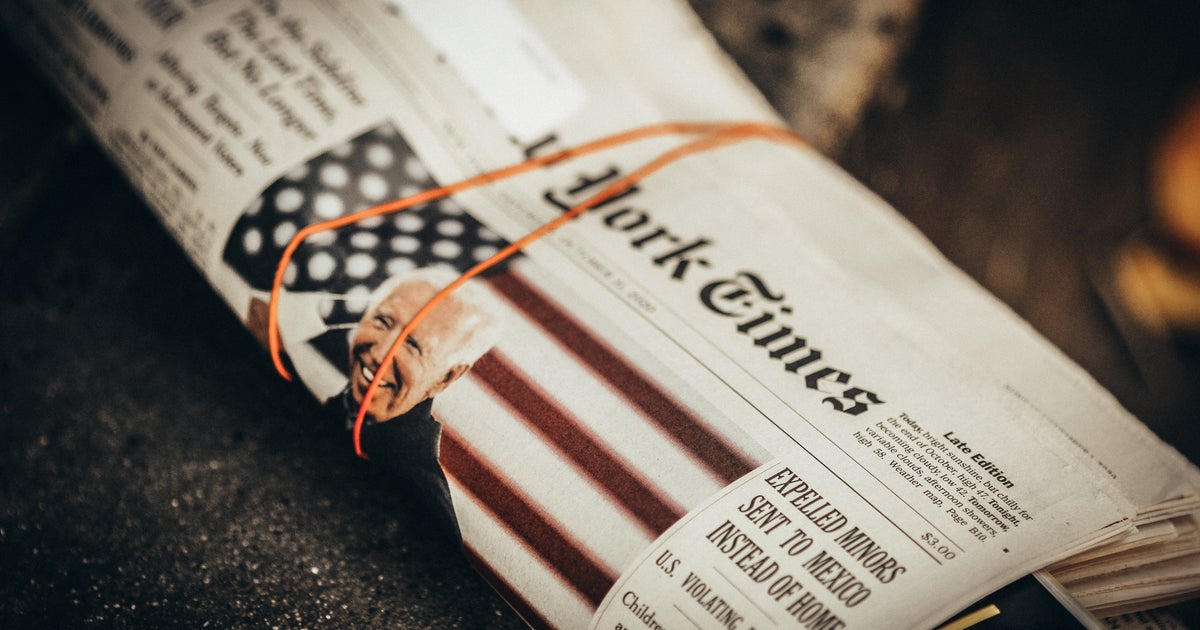
Some realities seem so far removed from our own, yet once we understand who is in control of the information, it’s clear to see that the content being disseminated in the media serves the interests of certain segments of the population. Professor Maximilian mentions Walter Lippmann’s concept of the phantom public: The general population does not have the time or capacity to be fully informed about all political and economic issues. As a result, it ends up being heavily influenced by these selective perspectives, which lead to a highly fragmented view of reality.
With elections taking place around the world, Alex raises the point that “a tendency toward the ideologization of politics has led a segment of the population to align itself with a particular camp and, as a result, to view reality solely through that ideological lens”. Juggling the numbers, presenting certain handpicked narratives and pieces of realities are all strategies for sustaining a discourse built by those in power. The creation of a parallel reality is also part of the political agenda of many countries, especially the world powers.
“When we look at the United States and still try to see it as that promised land — the land of the American Dream, where we can somehow experience the possibility of social mobility within capitalism — when focusing solely on that place, we are also losing sight of a country that has a growing number of people living in extreme poverty. They live in conditions of extreme deprivation, and this is the other side of that same coin,” he explains.
The war of all against all
Reducing the complexity of the global system to the reality of a single country and certain sectors within that country impoverishes the debate and often leads to diagnoses that are also very inaccurate. To think, for example, that the United States is the only country that dictates the global economy is simplistic and even wrong. Every place has its own peculiarities in politics, whether social, economic or diplomatic. But limiting ourselves to looking only at our own experiences, or at experiences considered a pattern in the global context, leads to a false understanding of what politics actually is.
“When we focus solely on ourselves, we lose the ability to learn from outside experiences, and we end up falling into false dichotomies”
Professor Alex Maximilian
It’s important to overcome intellectual and political parochialism, with narrow horizons and the universalization of one’s own specific points of reference. Understanding our own reality within the country where we live requires, first and foremost, an understanding of world history and the global economy. But often, a crisis or an armed conflict seems very far removed from our reality. In this war of all against all, “you hardly care what people are going through. Not just over there in Argentina, for example, but often even my next-door neighbor, right? My neighbor down the street. That’s because everyone is simply concerned with their own survival,” says Professor Maximilian.
Understanding the world we live in and contemporary politics requires us to look at the world’s diversity. If we get bogged down in domestic debate, we’ll keep trying to put together a puzzle while looking at just one piece. Perceiving politics from the inside requires looking outward and breaking down the barriers of geographical distance: geopolitics doesn’t happen out there, in a faraway place, it happens within our economy and our social issues inside our own country.
To open your eyes is to step out of the bubbles
In a reality shaped by post-truth, where objective facts lose their relevance and emotional appeals carry more weight in the popular imagination, consuming content and news from various countries and perspectives is a possible path toward ending global alienation. The war of narratives comes down to who reaches more people and speaks most loudly about their widely shared realities. Rather than avoiding contradictions, it is essential to seek different approaches to an issue that appears to be unique and isolated, but is in fact part of a much larger system rooted in geopolitics.
———————
The article above was edited by Maitê Olyntho.
Liked this type of content? Check Her Campus Cásper Líbero home page for more!