The U.S. stock market has come under considerable pressure in recent weeks. The benchmark S&P 500 (SNPINDEX:^GSPC) and the technology-heavy Nasdaq Composite (NASDAQINDEX:^IXIC) have dropped into correction territory, falling approximately 10% and 17%, respectively, from their October highs.
Corporate earnings growth has been exceptional this year, but investors are increasingly worried that technology companies are spending too much money on artificial intelligence infrastructure. Persistent inflation and the expectation of higher interest rates have also contributed to the sell-off.
Missed AI’s “Act 1”? Act 2 Could Be 16x Bigger. Most investors think they missed the AI boat because they didn’t buy Nvidia in 2005. But according to our analysts, we’re only at the end of “Act 1″—the R&D phase. “Act 2” is the global rollout. Continue »
Unfortunately, President Donald Trump just gave investors another reason to worry, and the news comes at a particularly bad time. On Nov. 25, his administration proposed new tariffs targeting 14 major trading partners, including China and the European Union. Those import taxes threaten to complicate the Federal Reserve’s fight against inflation, which could hurt the stock market.

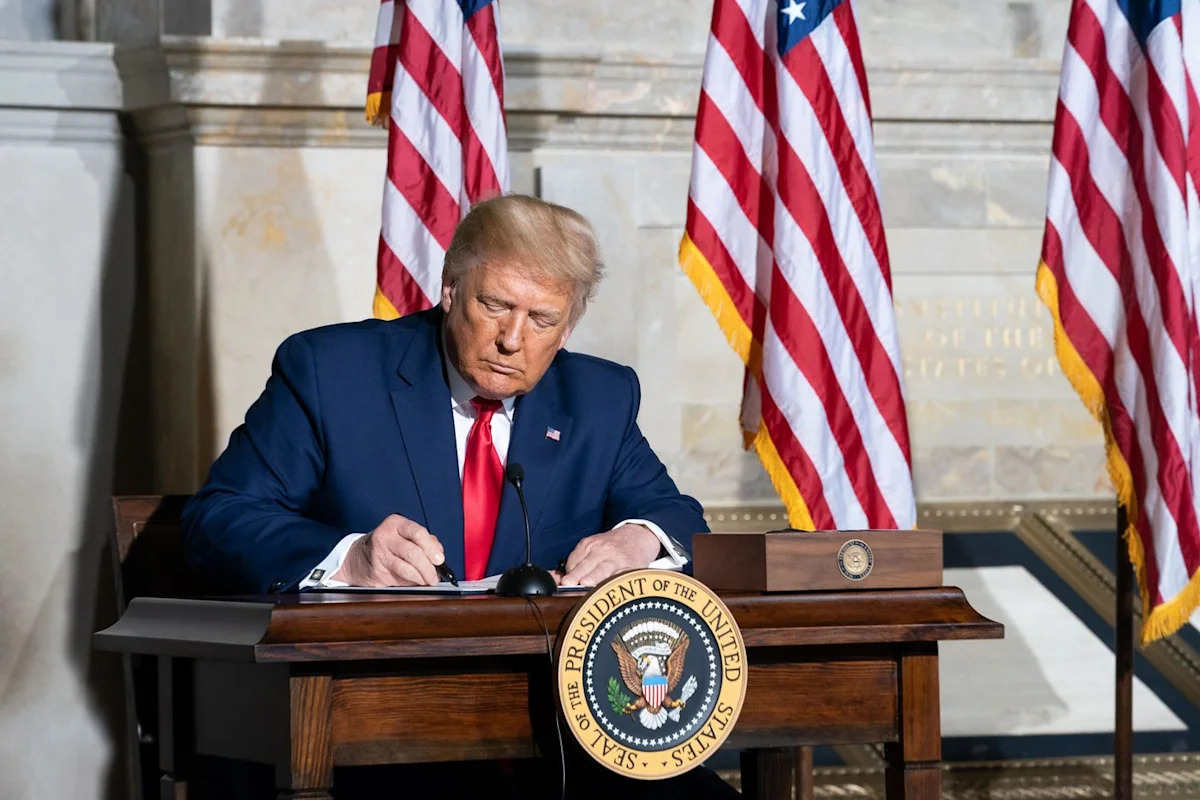
Image source: Official White House Photo by Joyce N. Boghosian.
How President Trump’s tariffs have impacted the economy to date
In May, President Trump said, “My favorite word in the dictionary is tariff.” He believes tariffs could be a substantial source of revenue for the federal government, while also bolstering national security by incentivizing companies to move manufacturing operations to the United States.
However, several studies suggest tariffs imposed by the Trump administration have already increased costs for American businesses, and those businesses often pass at least a portion of the additional expense along to consumers in the form of higher prices.
Research from the Federal Reserve Bank of St. Louis indicates that tariffs contributed 0.5 percentage points to headline inflation as of June 2026.
Research from the Federal Reserve Bank of Minneapolis indicates that tariffs added 0.2 to 0.4 percentage points to core inflation as of July.
In July, economists at the Federal Reserve Bank of New York wrote, “Nearly 90% of the economic burden of tariffs has fallen on U.S. firms and consumers.”
Additionally, economists at the New York Fed identified another troubling phenomenon in a recent research paper: Tariffs have actually increased the price of domestically produced goods, partly because American manufacturers use imported materials and partly because they face less competition from foreign businesses.
Story Continues