
Want to bookmark your favourite articles and stories to read or reference later? Start your Independent Membership today.
Already a member?
Log in
China has been accused of deploying an arsenal of AI-generated deepfakes, fake social media accounts, and fabricated political scandals to meddle in Taiwan’s closely watched local elections on Saturday.
From videos falsely depicting politicians taking drugs to fake online personas encouraging people not to vote, researchers and government reports claim to have uncovered a disinformation campaign aimed at undermining trust in the island’s democratic institutions.
The elections, which will determine who governs Taiwan’s cities and counties, are seen as a measure of public mood ahead of the 2028 presidential race, with the results set to be closely watched in China as well as the US.
China denies interfering in the island’s elections.
The Taiwanese government has flagged almost 2,700 accounts to Meta for their role in an alleged coordinated Chinese attempt to influence the elections, according to officials. The majority of the accounts are on Threads, Meta’s text-based platform, which is very popular in Taiwan.
Of the roughly 2,400 Threads accounts examined in an internal Taiwanese government report, 74 per cent showed China as the location, 25 per cent had no location, and 1 per cent listed Russia. Almost all the accounts opened in the four months before the elections and were likely created in batches. Most were identified as Chinese by the Taiwanese government.
A Meta spokesperson confirmed the US company removed the Threads accounts flagged by Taiwan’s government, many of which had already been disabled by its systems.
The spokesperson said none of these “low-quality fake accounts” had posted about election-related topics and most had no followers. “We will continue to take action against accounts that violate our policies.”
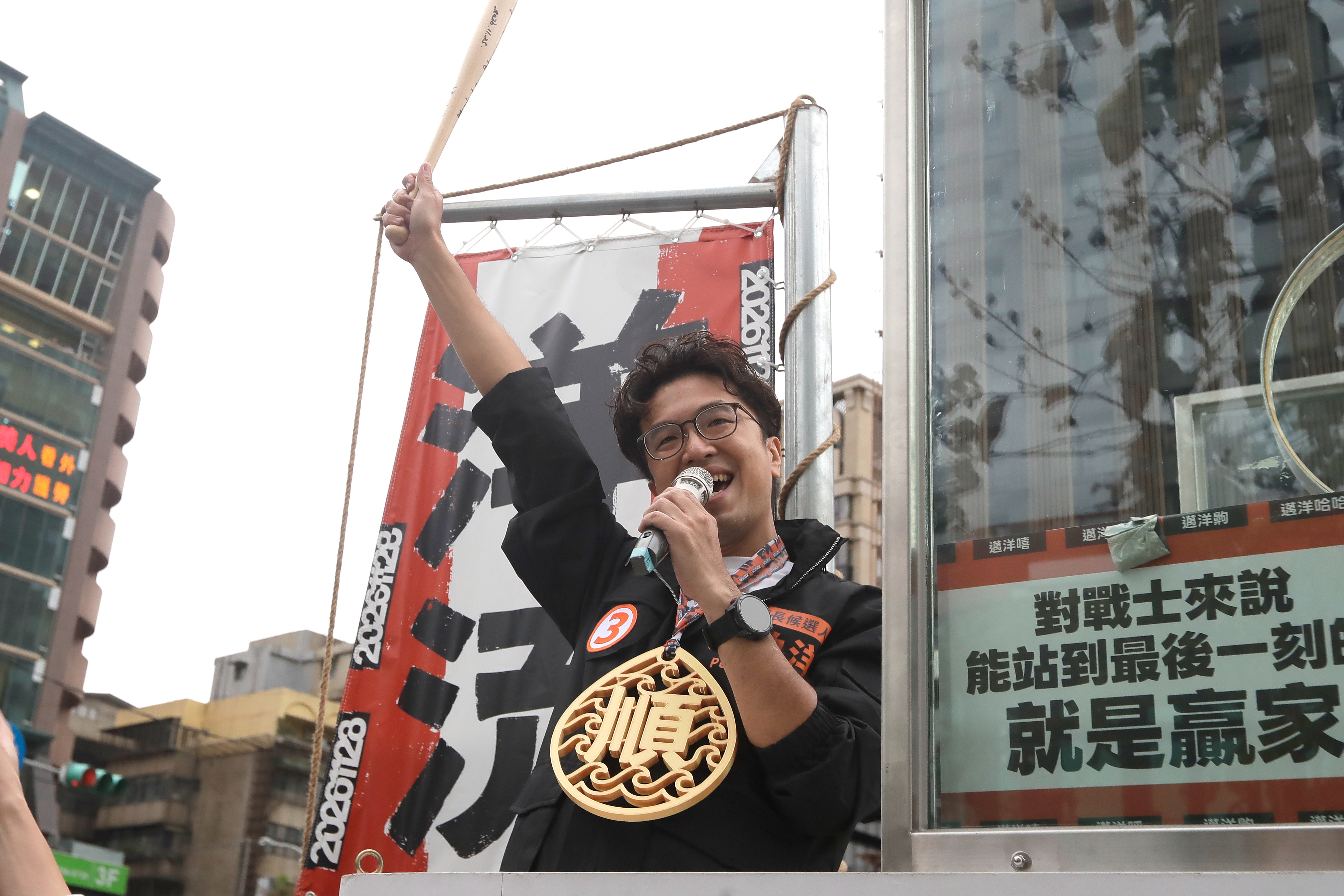
Democratic Progressive Party’s Taipei mayoral candidate Puma Shen cheers as his campaign motorcade passes by on Wednesday (AP)
Taiwan goes to polls on 28 November to fill more than 11,000 offices in cities and counties, with about 20 million people eligible to vote.
From Tainan in the south to the capital Taipei, the elections are largely a straight contest between the Democratic Progressive Party (DPP) and the Kuomintang (KMT). The smaller Taiwan People’s Party is contesting some local races and is backing the KMT candidate in the Taipei mayoral election.
Though the elections are contested over local issues of transport, environment and development, they carry major political significance.
The impending elections represent the first major electoral test for president Lai Ching-te, who took over in 2024, serving as a barometer of support for his DPP party, which China considers a separatist force and refuses to engage with.
A strong DPP performance strengthens Lai’s position inside the party and builds momentum heading into 2028. A result in favour of the opposition KMT creates internal pressure and questions about his leadership.
Beijing is historically seen to favour the KMT, which advocates closer ties and dialogue with China.
Beijing regards Taiwan, a self-governing island of 23 million people, as a breakaway province under its “One China” principle. It has called for “peaceful reunification”, but hasn’t ruled out the use of force to achieve that goal.

Democratic Progressive Party Taipei mayoral candidate Puma Shen greets supporters at a campaign rally (Reuters)
In spite of concerns over Chinese interference in the elections, the campaign has been largely bereft of rhetoric about the threat posed by Beijing.
In previous local elections, the threat of Chinese aggression was a key campaign issue for the DPP. This time, experts say, candidates are focusing more on domestic policy matters in an attempt to woo swing voters.
“Many of the candidates toned down their attacks. In order to try and get the swing voters, they talked more about policy,” says Wei-hao Huang, political science professor at National Sun Yat-sen University.
“How much actual importance does the CCP have in Taiwan’s local elections?” he asks, referring to the Chinese Communist Party. “Not much.”
Historically, the DPP has performed poorly in local elections. In the last round in 2022, it won only five of the 22 localities.
“They have nothing to lose for this election,” Sanho Chung, assistant professor of political science at National Cheng Kung University, said.
“They will probably be in a better position than they were before.”
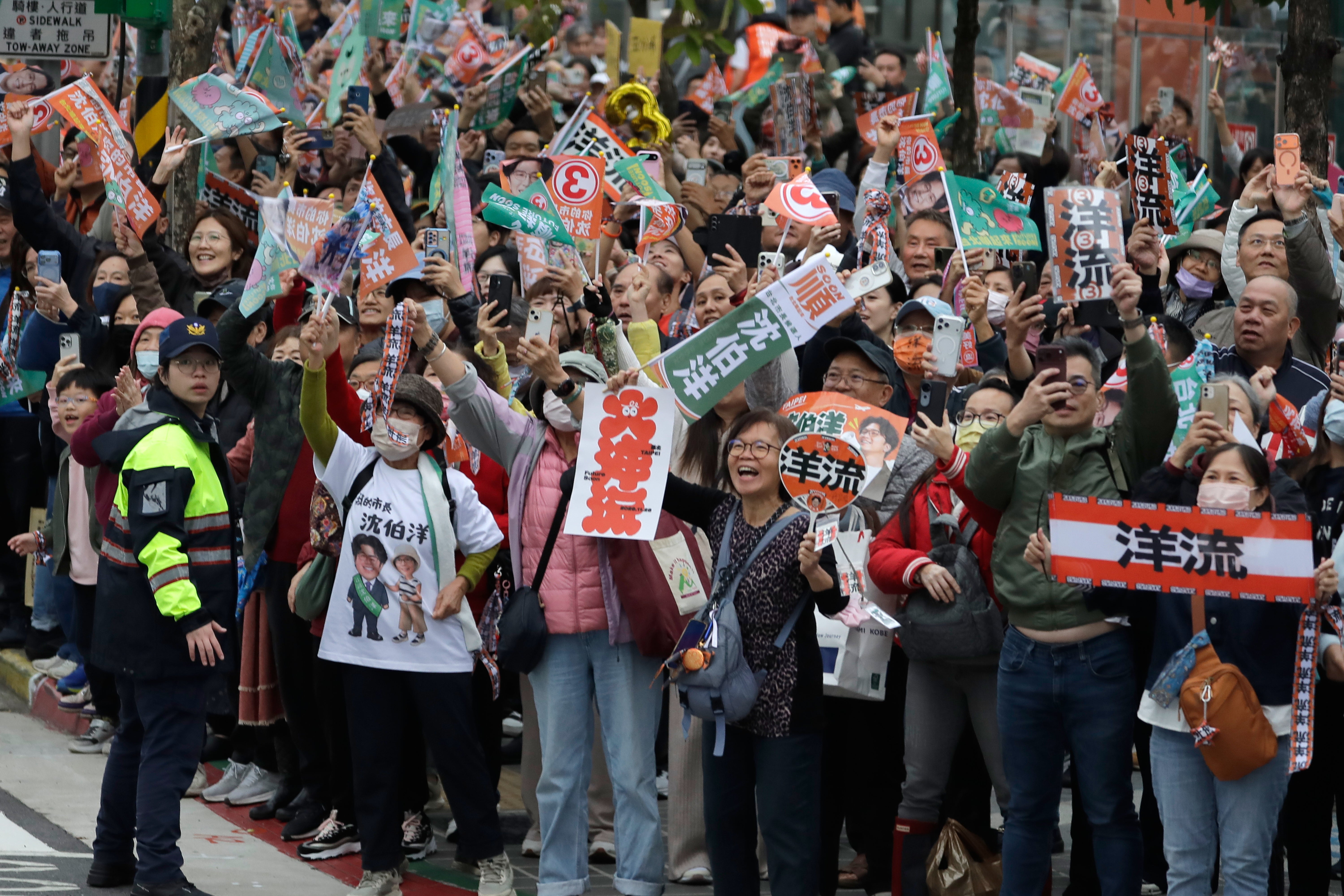
(AP)
Although Beijing has featured less prominently during the campaign, it has allegedly stepped up attempts to influence the political discourse online, according to Taiwanese intelligence officials.
Among the AI-generated videos circulating online are remarkably realistic clips purportedly showing Puma Shen, the DPP’s candidate for Taipei mayor, smoking drugs, or admitting to taking kickbacks on US arms purchases. He denies the allegations.
Other deepfakes depict president Lai and prominent DPP politicians making fabricated remarks or appearing in bizarre and humiliating situations, dressed in children’s clothes or performing strange dances, seemingly intended to ridicule and discredit them.
Some of the operations were more subtle, according to researchers at Vanderbilt University in the US, who said they found inauthentic activity in October and November aimed at influencing the elections.
Using a newly developed tool to detect AI-generated content, the researchers found that accounts posing as ordinary Taiwanese people build up seemingly authentic online presences by posting about non-political subjects such as food, animals or celebrities, or sexually suggestive imagery known as “thirst traps”, before abruptly switching to political content, sharing deepfake videos or expressing disillusionment with the ruling party and accusing it of corruption.
They also scatter messages promoting China or advocating unification with the mainland across their seemingly innocuous posts.
The researchers, working with Taiwan-based group Doublethink Lab, said that they used the new tool to detect subtle differences in tone and word choice between human-written and AI-generated posts.
They also identified signs of coordinated activity across platforms, the use of AI-generated personas, and posting patterns suggesting that some of the accounts were professionally managed rather than operated by ordinary users.
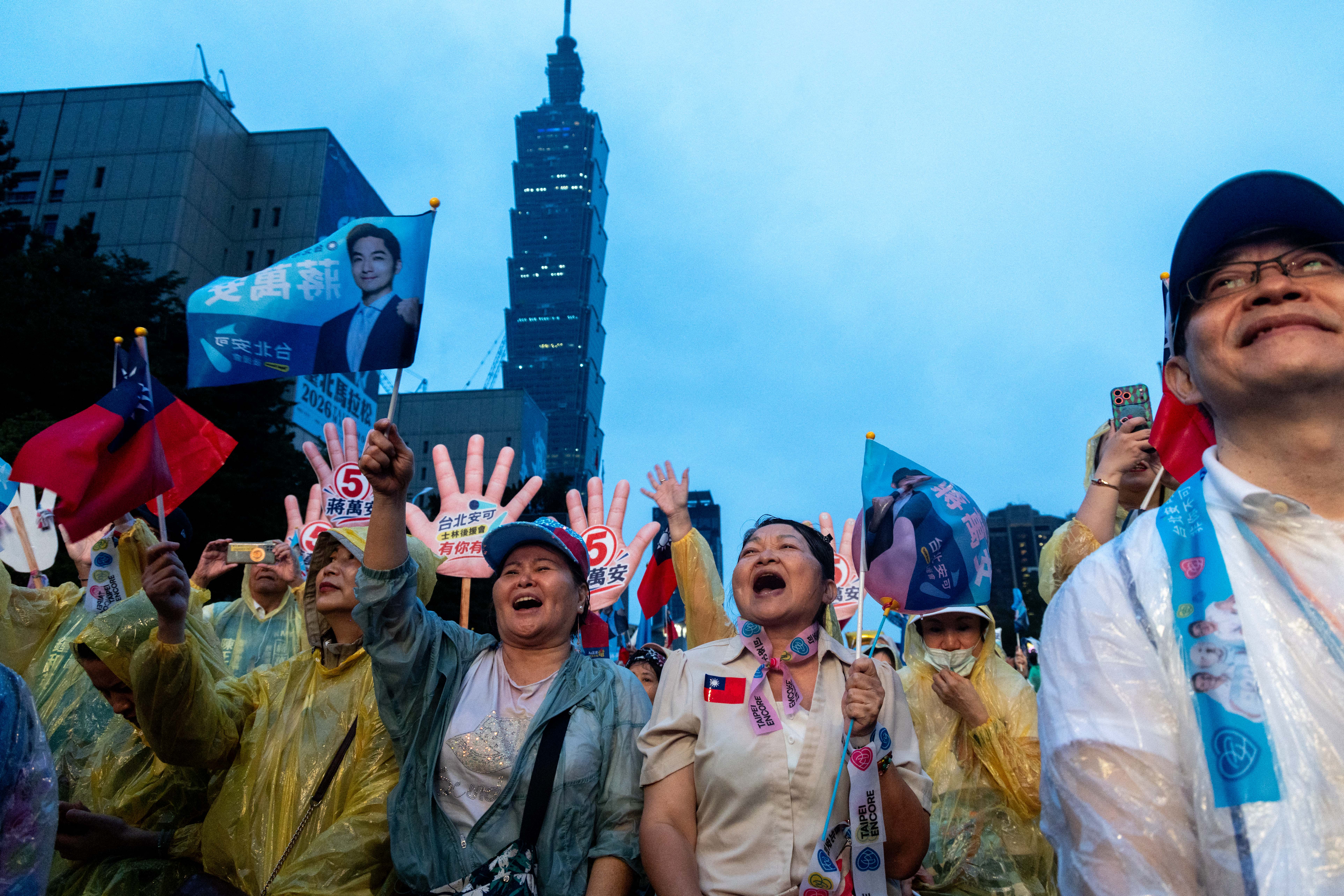
Supporters wave flags and chant slogans during a campaign rally for Taipei mayor Chiang Wan-an (AFP/Getty)
According to experts, the objective is not always to persuade Taiwanese voters to support China, but to deepen existing political divisions, undermine confidence in the DPP, and make it difficult for citizens to distinguish fact from fiction.
Andrew Yeh of the China Strategic Risk Institute told the BBC the motive of the alleged campaign wasn’t favouring a party, but “diluting Taiwan’s policy debates, driving polarisation and degrading Taiwanese citizens’ trust in their democratic processes”.
“Regardless of whether the KMT or the DPP comes out on top, a more fractured and more divided Taiwan is in Beijing’s interests.”
Taiwanese officials told Meta about 260 Threads accounts had disseminated over 2,150 AI-generated videos, according to an internal government report shared with lawmakers.
The videos drew 2.35 million interactions, including comments and shares, according to the report, which said most of the videos targeted DPP politicians and policies.
The National Security Bureau, the island’s civilian intelligence agency, in a warning about alleged Chinese interference in the elections, said such misinformation rose by around 48 per cent in the first nine months of 2026 to more than 2.5 million items from about 1.69 million a year earlier.
The spy agency accused China of using AI technology to gather information on Taiwanese current affairs, policies of candidates, and polling data to shape influence operations and expand AI-driven information manipulation aimed at “affecting voter preferences and election outcomes”.