The current landscape, characterised by wars and hybrid threats, brings the debate back into the spotlight regarding the quality of the security ecosystem that protects entities and environments vital to a country’s functioning, such as law enforcement agencies, regional authorities, emergency services, industrial infrastructure, major logistics hubs and airports. Among the technology firms working alongside institutions and businesses in this endeavour is Motorola Solutions, which is celebrating 60 years of operation in Italia this year. Lorenzo Spadoni, the company’s Country Manager for Italy and Senior Director for EMEA at Silvus Technologies (a company acquired by Motorola in 2025 for 4.4 billion dollars), offers a very practical perspective on the issue and the role played by the American firm in ensuring the security of critical communications. ‘What is happening in terms of threats was predictable, but the real issue lies elsewhere. ‘When a mission-critical communications network goes down,’ he explained to *Il Sole 24 Ore*, ‘the consequences can be dramatic: unlike a traditional mobile network, which causes inconvenience if it fails, a critical network that cannot operate puts people’s lives at risk.’
How does the multi-level system work?
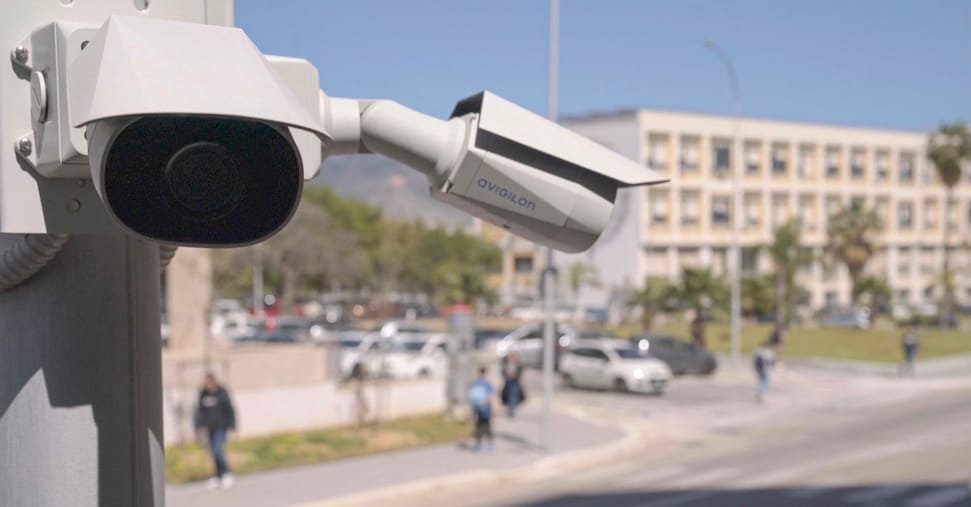
Motorola Solutions operates in Europe across three sectors, with mission-critical telecommunications forming its core business (accounting for 70 per cent of turnover) compared to professional video surveillance systems and emergency management operations centres. Its radio networks are designed to support public safety and defence operations even in challenging conditions and, as Spadoni explains, have at least two distinctive features: they are closed and segmented, and they have several levels of physical ‘fallback’ (the mechanism that allows a system to continue functioning when the main functionality fails). What does this mean? Should connections to the central system be lost, an individual radio station can continue to operate locally or via a private IP network, disconnected from the public internet.
The Rigopiano experience
A prime example of the multi-layered resilience championed by Motorola Solutions is that of Rigopiano, the village in Abruzzo struck in January 2017 by an avalanche that claimed the lives of 29 guests at a local hotel. A completely isolated village, recalls Spadoni, where the first communications were established between a helicopter and a rescuer via a radio-to-radio link without a repeater. This incident confirms that being disconnected from the public network helps to reduce exposure to risk, although it must be noted that security architecture alone is not enough and that devices require continuous updates.
‘For at least ten years,’ Spadoni points out, ‘we have been emphasising to our clients the need to upgrade critical radio networks and to invest in data encryption, because interoperability between systems creates new areas of vulnerability, as well as the need for audits of existing systems and preventive maintenance of hardware. Resilience is not just about cyber security, and it is not built solely through best practice or attempts to avoid being hacked, but through active monitoring of the electromagnetic spectrum, enhanced risk analysis capabilities, and the way in which a mission-critical network is designed and maintained.”
The role of AI
The Motorola manager also agrees that today, thanks to the widespread availability of artificial intelligence tools to a wider audience, the risk of attacks on vulnerable systems has increased significantly. The same technology, on the other hand, can be of practical help in emergency centres, filtering out background noise in communications, automatically responding to specific queries or suggesting procedures to be followed. ‘At the moment,’ concludes Spadoni, ‘AI adds options, but in my view it does not increase efficiency. The ability of an individual triage operator in an emergency call centre to manage certain situations cannot be replaced by an intelligent agent – a tool that enhances support capabilities but which, at present, cannot be envisaged as making autonomous operational decisions on which human lives depend.”