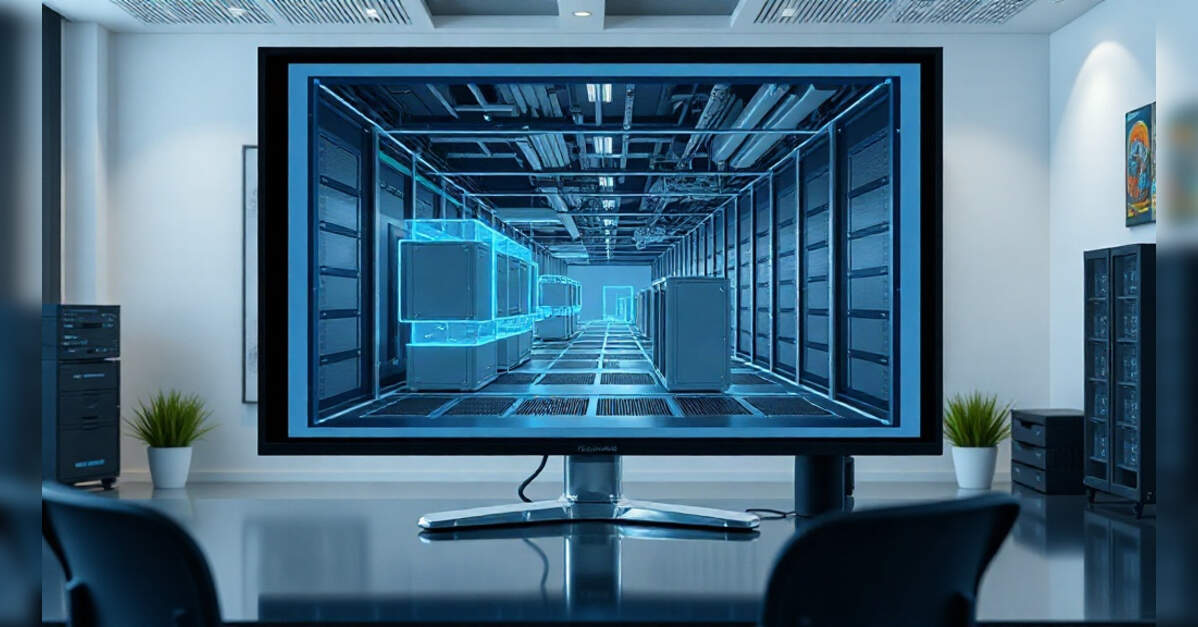
 India’s data centre industry is experiencing significant growth, driven by cloud adoption, enterprise digitisation, data localisation, and the rapid integration of artificial intelligence (AI). The country’s operational data centre capacity reached approximately 1,789 MW in the first half of 2026, with another 3,860 MW in the development pipeline through 2030, according to Cushman & Wakefield.This expansion requires operators to build facilities that accommodate evolving computing requirements and manage rising energy consumption. Decisions regarding space utilisation, power distribution, cooling architecture, and equipment placement have long-term implications for capital expenditure and operating costs.AI’s Impact on InfrastructureThe growing adoption of AI is fundamentally changing data centre infrastructure requirements. GPU-intensive workloads demand higher rack densities, greater power availability, and more sophisticated thermal management than conventional computing environments.Operators are increasingly adopting direct-to-chip liquid cooling and hybrid cooling configurations to adapt to these AI requirements. This makes infrastructure planning more interconnected, as increasing rack density requires corresponding adjustments to power distribution and cooling capacity.Advanced 3D modelling offers an integrated approach to design. Engineering teams can examine architectural layouts, electrical systems, mechanical infrastructure, and data hall configurations within a common environment, identifying potential conflicts before construction.This approach is particularly relevant in India, where markets like Mumbai, Chennai, Hyderabad, and Bengaluru present diverse considerations for land, climate, power, and water resources. Location-specific engineering helps develop facilities suited to their operating environments.Energy and Cooling ChallengesEnergy availability is a defining consideration for India’s digital infrastructure expansion. The Central Electricity Authority (CEA) estimates the country’s data centre power demand will reach approximately 17 GW by 2031–32.Cooling is equally important as AI workloads increase thermal loads. Computational Fluid Dynamics (CFD) simulations, combined with 3D modelling, allow engineering teams to study airflow patterns and temperature distribution before equipment installation.Such simulations are relevant in India due to high ambient temperatures, humidity, and regional water constraints. Modelling these conditions during design supports better decisions on cooling technologies and equipment placement.Integrated modelling also helps assess dependencies between physical space, power, and cooling capacity. This prevents stranded capacity and inefficient capital deployment by aligning infrastructure investments with anticipated requirements.Digital Twins for Lifecycle ManagementBuilding Information Modelling (BIM) provides a common digital reference for architects, engineers, contractors, and operations teams. When integrated with real-time operational information, these models can form the foundation for digital twins.Digital twins help operators understand infrastructure performance under various conditions. Teams can assess implications for power availability and cooling capacity before deploying additional high-density racks.This creates opportunities for predictive maintenance, improved capacity planning, and better coordination. It also ensures information developed during construction remains useful throughout a facility’s operational lifecycle.The success of India’s data centre industry depends on effectively designing and utilising capacity. Greater engineering precision can help develop adaptable, energy-efficient, and operationally resilient facilities.