
Philip Obaji Jr. poses for a photo at the Straight Talk Africa studio in Washington, D.C., U.S., on Sept. 27, 2023. (Philip Obaji Jr. / Facebook)
When Yevgeny Prigozhin called Nigerian investigative journalist Philip Obaji Jr. a “cockroach” in 2022, the Wagner Group chief threatened to make him pay for his reporting.
A year later, Obaji found himself locked inside a shipping container full of the insects, as well as rats, in the Central African Republic after being detained by local soldiers acting on the orders of Russian mercenaries.
Once released, he crossed into neighboring Cameroon to seek treatment for his wounds. Within days, he was back in the Central African Republic to finish his investigation.
“I did not want to go home empty-handed,” Obaji, now 41, told the Kyiv Independent.
As Russia struggles to recruit enough soldiers without launching another wave of mass mobilization, Africa has become a growing source of manpower for its war against Ukraine. Russia is recruiting men across the continent, exploiting poverty and offering high salaries or false promises of civilian jobs.
“When they sign these contracts, they’re eventually told that, look, you don’t have any job in the places that you thought you were going to work in. The only option you have is to get to the front lines in Ukraine and work.”
Ukraine’s military intelligence (HUR) has identified 5,451 Africans among nearly 46,000 foreign nationals who have signed contracts with the Russian military, while a United Nations commission found that Russian authorities had trafficked people from 29 countries across the world to recruit them into the armed forces.
In an interview with the Kyiv Independent, Obaji recounted how investigating Russian mercenaries put his life at risk and how Russia’s operations in Africa became intertwined with its war against Ukraine.
A journalist on Wagner’s radar
Obaji studied marine biology and worked as a sports television presenter before turning to reporting on human rights abuses. His interest in Russia began in 2018, when three Russian journalists were killed while investigating Wagner’s operations in the Central African Republic.
Obaji, then reporting for The Daily Beast, was asked by his editor to look into what the journalists had been investigating before their deaths. He collaborated with the outlet’s Russia correspondent, Anna Nemtsova, on what would become one of its most-read stories that year, he recalled.
“After the story was published, I decided on my own to continue to dig into what the Russians were doing in the Central African Republic,” he said.
Over the following years, as Wagner expanded its presence in the country, Obaji’s reporting brought him into contact with the Russian mercenaries themselves.
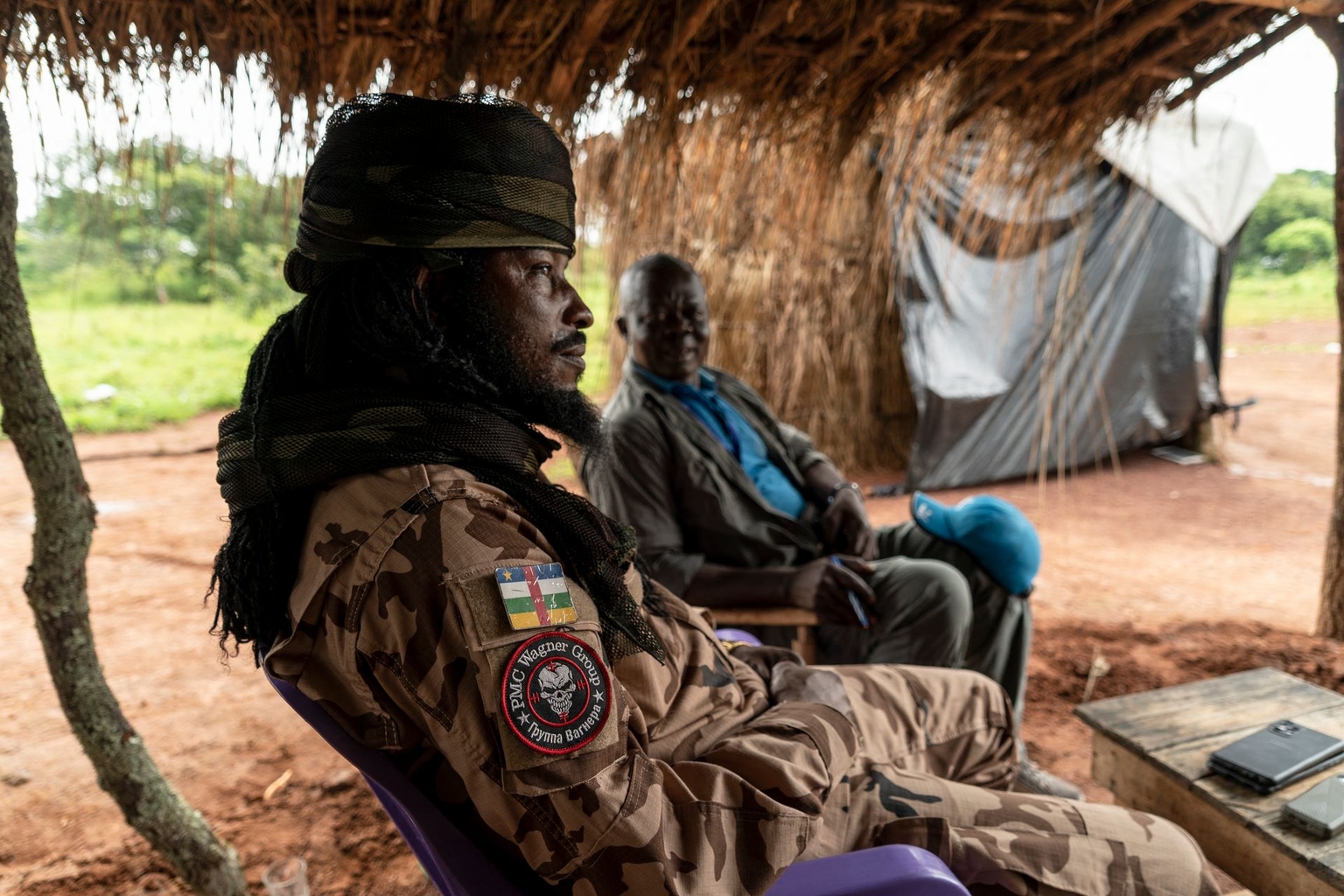 A badge bearing the Wagner Group emblem is seen on the arm of Bello Issein, also known as General Boungous, at a disarmament site in Maloum, Central African Republic, on July 24, 2025. (Mariam Kone / AFP via Getty Images)
Just weeks before Russia launched its full-scale invasion of Ukraine in February 2022, Obaji learned from his contacts within Wagner that more than 200 of its fighters had been withdrawn from the Central African Republic and flown to Moscow for training ahead of their deployment to Ukraine.
Seeking confirmation, he contacted Prigozhin directly. Instead of an email response, Obaji received a threatening phone call.
“He called me a cockroach and then said he was going to deal with me for reporting on issues that, according to him, were not true,” Obaji recalled.
“So I fell to the ground. I was screaming. When I looked up, I saw two Russian paramilitaries from the Wagner group ordering the soldiers to take me away and get me locked up.”
Soon afterward, his photograph began circulating in a WhatsApp group used by Wagner fighters in the Central African Republic, he said, adding that Wagner commanders had instructed their men to arrest or kill him if he was spotted in the country.
An unfinished investigation
More than a year after Prigozhin threatened him, Obaji was detained in the Central African Republic.
He had returned to the country to investigate the future of Wagner’s operations following Prigozhin’s death in a plane crash in August 2023, two months after the Wagner chief led a short-lived armed rebellion against Russia’s leadership.
The morning after his arrival, Obaji headed to the border with neighboring Cameroon to interview people displaced by Russian paramilitary operations in gold-mining areas. There, he was attacked by four Central African soldiers.
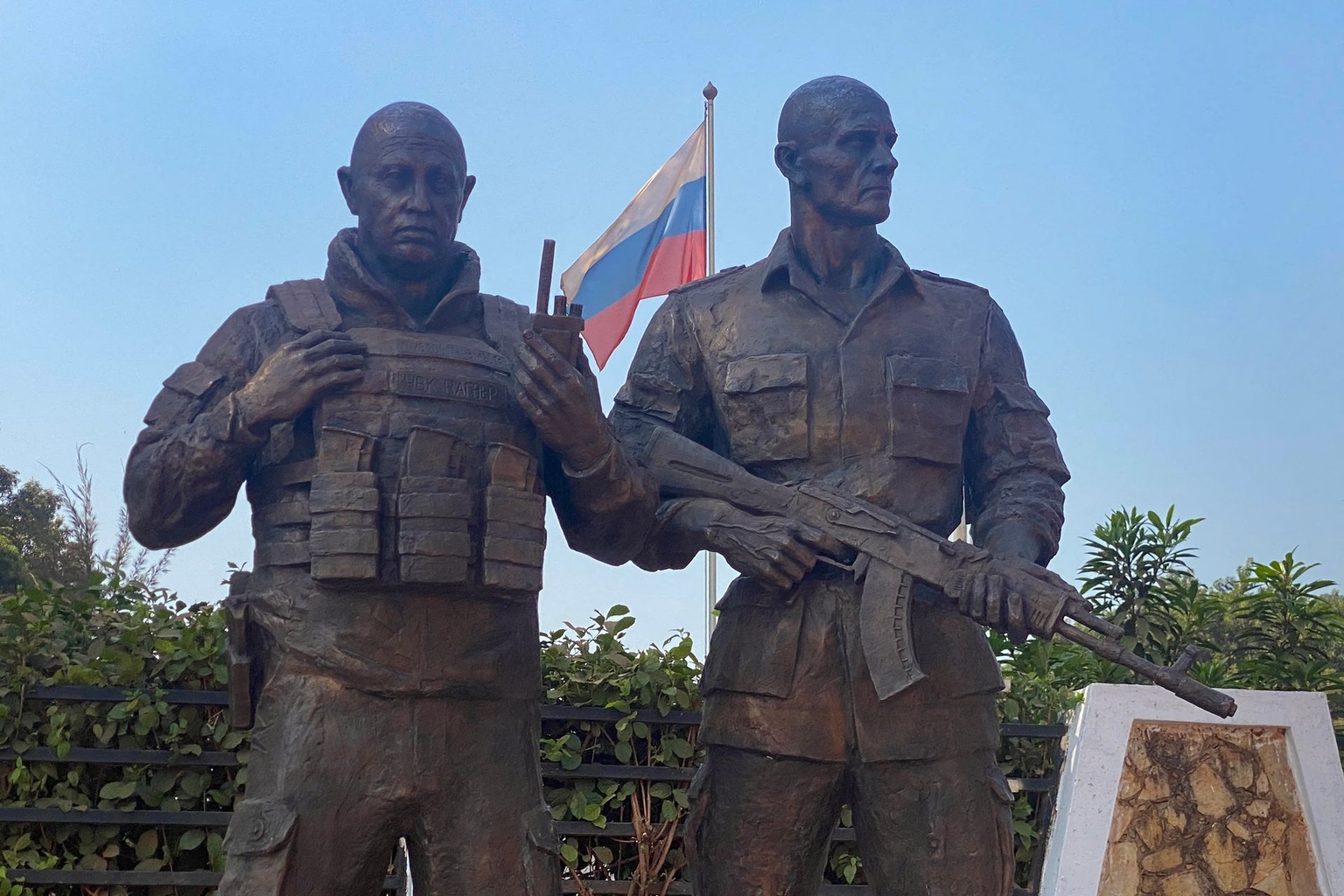 Bronze statues depicting late Wagner group leader Yevgeny Prigozhin (L) and Dmitry Utkin (R), stand outside the Russian House in Bangui, Central African Republic, Dec. 3, 2024. (Annela Niamolo / AFP via Getty Images)
“I fell to the ground. I was screaming. When I looked up, I saw two Russian paramilitaries from the Wagner Group ordering the soldiers to take me away and lock me up,” he recalled.
The soldiers dragged him into a small shipping container near the border.
“I spent the night there in solitary confinement,” Obaji said. “But I wouldn’t say solitary because of the cockroaches and rats in the container.”
He was released the following morning after the motorcyclist who had driven him to the border sought help from a senior military officer. Obaji received medical treatment in Cameroon before returning to the Central African Republic a few days later to complete his investigation.
“I felt that I had gone to the lengths that I had and I needed to finish,” he said.
Gold for Russia’s war
Revenue from African gold has helped finance Russia’s war against Ukraine, according to Obaji. Before Prigozhin’s death, much of that revenue was used to fund Wagner’s operations in both Africa and Ukraine.
“Wagner was able to gain a lot of strength because of the amount of resources that they had amassed from Africa,” he said.
Access to gold mines was central to the agreement under which Russian paramilitaries began operating in the Central African Republic in 2018, Obaji said.
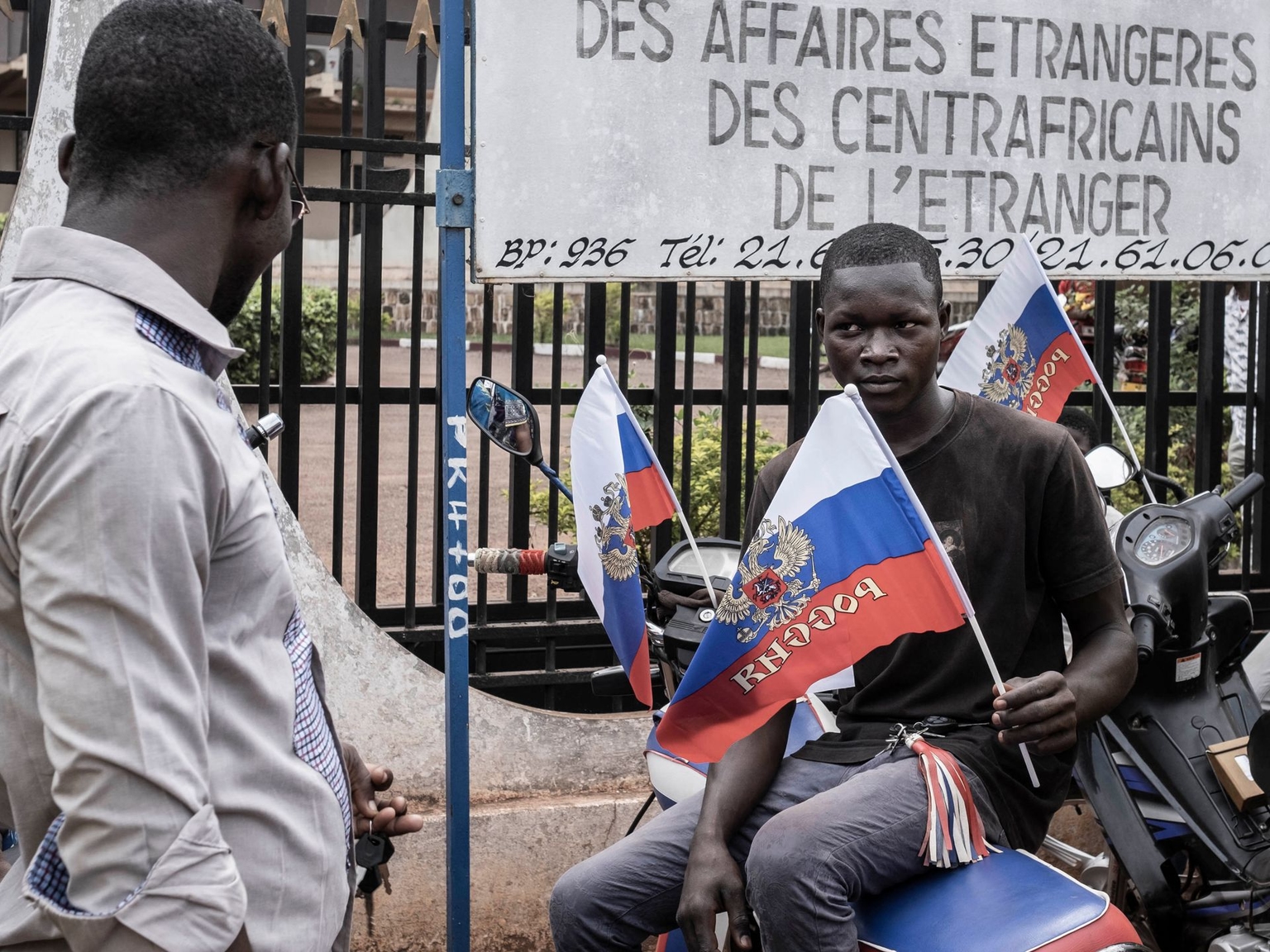 A demonstrator holds a Russian flag while sitting on a motorcycle during a march in support of Russia and China’s presence in the Central African Republic in Bangui, March 22, 2023. (Barbara Debout / AFP via Getty Images)
His reporting was later cited in a 2023 investigation by the anti-corruption organization The Sentry, which documented how Wagner used violence against local communities to gain control of the country’s mining sector.
That same year, the U.S. Treasury sanctioned companies in the Central African Republic, the United Arab Emirates, and Russia involved in illicit gold trading that financed Wagner’s operations in Africa and Ukraine.
‘The only option is the front line’
Russia is increasingly looking to Africa not only for its natural resources but also for military recruits.. Foreign recruitment is part of Russia’s broader system of so-called voluntary recruitment, which also targets prisoners, migrants, students, and people in financial hardship to address its manpower shortage.
“For a lot of people, it’s a good way, an escape route out of poverty,” he said.”
Propaganda is the first stage of Russia’s military recruitment in Africa, according to Ukrainian intelligence. Through its state-run news agency Sputnik and a growing network of local radio stations, Moscow aims to reach nearly 300 million people.
Obaji said Russian propaganda has helped build sympathy for Moscow among some Africans by portraying Russia as an alternative to the West, and Ukraine as the aggressor.
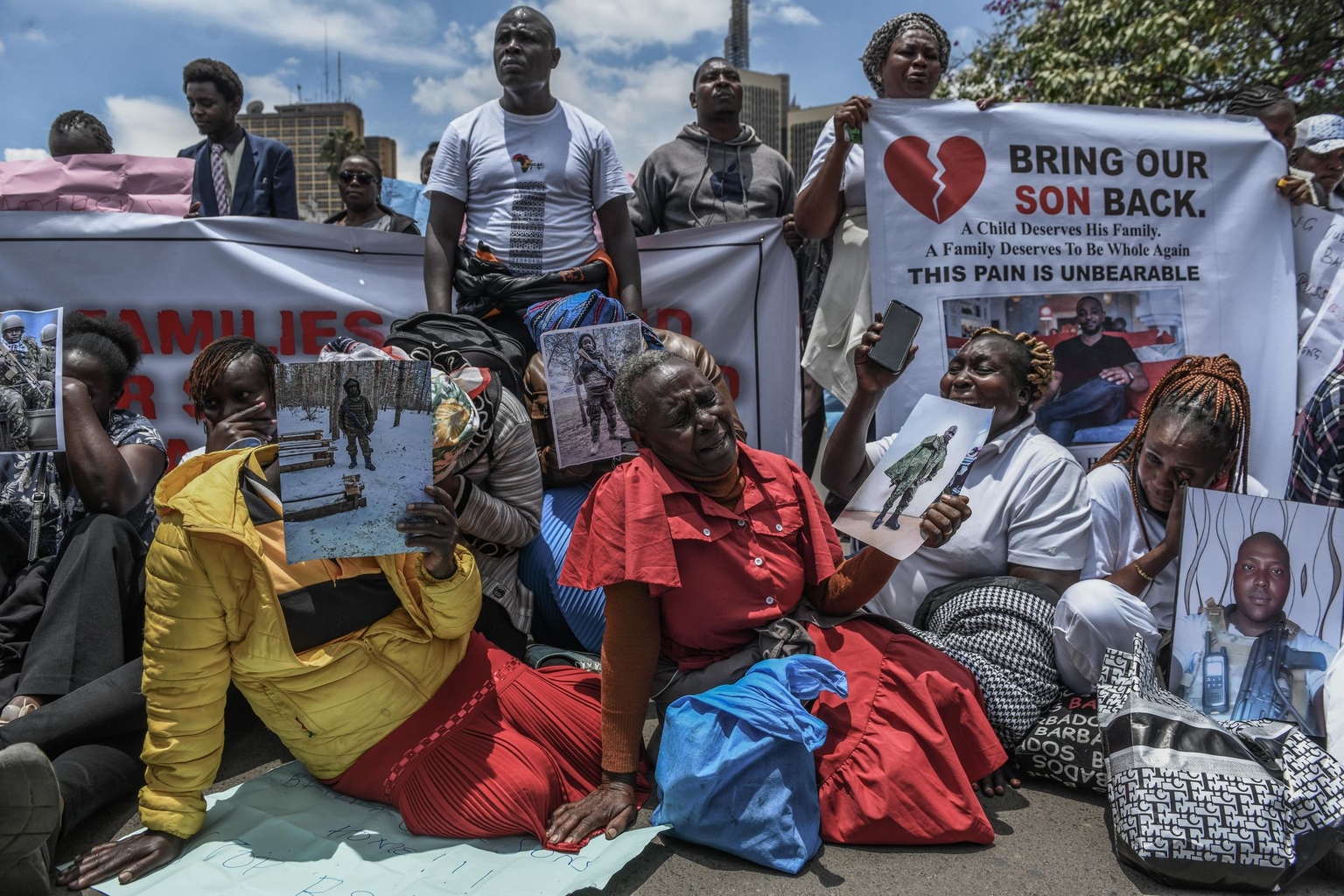 Families of Kenyans allegedly recruited to fight alongside the Russian army in the war against Ukraine hold photographs of their missing relatives during a protest in Nairobi, Kenya, March 5, 2026. (Gerald Anderson / Anadolu via Getty Images)
According to Obaji, Russia initially recruited members of armed groups in the Central African Republic, offering them military training and lucrative payments in exchange for laying down their arms. As recruitment spread across Africa, agents began contacting people in person and on social media, often promising them civilian jobs in Russia.
“When (recruits) get to Moscow… they are handed contracts written in Russian language,” Obaji said. “When they sign these contracts, they’re eventually told that, look, you don’t have any job in the places that you thought you were going to work in. The only option you have is to get to the front lines in Ukraine and work.”
Obaji has spoken to families of African recruits, many of whom were unaware that their relatives would end up fighting in Ukraine. Others, however, knowingly took the risk in exchange for financial rewards.
“For a lot of people, it’s a good way, an escape route out of poverty,” he said.
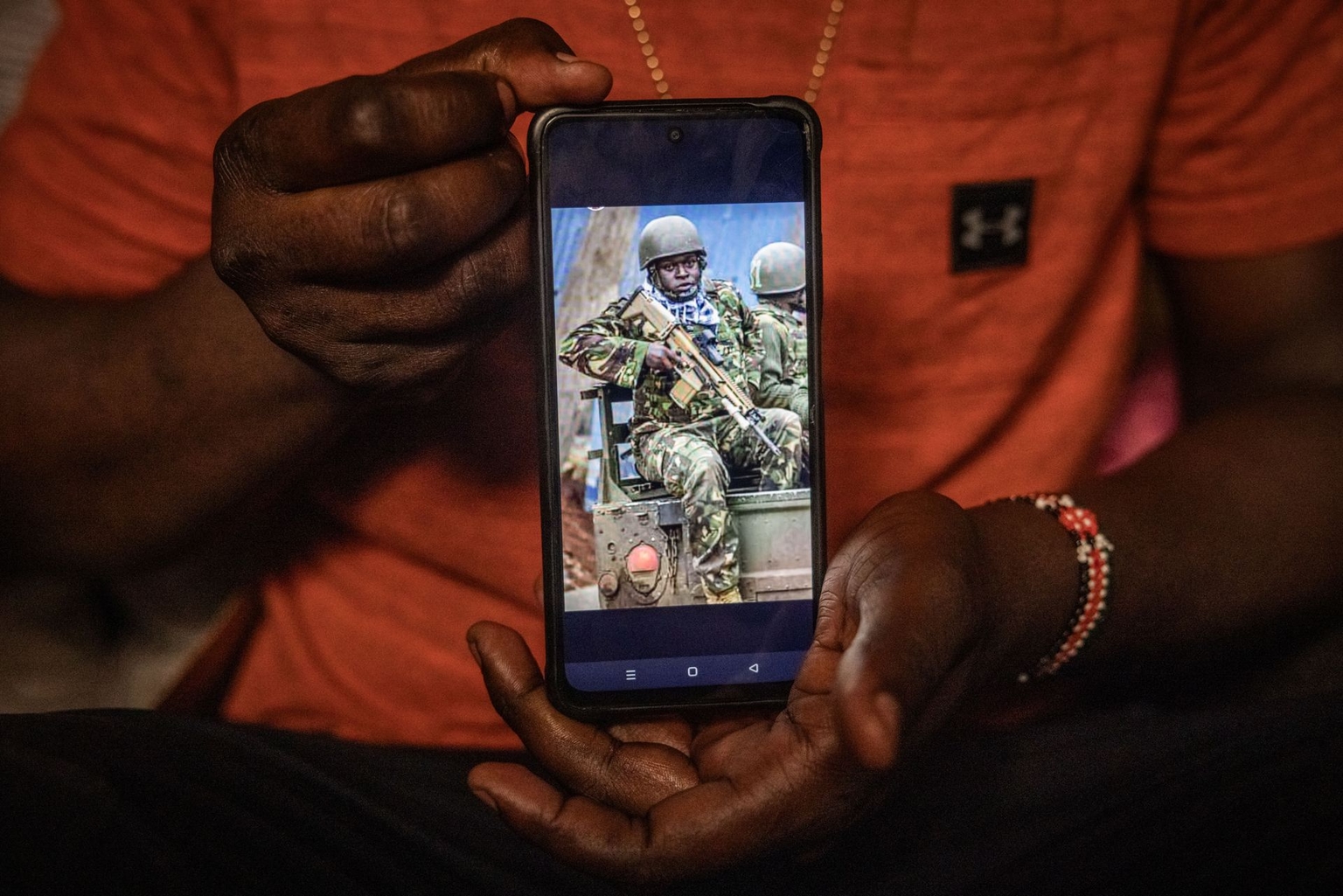 Evans Khagola holds a photograph of Oscar Khagola Mutoka in Nairobi, Kenya, Jan. 21, 2026. Oscar is among Kenyans reportedly recruited to fight alongside Russian forces in Russia’s war against Ukraine. (Ed Ram / For The Washington Post via Getty Images)
In 2026, several African governments began taking action to stop Russian military recruitment. Kenya and Ghana directly asked Moscow to stop recruiting their citizens, while South Africa and Botswana warned people against accepting lucrative job offers in Russia.
According to Ukrainian intelligence, Russia recruited 699 Burundians and 530 Zimbabweans in the first nine months of 2026, up from 30 and 65, respectively, in all of 2025.
Moscow’s expanding recruitment in Africa fits into the Kremlin’s broader strategy of sustaining its war in Ukraine. Russia remains committed to capturing all of Donetsk Oblast, an objective that will require additional manpower at a time when Russia is already struggling to replenish its forces and recruitment of contract soldiers is slowing.
Experts expect Moscow to rely on covert recruitment methods at home and abroad for as long as possible to avoid a repeat of the political backlash triggered by the 2022 mobilization, which sparked widespread protests and drove hundreds of thousands of Russians out of the country.
“They definitely have to spread their tentacles across the continent,” Obaji said when asked about Russia’s recruitment plans for 2027.