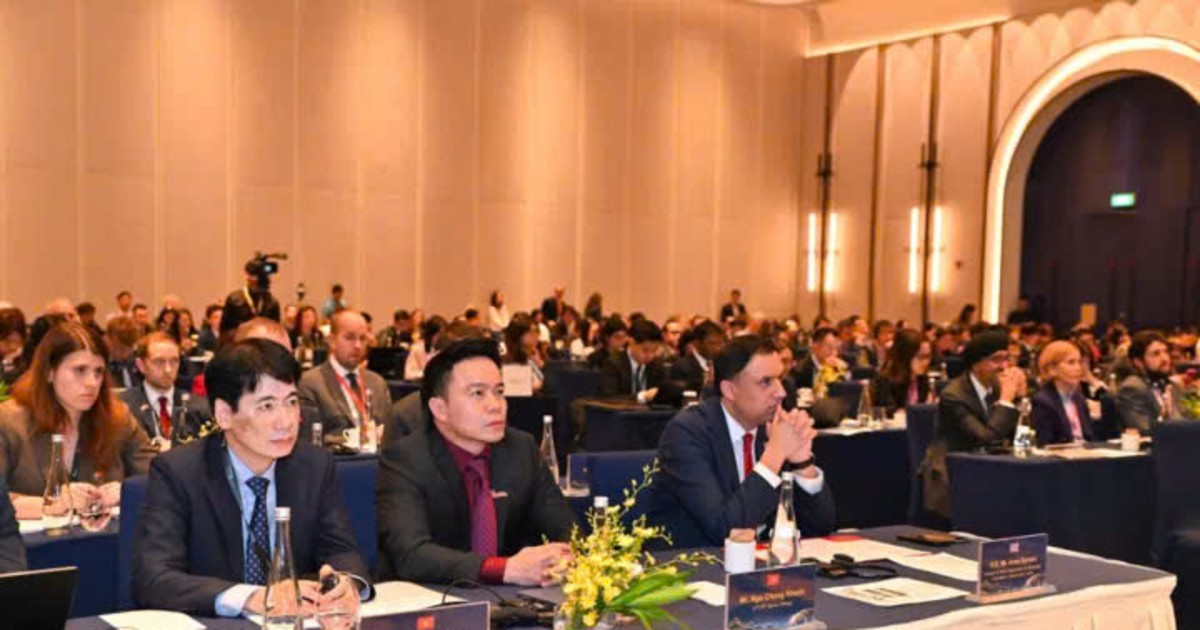
The CPTPP-ASEAN-EU Business Forum 2026 officially opened in
Hanoi on November 25 afternoon, bringing together leaders and representatives
from Vietnam, the European Union (EU), ASEAN, CPTPP member economies,
international organizations, business associations, and enterprises from both
domestic and international markets, reported the Government’s online newspaper (chinhphu.vn).
In his opening remarks, Vietnamese Deputy Minister of Industry and
Trade Luong Hoang Thai, as quoted by the newspaper, noted that the global economy is undergoing profound
transformations, including the restructuring of supply chains, rapid
technological advancements, and increasing demands for sustainable development.
These changes present new challenges while also highlighting the need for
stronger economic connectivity among nations.
According to the Vietnamese Deputy Minister, the CPTPP member economies, the ASEAN, and the EU possess highly complementary strengths. CPTPP is distinguished by
its high-standard trade commitments, ASEAN by its dynamic growth and
manufacturing capabilities, and the EU by its large market, investment capital,
technological expertise, and innovation capacity.
Strengthening ties among these three regions, he said, would
create new growth momentum while helping reinforce an open, stable, and
rules-based international trading system.
As Chair of CPTPP in 2026, Vietnam places particular
emphasis on translating government commitments into tangible development
opportunities for businesses. Following the dialogue between CPTPP senior
officials and business leaders held in Ho Chi Minh City in July 2026, this
forum marks a significant step forward by elevating discussions to the
ministerial level and expanding participation to include ASEAN and EU
stakeholders.
Four priority areas
for cooperation
The Vietnamese Deputy Minister proposed four key areas for future
cooperation.
First, the parties should make better use of existing free
trade agreements (FTAs), enhance policy coordination, reduce compliance costs,
and create favorable conditions for businesses, particularly small and
medium-sized enterprises (SMEs), to benefit more effectively from economic
integration.
Second, the three regions should leverage their
complementary strengths in markets, capital, technology, and production
capabilities to promote investment and cross-regional cooperation, building
diversified, sustainable, and resilient supply chains.
Third, green transition, digital transformation, and
innovation should become new drivers of economic growth and competitiveness.
Fourth, governments and businesses should foster a
supportive environment that enables enterprises to propose initiatives,
establish partnerships, and turn business opportunities into concrete projects.
He also expressed hope that the Hanoi Business Action
Package 2026, unveiled at the forum, would provide a foundation for converting
business recommendations and networking initiatives into practical cooperative
activities after the event.
Speaking at the forum, Mr. Maroš Šefčovič, European Commissioner
for Trade and Economic Security, reaffirmed the EU’s commitment to being a
reliable partner through trade agreements based on fairness and mutual benefit.
He noted that the EU currently maintains the world’s largest network of FTAs,
with its agreements covering more than half of the global population.
Regarding ASEAN, Mr. Šefčovič described the bloc as
strategically and economically significant to the EU. Trade relations between
the two blocs are already strong, with free trade agreements with Singapore and
Vietnam currently in force. The EU is continuing to expand and deepen its trade
cooperation frameworks with ASEAN countries, aiming to strengthen economic
integration between the two regions.
Beyond trade, the EU and ASEAN are also enhancing
collaboration in areas such as digital trade, green technology, sustainable
services, and resilient supply chains. The EU hopes that bilateral FTAs with
individual ASEAN member states will gradually lay the groundwork for a future
region-to-region trade agreement between ASEAN and the EU.