
The truth will set you free — or get you imprisoned in Korea.
In 2018, an assault victim was fined for sharing the court ruling against his attackers with neighbors. In 2024, the Supreme Court found a civic activist guilty of defamation for naming so-called bad fathers who refused to pay child support. That same year, a YouTuber was fined for identifying a man who attacked and tried to rape a woman in Busan.
In Korea, speaking up against someone’s wrongdoing, whether it is against sexual harassment, school violence, unpaid wages, marital infidelity or physical assault, can land anyone in criminal court, even if every word is true.
Article 307, clause 1 of the Criminal Act punishes not only people who spread lies about others but also those who publicly state facts that damage someone’s reputation. The offense is called defamation using statement of facts because a statement can be entirely true and still be a crime.
The clause is one of the most debated in Korean law. In November 2025, President Lee Jae Myung ordered the government to review abolishing it. A year later, it remains on the books because of clashing opinions over the need to protect societal order over freedom of speech.
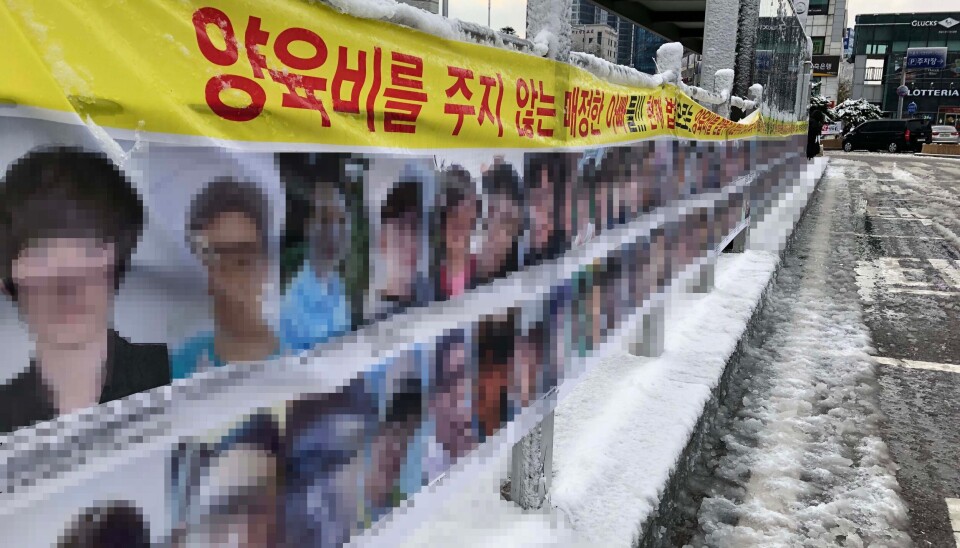
A banner publicly displaying the faces of parents who refused to pay court-ordered child support is displayed.
YONHAP
No good deed goes unpunished
“I got sued for 29 cases of defamation due to a statement of facts,” Koo Bon-chang, a civic activist behind the Bad Fathers website, told the Korea JoongAng Daily. The website was created in 2018 and publicly posted photos and the names of parents — mostly fathers, hence the name of the website — who allegedly did not pay court-ordered child support.
The people who sued Koo claimed the website’s posts — based on simple data such as name, contact information and/or the duration or amount of their unpaid child support — hurt their reputation and committed defamation due to statement of facts.
At Koo’s first trial in 2020, all seven jurors found that he had acted in the public interest and acquitted him. An appeals court reversed the verdict. The case made it to the Supreme Court, which upheld a 1 million won fine ($750), suspended for two years.
“Lawyers told me I practically won the cases because my conviction was extremely lighter than other people’s in such cases,” Koo said. “Maybe I did. But under the law, a conviction is still a conviction.”
In another publicized example, a woman named Pyo Ye-rim, who spoke up against her former bullies from high school, was threatened with defamation lawsuits. She started a National Assembly petition in 2023 calling for abolition of the clause, which surpassed 50,000 signatures, before she died by suicide in October that year.
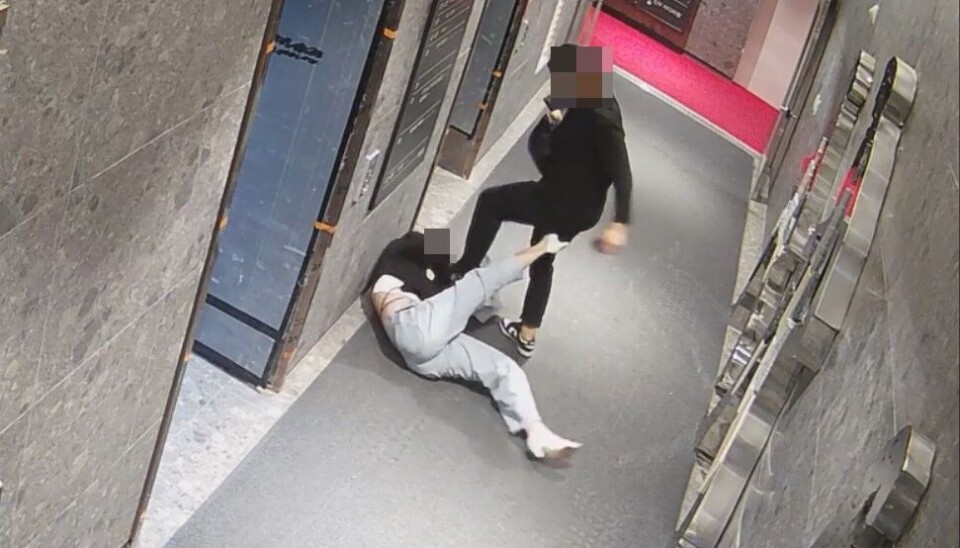
CCTV footage of a man attacking a woman with no acquaintance in Busan, on May 22, 2022
VINCENT LAWFIRM
Why is this law here in the first place?
The law mirrors that of Japan — an honor-oriented society that believes private matters such as one’s marital status or health conditions can be critical to one’s reputation when publicized, even if they are facts.
When Korea wrote its own Criminal Act in 1953, lawmakers benchmarked Japan’s criminal law and have not changed it since. Korea follows the continental civil law tradition that centers on written laws enacted by legislatures. Contrastingly, the United States largely follows the common law tradition where judicial precedents play a more important role.
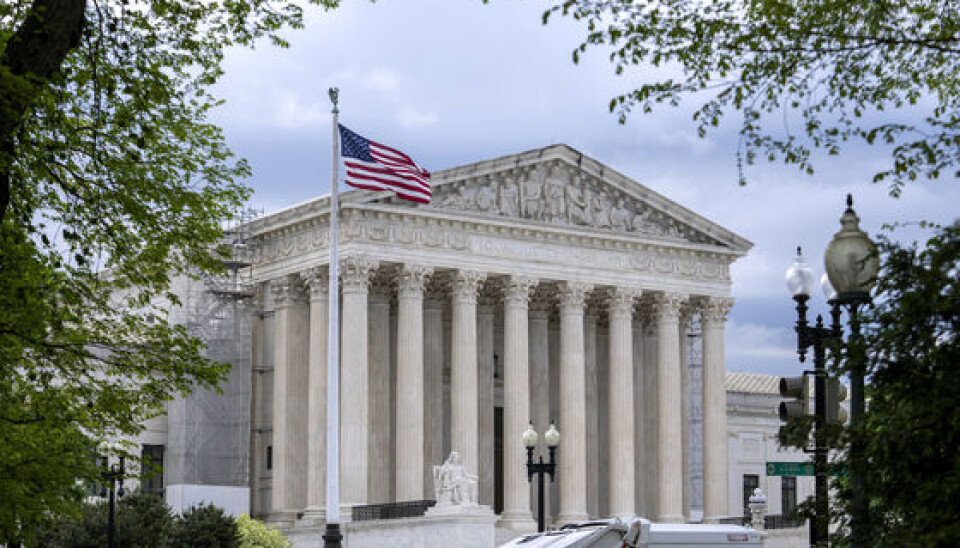
The U.S. Supreme Court is seen on Capitol Hill in Washington, on April 25, 2024.
AP/YONHAP
“The law was already in the Japanese penal code and it simply took root there,” said Prof. Park Kyung-sin, a law professor at Korea University and the director of Open Net, a nongovernmental organization that advocates for protection of free speech. “That’s because Korea’s criminal code [for the clause] was never changed.”
Aside from the legal text, Korean society itself also played a part. As a culture that places great importance on how one is perceived by those around them, protecting one’s “dishonorable” secrets and one’s reputation is seen as a responsibility of the government. The sentiment was reflected in the law to prioritize protecting reputation over freedom of speech.
“Korea has kept a centralized bureaucracy for at least 1,000 years,” said Keith Park, an attorney at Lawfirm Hanjung. “The state’s role in deciding who is in the right and who is in the wrong is much bigger in Korea than in the United States. The state’s role [is big] because of a paternalistic view of the state […] and because of the influence of continental law.”
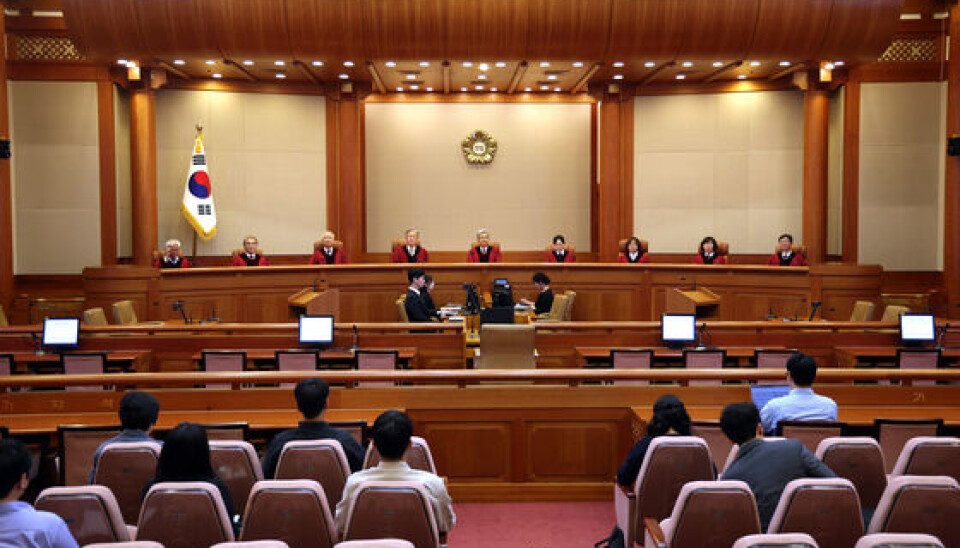
Justices are seen inside the Constitutional Court in central Seoul on May 21.
YONHAP
What about other countries?
In the United States, truth is an absolute defense. Notably, 40 states, such as California, New York and Massachusetts, as well as the District of Columbia, have anti-SLAPP, or “strategic lawsuit against public participation” laws designed to stop meaningless lawsuits brought forth to silence criticism on matters of public interest.
These laws exist to prevent the cost and burden of a lawsuit from becoming a weapon against people who speak out. Although the United States doesn’t have a federal criminal defamation law, some states such as Florida have criminal defamation for false information on the books.
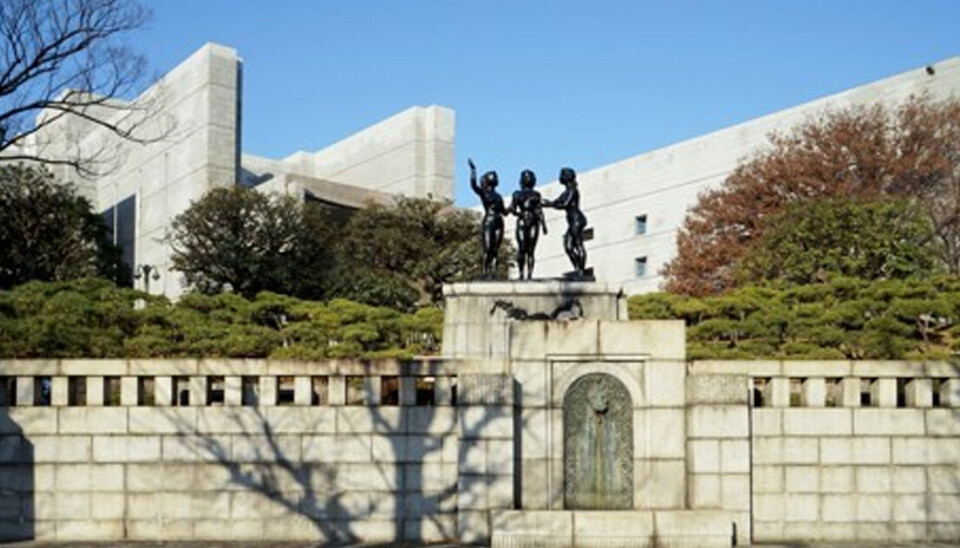
The Supreme Court of Japan in Tokyo
YONHAP
Germany sits in between. The truth can also be punished in Germany depending on its severity, not under defamation but under its insult laws. The clause is to protect human dignity after the Nazi regime systematically used propaganda and slander to target its vulnerable groups. Similarly, Swiss criminal law allows defendants to avoid punishment if they prove their statement was true or reasonably believed to be true. However, courts bar truth as a defense and impose criminal fines for remarks meant mainly to damage reputations without serving the public interest, especially on private matters.
Japan still punishes defamation due to statement of facts as a criminal offense, as its legal code is the same as Korea’s, word for word. However, it has stricter rules for applying penalties, as the victim of the defamation must personally file a complaint against the harasser. In Korea, police can investigate without the victim personally filing a complaint.
An image of a statue of Justitia, the goddess of justice
KOREA JOONGANG DAILY
Crime and punishment
Under Korean law, defamation is punishable by up to two years in prison or a fine of up to 5 million won. If it occurs online, a separate law raises the maximum to three years in prison or a 30 million won fine
However, a true statement is not punishable if it was made “solely” in the public interest. Courts decide what that means, but critics say the line is vague.
“The individual defamation complaints against me were identical, word for word,” Koo said. “However, one prosecutor said no charges. Another suspended the indictment. Another indicted me. That’s absurd.”
A statement must meet four conditions to count as defamation using statement of facts in Korea: it must be made public, with the person in the statement identifiable, be a fact and not an opinion and it must be capable of lowering that person’s societal standing.
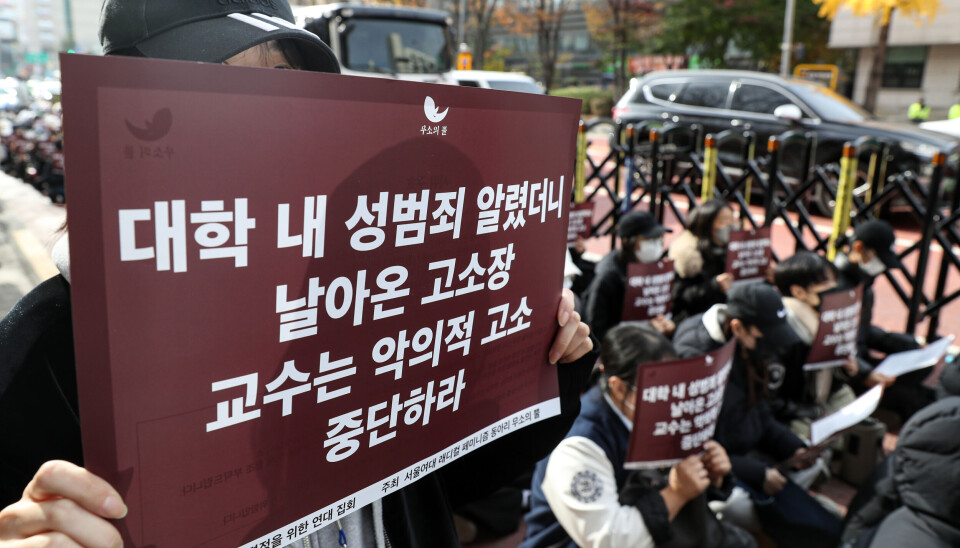
Seoul Women’s University students rally outside Nowon Police Station demanding a professor accused of committing sexual misconduct drop the lawsuit against the students who put up a poster on campus calling out the professor, during a protest in northern Seoul on Nov. 19, 2024.
NEWS1
However, the requirements are less clear than they sound.
For example, “public statements” do not require a large number of people. The Supreme Court has previously ruled that telling the story to just one person can count if the one listener is likely to spread the statement. Recently, remarks made to close friends or family who are expected to keep a secret generally saw leeway, but even that differs case by case.
“Even a group chat with three or four friends, or an anonymous online forum such as Blind can be risky,” said Shim Ji-yeon, the head attorney of the law office Shim & Lee, which specializes in representing survivors of sexual crimes. “The restriction of not being able to tell your story to those you want to must be changed.”

Actor Jung Ji-so as a younger version of protagonist Moon Dong-eun, a victim of school violence in Netflix limited series ″The Glory″ (2022-23)
NETFLIX
Similarly, the definition of “identifiable” is also vague, as some cases have argued that a job title or a description is enough to identify someone — even without using their actual names. A “fact” in legal terms does not mean “the truth,” but rather a claim that can be objectively proven true or false. What counts as lowering someone’s social standing also varies from case to case.
“[The rulings] tend to follow the social climate,” attorney Shim said. “During the height of the #MeToo movement, there was an expectation that if we stress that the person spoke up for the public good — which makes the statement ineligible for punishment — the court would recognize and rule it that way, and they did.”
However, nine years have passed since the movement began and the court’s leniency to view such statements as part of that bigger movement seems to have faded, according to Shim.
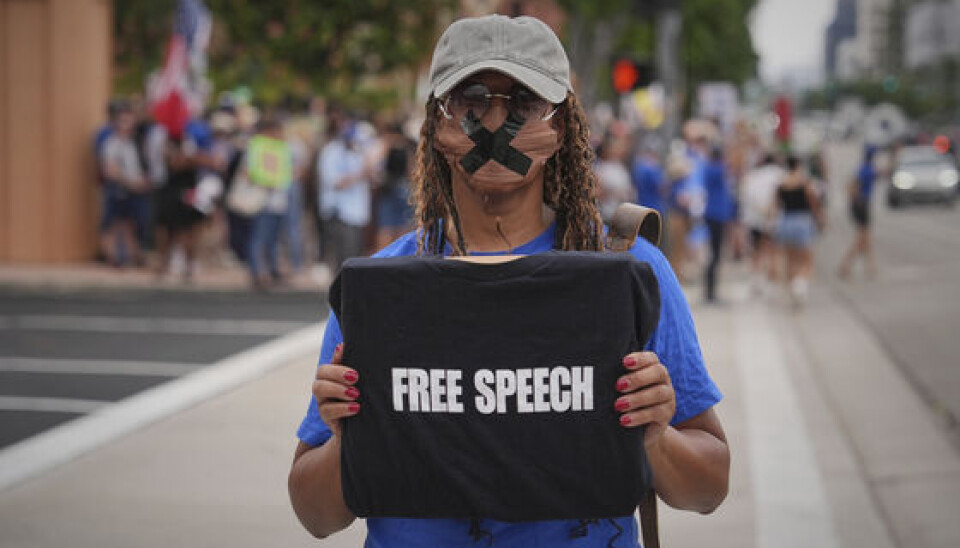
A protester holds a ″Free Speech″ sign at a demonstration in Burbank, California, on Sept. 18.
AP/YONHAP
Gag order on free speech?
Critics find the law to be a restraint on free speech, as victims of sexual abuse or crimes and whistleblowers cannot speak up in fear of being punished.
“The clause does more to restrict victims than to protect them,” attorney Shim said. “More often, victims are sued for defamation in return after reporting they have been subject to a sex crime. Sometimes, the perpetrator files before the victim has gathered the courage to come forward to legally file the complaint.”
In some cases, people accused of sexual crimes have even filed complaints of defamation using statement of facts against trial witnesses and people their alleged victims had confided in, according to Shim.
More than one-third of people who sought legal counseling from women’s rights advocacy group Womenlink in 2017 — at the height of the #MeToo movement — were seeking help after facing countersuits or other legal action after speaking up about their sexual harassment or assault history, according to the group. The group claimed many victims ultimately abandon their cases because of the burden of prolonged legal battles.
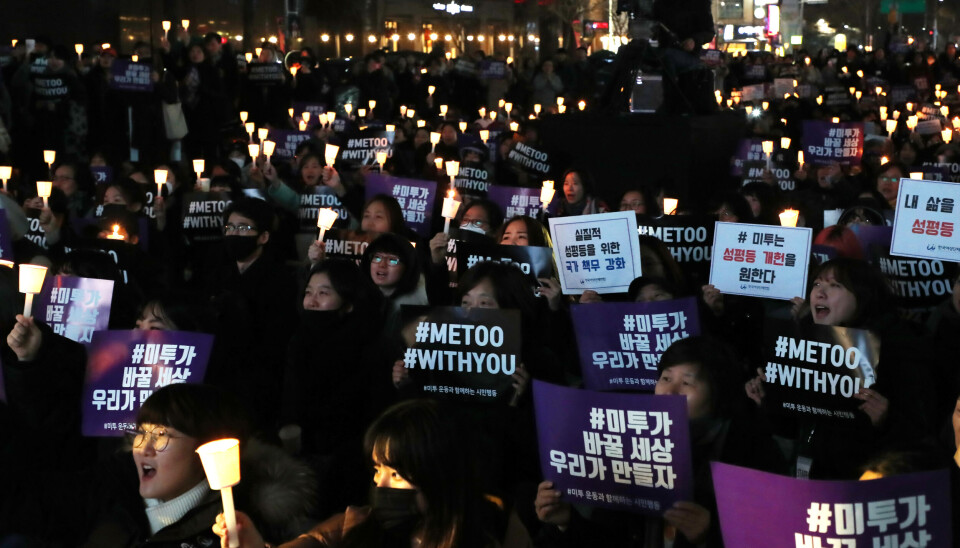
Protesters hold candles and placards calling for an end to sexual harassment at a rally in central Seoul, on March 23, 2018.
NEWS1
“If the public interest in those claims is recognized, you won’t be punished,” said Hwang Jin-seop, an attorney at Law Firm Taeryun. “However, the investigation itself is stressful. Cases can take three months — if the police close them quickly. If it ends up going to trial, it can take more than a year.”
The law reaches the workplace too, and foreigners in Korea often learn the hard way.
“I had to be very careful telling my students I was leaving the hagwon [private education institutions] because the owners didn’t pay my salary due to strict legal defamation regulations in Korea,” said an English-language teacher in Korea from the Netherlands, who requested anonymity.
The risk of defamation charges can discourage employers from giving candid references, Brendon Carr, senior foreign counsel at HHC Employment & Labor Law, said. Even a statement such as “we fired him for sexual harassment” could expose a former employer to a complaint, he said.
“For teachers from the United States, Canada and Britain, the prospect of facing criminal charges for saying a hagwon failed to pay agreed-upon wages is difficult to comprehend,” Carr said.
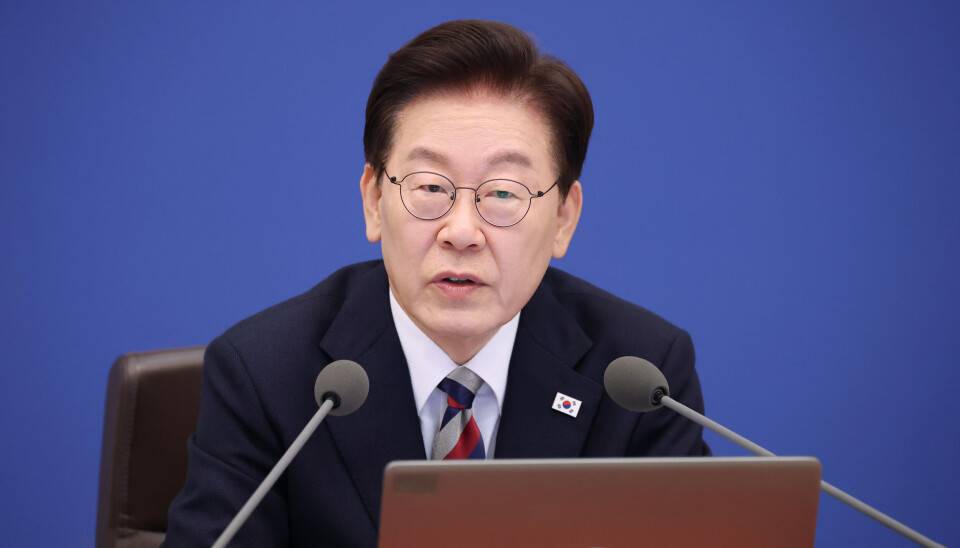
President Lee Jae Myung speaks during a Cabinet meeting at the Blue House in central Seoul on Nov. 3.
YONHAP
The law is under pressure as never before
Efforts to abolish the law are gaining momentum.
“Please consider abolishing the defamation law for statement of facts,” President Lee said during a cabinet meeting in November 2025. “How is saying what it is defamation? It must be resolved in civil court. It is not something for criminal punishment.”
The overhaul is still yet to come, but at least seven bills from Democratic Party (DP) lawmakers in the National Assembly seek to abolish or amend the law. Among them, DP Rep. Park Ju-min has repeatedly introduced bills to abolish criminal penalties for the clause since 2021 and most recently in September 2025. DP Rep. Min Byoung-dug took a different approach and proposed keeping the law but having it apply only to “extremely” private personal matters.
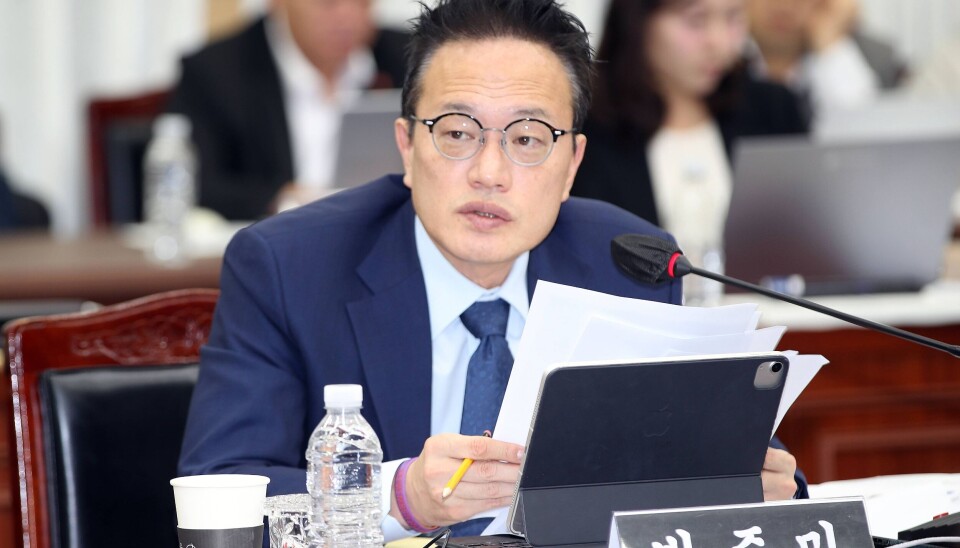
Ruling Democratic Party lawmaker Park Ju-min questions officials during a National Assembly audit in Jeju, on Oct. 22.
NEWS1
The law has also received criticism from international bodies, notably the United Nations — repeatedly since 2011.
“The Committee continues to be concerned by the chilling effect that criminal defamation laws […] have on freedom of expression in the Republic of Korea,” the United Nations Human Rights Committee said in its report on Korea in 2023. “The State party should consider decriminalizing defamation and should in all cases restrict the application of criminal law to the most serious defamation cases, bearing in mind that imprisonment is never an appropriate penalty for defamation.”
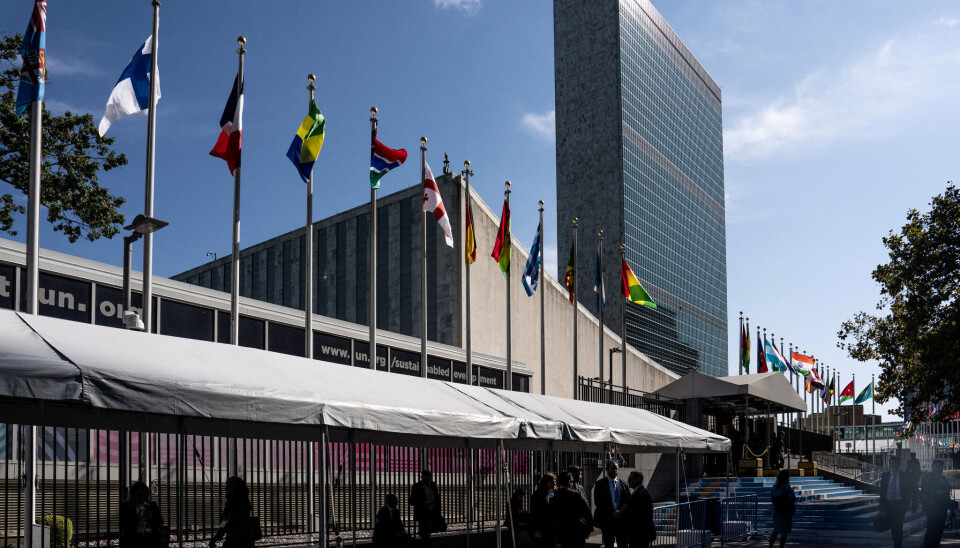
The main entrance at United Nations headquarters in New York on Sept. 22.
REUTERS/YONHAP
The law went to the Constitutional Court of Korea twice and was ruled constitutional in both cases. In 2016, the court ruled the law’s punishment for such crimes taking place online was constitutional, with seven judges in favor and two dissents. Five years later, the court ruled the Criminal Act clause constitutional, but with a very slim margin of five for and four against.
Abolition may come with consequences
As with a lot of laws that seem outdated, however, the clause still has supporters and may not disappear so soon.
In a 2016 survey by the Seoul Bar Association, 49.9 percent of lawyers surveyed agreed the clause should be decriminalized and moved to the civil court. Another 33.2 percent wanted the law unchanged and 16.5 percent supported criminal punishment but only punishable by fines — not prison time. Two years later, 330 lawyers and law professors signed a petition calling for an abolition of the law.
The defenders of the law worry that some facts are no one’s business.
When the Constitutional Court of Korea upheld that the law was constitutional, its main concern was that the absence of the law could leave private personal matters exposed with no consequences. A person’s medical history, sexual orientation or family life can both be true and still be devastating to reveal.
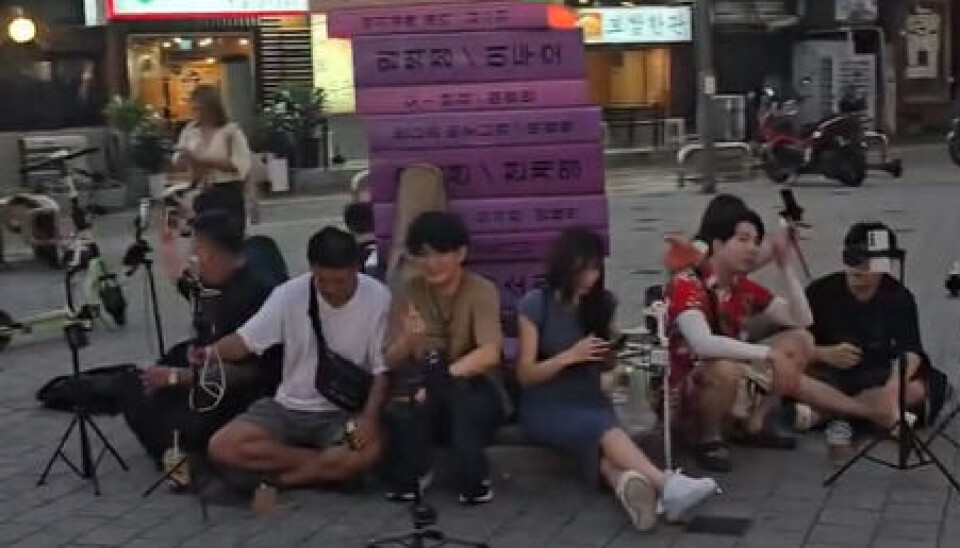
YouTubers and streamers participate in a live broadcast near Bucheon Station, Gyeonggi, in an undated photo.
JOONGANG ILBO
Other defenders of the law warn that a sudden abolition could lead to societal disorder, especially the potential dangers of an influx of fake news triggered by cyber wreckers, or YouTubers who profit from exposing the private lives of public figures, if the law is to disappear.
“This matter should be handled with much caution,” said Prof. Lee Chang-hyun, a former prosecutor and a current law professor at Hankuk University of Foreign Studies Law School. “For someone who will become [a public figure] such as the president, the public has the right to know the facts, even if it hurts their reputation. However, for an ordinary citizen like me, my reputation could be left defenseless without legal protection.”
“In Korea, criminal punishment is quick and certain, but a civil suit drags on for years only to end up in small payments,” Prof. Lee said. “If a cyber wrecker makes a 50 million won in one expose and the fine is only a few million won in damages years later, the temptation to [post such videos] only grows.”

The Seoul Central District Court in Seocho District, southern Seoul, on Feb. 18
NEWS1
Even if the law moves to the civil court, the courts lack the necessary tools to carry out the change. Most notably, the lack of a discovery system, which the U.S. courts use to allow each side to hand over materials such as depositions, interrogatories or requests for documents before trial, and a punitive damages system, according to attorney Keith Park. Without them, a person hurt by a post would have to gather evidence alone, only to receive a small payout in the end.
Victims can already sue for civil damages over true statements, but the harder question is what comes next, according to attorney Hwang.
“Whether the amount of damages should change after decriminalization is a question that society needs to answer,” Hwang said.
BY LEE JI-WON [lee.jiwon10@joongang.co.kr]