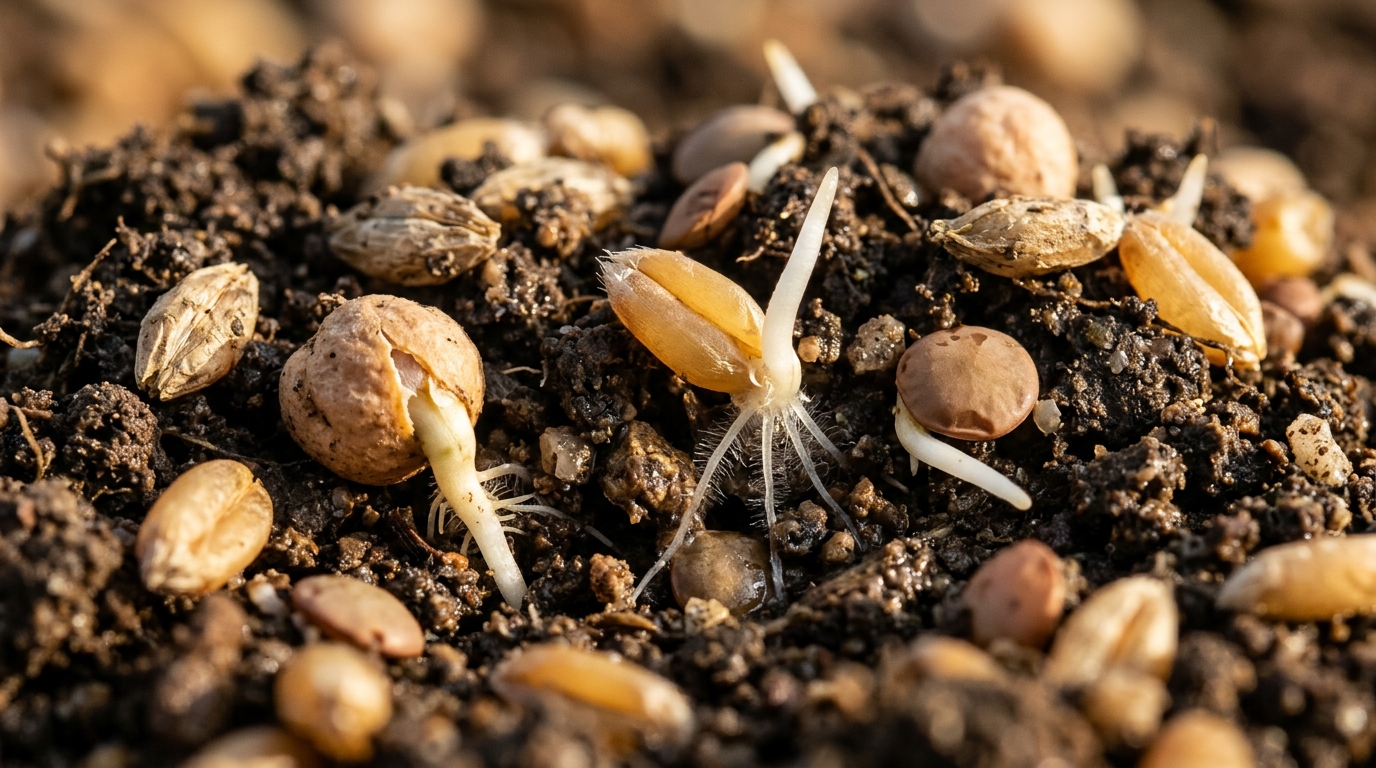
Modern global agricultural systems face intensifying environmental pressures driven by climate change, with abiotic stresses including severe drought, temperature extremes, and soil salinization estimated to reduce crop yield potential by more than 50 percent through impaired germination and compromised seedling establishment. To address these vulnerabilities in foundational cereal and legume crops, a comprehensive scientific review published in Plant Cell Reports examines how next-generation seed priming interventions are evolving beyond traditional water-soaking methods into high-precision agronomic technologies. Cereals such as wheat, rice, and maize provide essential dietary carbohydrates but typically lack lysine, whereas legumes like chickpeas, lentils, and soybeans supply complementary proteins and engage in symbiotic nitrogen fixation. Conventional seed hydration practices have long demonstrated the ability to initiate pregerminative metabolic repair, yet their widespread industrial adoption remains constrained by rapid post-treatment viability loss, variable environmental sensitivity, and absent standardization. The published synthesis demonstrates that modern physical modalities, engineered nanocarriers, chemical cell-cycle arrest, and predictive machine learning models are creating coordinated pathways to stabilize seed vigor and protect global harvests.
Mechanistically, seed priming operates as a controlled presowing physiological intervention that hydrates the seed sufficiently to initiate metabolic repair during imbibition and activation lag phases without crossing the critical threshold of radicle protrusion. During this controlled hydration, cellular repair mechanisms are initiated, including the upregulation of antioxidant defenses, early mobilization of stored energy reserves, and enzymatic DNA restoration. When seeds are subsequently dehydrated back to their initial baseline moisture content, the embryo is arrested in a state of physiological readiness that preserves a molecular stress memory. Epigenetically, this primed state involves dynamic chromatin reorganization that shifts target genomic loci from condensed heterochromatin to transcriptionally active euchromatin, enriched by activating histone marks like H3K4me3 and the removal of repressive marks like H3K27me3 on stress-responsive promoters. Simultaneously, internal hormonal balance shifts through the accelerated catabolism of abscisic acid via the upregulation of CYP707A-encoded enzymes alongside increased gibberellic acid biosynthesis via GA3ox and GA20ox, activating hydrolytic enzymes like alpha-amylase that ensure rapid emergence upon rehydration.
The metabolic and antioxidant reconfiguration initiated during priming prepares the embryo to neutralize damaging oxidative bursts typically encountered during field emergence. Controlled hydration accelerates mitochondrial biogenesis, which elevates the cellular ATP-to-ADP ratio and enhances respiration rates required for subsequent cellular elongation. Concurrently, the primed metabolome accumulates protective osmolytes such as proline and glycine betaine, alongside secondary metabolites including phenolics and tocopherols that reinforce cellular membrane integrity against desiccation. Enzymatic antioxidant systems are significantly amplified, establishing an active hierarchy wherein superoxide dismutase dismutates superoxide radicals into hydrogen peroxide, which is subsequently decomposed into water and oxygen by catalase and ascorbate peroxidases. Rather than merely detoxifying cellular tissues, regulated pulses of reactive oxygen species serve as vital secondary signaling messengers that stimulate the transcription of downstream stress-adaptation genes. This coordinated biochemical poise enables germinating seeds to lower mean germination times and maintain emergence synchronization even under severe moisture deficits or saline soil conditions.
Empirical evaluations across diverse cereal crops illustrate significant agronomic resilience following tailored priming treatments. In wheat, priming seeds with 50 parts per million salicylic acid mitigates terminal heat stress to safeguard mature grain weight, while gamma-aminobutyric acid applications improve photosynthetic efficiency and total biomass during drought. For maize cultivation, seed priming using 1 percent zinc sulfate solutions combined with foliar microelement sprays increases kernel zinc concentrations by up to 43.6 percent, while silicon nanoparticle priming reduces toxic cadmium accumulation in grains grown on heavy-metal-contaminated ground by limiting root-to-shoot translocation. Salinity tolerance in rice is substantially bolstered by nanopriming with chitosan and silver nanoparticles, which reprogram stress metabolism and protect seedling vigor. Furthermore, halo-priming oat seeds with calcium chloride solutions optimizes potassium-to-sodium ratios to counteract sodium toxicity, and barley seeds treated with potassium nitrate, calcium chloride, or zinc-oxide nanoparticles sustain membrane stability and photosynthetic capacity under challenging dryland conditions.
Legume crops display corresponding physiological and agroecological enhancements under specialized priming treatments, particularly in drought endurance, seed germination rates, and root nodulation. In chickpea trials conducted at 21 degrees Celsius, osmopriming achieved an 87.89 percent germination rate under restricted 50 percent field moisture capacity while significantly augmenting root and shoot dry biomass. Garden pea seeds primed with calcium chloride or salicylic acid exhibited heightened relative water content and elevated membrane stability indices under elevated thermal stress. Similarly, biopriming soybean seeds with a formulation combining sodium carboxymethylcellulose and gum Arabic significantly suppressed malondialdehyde accumulation, thereby preventing lipid peroxidation under both drought and flooding regimes. Beyond abiotic stress tolerance, nutrient priming with molybdenum promotes biological nitrogen fixation in common beans and soybeans by providing an essential cofactor for the nitrogenase enzyme complex, while priming lentils with sorbitol or polyethylene glycol accelerates phenological development and enhances beneficial rhizobial microbiota diversity within emerging root nodules.
Targeted seed priming also demonstrates substantial efficacy as an agronomic biofortification tool to mitigate global human micronutrient deficiencies, particularly regarding zinc, iron, and protein density in staple crops. Pot experiments show that wheat seeds primed with 0.5 percent zinc sulfate achieve a 63.1 percent grain yield expansion alongside a 43.1 percent increase in grain zinc concentration, while field evaluations using 0.3 percent zinc sulfate elevate grain yields by 14 percent. In rice, low-dose zinc sulfate priming combined with urea seed treatments and foliar sprays elevates final grain zinc concentrations by up to 37.9 percent. In grain legumes, chickpea priming with 0.05 percent zinc sulfate bypasses soil fixation constraints to increase seed zinc accumulation by 29 percent. Furthermore, treating mung bean seeds with 200 parts per million molybdenum trioxide nanoparticles accelerates root nodule formation by 73.3 percent, driving overall grain yield gains of 32.53 percent and boosting final protein content to approximately 24.3 percent.
In addition to nutritional and physiological gains, microbial biopriming serves as an effective preharvest biocontrol intervention to suppress damaging fungal pathogens and dangerous mycotoxin accumulation. Inoculating seeds with antagonistic biological agents, such as Bacillus subtilis, Pseudomonas fluorescens, and Trichoderma species, establishes a protective microbial barrier across the seed coat and developing rhizosphere. In maize grain trials, selected Bacillus isolates suppressed the proliferation of Aspergillus flavus and decreased aflatoxin B1 contamination by up to approximately 94 percent through the secretion of antifungal lipopeptides and the downregulation of the fungal toxin-biosynthesis gene aflR. In wheat, biopriming using beneficial bacterial isolates markedly decreased Fusarium head blight severity and reduced deoxynivalenol vomitoxin concentrations below detectable limits. Similarly, inoculating garden pea seeds with Bacillus strains expressing cyclic lipopeptide pathways and iron-chelating siderophores suppressed Fusarium proliferatum and Fusarium equiseti infections while improving seedling emergence velocity and dry biomass.
Despite these substantial benefits, widespread industrial deployment of conventional seed priming has encountered persistent operational bottlenecks. The cyclical hydration and redrying process often compromises post-treatment storability, leaving primed seed lots prone to rapid lipid peroxidation and reducing viable commercial shelf life to less than six months. Bulk liquid processing also introduces uneven hydration kinetics and severe hypoxia within commercial-scale soaking vessels. Furthermore, priming responsiveness is strongly genotype-dependent, with distinct crop cultivars and varying seed lot vigors exhibiting disparate physiological thresholds that undermine universal treatment protocols. To overcome these limitations, advanced physical priming modalities—such as cold atmospheric plasma, magnetopriming, and acoustic ultrasound—operate as entirely dry, residue-free interventions that preserve cellular vitrification matrices. Physical etching and acoustic cavitation generate microscopic fissures that accelerate water and oxygen influx during subsequent sowing, while magnetopriming modulates membrane calcium channels to accelerate alpha-amylase synthesis, triggering beneficial hormetic defense signaling without chemical inputs.
To directly resolve post-treatment seed deterioration during storage, researchers are utilizing targeted chemical cell-cycle regulators, most notably the plant-derived non-protein amino acid mimosine. Mimosine acts as a reversible biochemical checkpoint regulator that temporarily halts cell-cycle progression at the G1-to-S-phase transition, delaying nuclear DNA synthesis while allowing essential organelle reorganization, structural repair, and antioxidant mobilization to proceed. However, mimosine operates within a narrow therapeutic window, as concentrations exceeding 50 to 100 parts per million induce phytotoxicity, root stunting, and altered indole-3-acetic acid oxidase activity. Similarly, protective polyamines such as putrescine and spermidine stabilize cellular membranes by binding anionic phospholipid head groups and shielding nucleic acids, though precise washing and dosage calibrations remain essential to prevent abnormal seedling morphology.
Emerging smart nanocarrier systems offer sophisticated mechanisms to deliver nutrients, phytohormones, and antimicrobial agents while avoiding phytotoxic burst effects. Engineered nanocarriers utilizing biodegradable polymers like chitosan, cellulose nanofibers, and carboxymethyl cellulose encapsulate active compounds to synchronize their release with embryonic metabolic demand. In maize, lignin-carbon nanoparticles effectively control stalk rot caused by Fusarium verticillioides while stimulating seedling radicle growth and soluble protein production, while stimuli-responsive zinc-caffeic acid nanocarriers loaded with kinetin achieve a 3.7-fold increase in hormone uptake under saline conditions. Nevertheless, broadscale environmental application of nanotechnology requires caution; excessive nanoparticle concentrations can trigger cellular oxidative damage, disrupt beneficial soil rhizobia and mycorrhizal networks, or translocate into edible tissues. These risks necessitate strict concentration limits, biocompatible coatings, and advanced mass spectrometry residue profiling to comply with international regulatory frameworks such as European Food Safety Authority standards.
To transition seed priming from empirical trial-and-error to automated precision, computational architectures combining artificial intelligence and machine learning are increasingly integrated into protocol optimization. Supervised forward algorithms, including Random Forest, Artificial Neural Networks, and eXtreme Gradient Boosting, capture complex non-linear biological dynamics to predict germination percentages, emergence kinetics, and biomass accumulation from multidimensional seed and environmental inputs. In fodder pea evaluations under combined thermal and salinity stress, Multivariate Adaptive Regression Splines predicted germination power with a high coefficient of determination of 0.899, while XGBoost predicted seedling fresh weight with an accuracy of 0.966. Coupling these predictive models with multi-objective genetic algorithms and Bayesian optimization allows agronomists to determine exact elicitor concentrations, temperatures, and exposure times. When combined with computer vision diagnostics like the Rice Seed Germination Evaluation System and real-time object segmentation platforms like SeedRuler, machine learning provides automated vigor assessments, though cross-environment reliability still demands multi-location field validation to prevent algorithmic overfitting.
Subject of Research: Physiological, nanotechnological, physical, and computational advancements in cereal and legume seed priming
Article Title: Next-generation seed priming in cereals and legumes: leveraging nanotechnology, physical modalities, and AI-driven machine learning for climate-resilient food security
Article References: Ghallab, D. S. (2027). Next-generation seed priming in cereals and legumes: leveraging nanotechnology, physical modalities, and AI-driven machine learning for climate-resilient food security. Plant Cell Reports, 46(1), Article 4. https://doi.org/10.1007/s00299-026-04022-1
Image Credits: AI Generated
DOI: 10.1007/s00299-026-04022-1
Keywords: seed priming, cereals, legumes, nanopriming, cold plasma, magnetopriming, mimosine, cell cycle regulation, machine learning, abiotic stress, priming memory, biofortification, biological nitrogen fixation, epigenetic remodeling, desiccation tolerance, zinc biofortification, food security