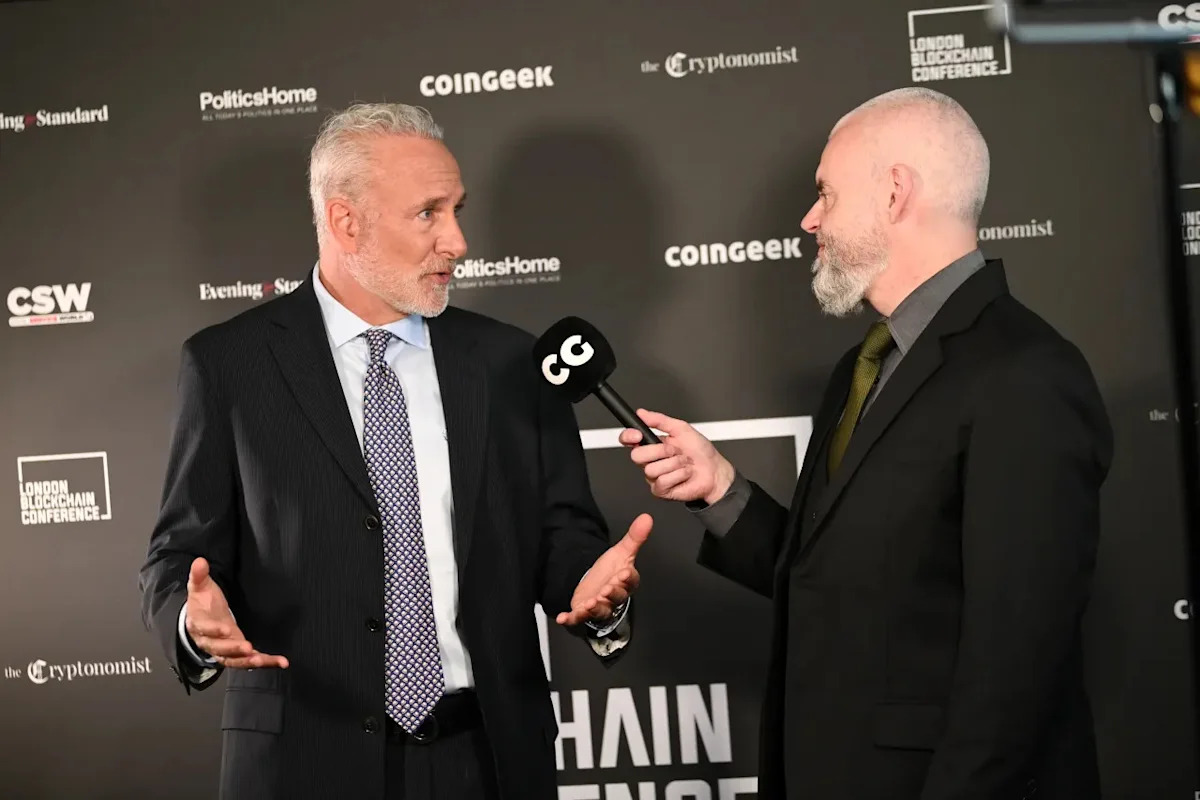
Schiff believes America’s economic troubles run far deeper than the recent weakness in technology stocks or concerns about an artificial intelligence bubble.
He pointed to America’s ballooning budget and trade deficits, arguing that the country has increasingly relied on foreign production while borrowing to finance its consumption.
Schiff highlighted October’s merchandise trade deficit, which swelled to $149.5 billion, marking the third-largest monthly goods deficit in US history.
Peter Schiff sounded the alarm on America’s economic future, warning that the country could be heading toward a devastating financial crisis as mounting debt, persistent inflation and Federal Reserve policy collide.
The longtime gold bull argued that policymakers have effectively traded a deeper financial crisis for years of inflation, leaving the U.S. economy increasingly vulnerable. He warned that reversing that bargain could come at an enormous cost.
‘One Gigantic Bubble’
Schiff believes America’s economic troubles run far deeper than the recent weakness in technology stocks or concerns about an artificial intelligence bubble.
“The entire U.S. economy is one gigantic bubble waiting to deflate. All it needs is the correct pin,” he warned.
He pointed to America’s ballooning budget and trade deficits, arguing that the country has increasingly relied on foreign production while borrowing to finance its consumption.
Schiff highlighted October’s merchandise trade deficit, which swelled to $149.5 billion, marking the third-largest monthly goods deficit in US history. He argued that the deterioration in America’s trade position, alongside its massive fiscal deficits, is setting the stage for a sovereign debt and currency crisis.
“We are headed for a real sovereign debt and currency crisis in the United States,” he said.
He also warned that the fallout could extend well beyond Wall Street, predicting a collapse in stocks, bonds and real estate, alongside widespread defaults and bankruptcies.
“The stock market’s going to crash,” Schiff said, adding that banks and pension funds are “going to fail.”
Fed’s ‘Deal With The Devil’ Could Come Back To Haunt America, Warns Schiff
At the heart of Schiff’s warning is what he described as America’s bargain with inflation.
He argued that policymakers repeatedly chose monetary stimulus and bailouts over allowing the economy to absorb the pain of financial crises, including the 2008 meltdown and the COVID-19 shock.
Story Continues
“We traded a more severe financial crisis for higher inflation. That was the deal with the devil,” Schiff said.
According to him, years of money creation and credit expansion have helped sustain an economic system that would otherwise have faced a much more painful reckoning.
Schiff warned that the Fed now faces an increasingly difficult choice, either it continues fighting inflation and risks triggering a financial collapse, or reverses course and unleashes another wave of monetary stimulus. He believes the latter is inevitable.
“It’s not a question of if. It’s only a question of when and exactly how it’s going to do it,” he said of the Fed’s eventual pivot.
He expects the central bank to eventually cut interest rates and restart massive quantitative easing, potentially even launching QE before rate cuts to suppress longer-term borrowing costs.
But he warned that such a move would come at the expense of the dollar and US Treasury holders, making gold and silver increasingly attractive alternatives.
Schiff Says Fed Must Follow Through On December Rate Hike
In a separate post on X, Schiff pushed back against arguments that the Fed should avoid raising interest rates in December because falling oil and commodity prices, along with easing inflation expectations, suggest price pressures are cooling.
“Some argue that it’s a mistake for the Fed to hike rates in Dec. because oil & other commodity prices have dropped sharply and inflation expectations are falling,” he wrote.
Schiff argued that these trends are happening precisely because markets expect the Fed to keep tightening monetary policy.
“But that’s only happening because markets expect rate hikes. If the Fed fails to deliver, those trends will reverse,” he warned.
His argument is that backing away from a rate hike could undermine the market’s expectations of tighter monetary policy, potentially reigniting inflationary pressures.
According to the CME FedWatch tool, the odds of a 25-basis-point rate hike in December stood at 98.4% at the time of writing.
During the after-hours session on Friday, the SPDR S&P 500 ETF (SPY), which tracks the S&P 500 index, fell 0.63%; the Invesco QQQ Trust ETF (QQQ) declined 0.83%; and the SPDR Dow Jones Industrial Average ETF Trust (DIA) was lower by 0.37%. Retail sentiment on Stocktwits toward the S&P 500 ETF was in the ‘extremely bullish’ territory at the time of writing.
For updates and corrections, email newsroom[at]stocktwits[dot]com.
Stocktwits News Desk has no position in any of the stocks mentioned in this article. StockTwits’ news team content is for informational purposes only and is not intended as investment advice. For more, see our editorial policy. This article was originally published on StockTwits.
Related: