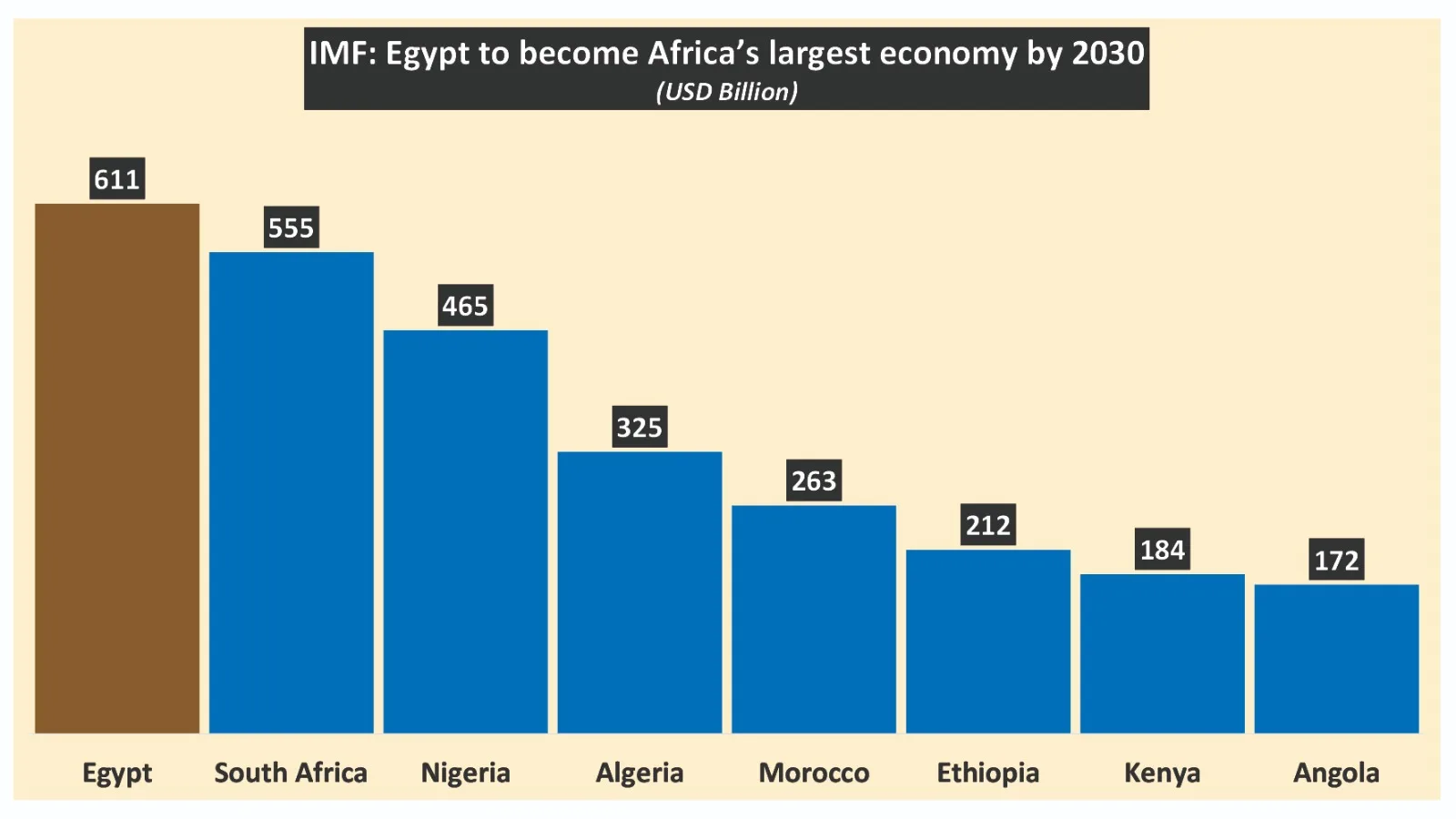
The ability to lure FDI is a global issue, rather than an Egyptian or regional one, given unabated efforts by mature and developing economies worldwide to take a bigger slice of the cake.
Egypt and the International Monetary Fund (IMF) have reached a staff-level agreement on the eighth and final review under the 48-month Extended Arrangement under the EFF and the third review under the climate-linked resilience facility.
The North African country will be entitled to get $2.3 billion in funds. This deal is the last one, covering the eighth and final review of the Extended Fund Facility (ETF) and the third review of the Resilience and Sustainability Facility (RSF).
The IMF Board approval is pending, and both arrangements lapse on December 15. Egypt’s government has signalled that Egypt will not seek new IMF financing. So the useful question is no longer whether Egypt will borrow from the Fund again. It is whether the economy can stand without one.
S&P Global Ratings said in its October report on Egypt’s economy that the country’s external buffers strengthened despite a temporary post-shock weakening.
“High-frequency data indicates that higher energy import costs weighed on the external position, but this was partly offset by strong export earnings, record-high remittances, and robust tourism receipts. Suez Canal revenue also continued to recover, rising to $3.4 billion in the first nine months of fiscal 2026 from $2.8 billion during the same period in fiscal 2025, although still below pre-2023 Red Sea conflict levels,” read the S&P report, a copy of which was obtained by The Egyptian Gazette.
Egypt’s banking sector also continues to provide an important external buffer, with net foreign assets attaining a six-year high of $31.2 billion during the same period. The net international reserves hit a record $57.5 billion at the end of October.
“In our view, further capital outflows will likely be absorbed through the banking system’s net foreign assets position before becoming visible in international reserves data,” the report said.
Red flags
Where does Egypt’s foreign currency come from? Mostly not from factories. And that’s the top red flag.
Remittances hit a record of $33.9 billion in the first eight months of 2026, up 27 per cent. Suez Canal revenue jumped by 23 per cent to $4.67 billion last fiscal year, according to data from the Central Bank of Egypt (CBE).
Tourism did the rest. Much of the remittance jump followed the 2024 float, which pulled informal flows into the banking system. However, Egypt’s tourism is hostage to regional war.
The overall balance of payments closed the 2025/26 fiscal year with a surplus of $2.8 billion. Inflows are covering a growing outflow. That works while remittances boom. It gets uncomfortable the day they flatten.
The IMF warns downside risks remain significant. According to the Fund, escalation of regional conflicts could disrupt trade and investment and, alongside tighter global financial conditions, trigger capital outflows and raise borrowing costs.
“While high debt and financing needs remain key vulnerabilities. Conversely, easing tensions, stronger Suez Canal activity, and faster reform implementation could further lift growth,” said Amine Mati, head of an IMF mission that visited Cairo earlier this month.
FDI is imperative
Undoubtedly, direct investment plays a key role in maintaining sustainable economic growth by creating jobs and increasing national income. In a bid to increase direct investment, there should be an attractive business climate that prioritises the private sector.
Here it should be noted that an economy’s ability to lure foreign direct investment (FDI) is a global issue, rather than an Egyptian or regional one, given unabated efforts by mature and developing economies worldwide to take a bigger slice of the cake.
FDI inflows are deemed to be a magic wand for an overall economic revamp, aimed at lifting growth rates for more jobs to slash unemployment. First, we need to review, revise and revamp the nation’s investment environment. More importantly, we should assess steps taken over the past years to lure FDI inflows.
In 2015, Egypt enacted an investment law that introduced a one-stop-shop system to facilitate licensing and other official procedures. In May 2017, the parliament passed another government-initiated investment bill, replacing the previous legislation.
The 2017 investment law provides investors with a package of advantages and incentives. For the first time, investors can hire foreign labour in Egypt. With the Covid-19 pandemic and the Russia-Ukraine war, global direct investment has taken a blow.
However, in Egypt, the real challenge undermining private investment is the mindset and red tape. Despite the one-stop-shop system installed by the law, investors grumble about time wasted in setting up their own businesses here.
In a country like the United Arab Emirates (UAE), an investor can establish a business via the Internet in about 15 minutes.
By all means, it is imperative to empower Egypt’s private sector as part of promoting market-oriented economic policies for all-inclusive growth. One of the big steps to boosting the private sector’s role is to revamp the business climate via more and more investment incentives. These incentives include registration and licensing facilitations well as tax relief.