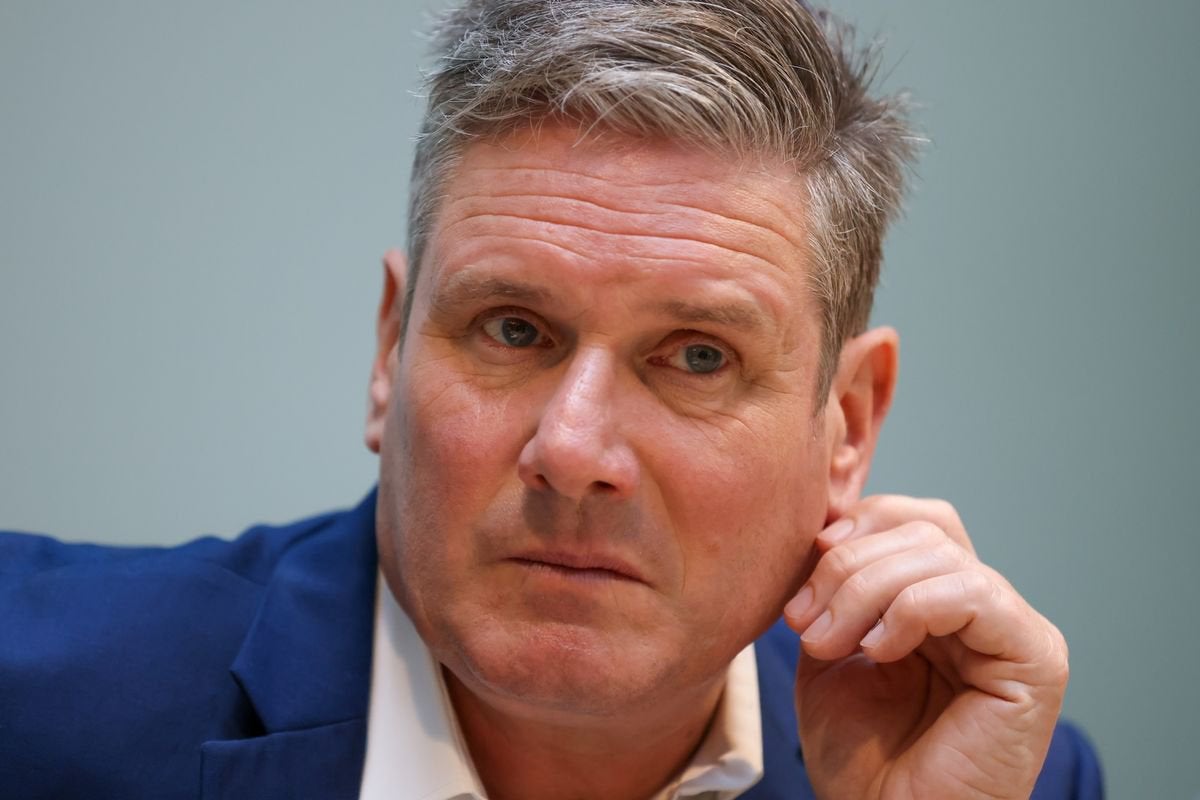
The spiky Tory leadership contest between Foreign Secretary Liz Truss and former Chancellor of the Exchequer Rishi Sunak must be the gift that keeps on giving to Labour leader Keir Starmer. That’s what conventional wisdom at Westminster would have one believe.
“Lucky Starmer can reap rewards from the Tory leadership race,” writes one columnist in The Independent. At The Guardian, a veteran Tory-hater echoes him: “Weeks of Truss and Sunak tearing lumps out of each should bring nothing but joy for Labour.”
But if Starmer listens to these siren voices, he can kiss goodbye to victory at the next general election. The inconvenient fact remains that Britain’s opposition party has lost the last four elections. Starmer cannot rely on the Tories to self-destruct. Only if Labour wins back voters’ trust on the economy (among other things) will it avoid a fifth defeat.
Leadership challenges threaten Conservative party unity and help the opposition, says the Keir chorus. Yet that’s only true if the Tories do fall apart. Even now, the two Conservative rivals are beginning to agree on the most contentious issue that has hitherto divided them — the need for tax cuts to mitigate a looming recession.
Gallup opinion poll data suggests that internal party putsches are far more likely to have positive rather than negative impacts. Take one notable example: When Margaret Thatcher, a three-time election winner, was forced out after a party challenge, her successor went on to win a fourth victory. After 11 years, Britain had grown tired of being hectored by the Iron Lady, even though she was the UK’s most successful post-war leader. A change at the helm was change enough for voters.
Ditto Boris Johnson. The caretaker prime minister has never been beaten at the ballot box, but all the evidence suggests that his endless fibs and finagling threatened his party with electoral annihilation. So, leading Cabinet members revolted and ditched another loser. A 17th-century political theorist put it thus: “Treason doth never prosper, what’s the reason? For if it prosper, none dare call it Treason.”
Naturally, Starmer is crafting a message that it is time for a change. The Tories will have been in power for 14 years by the time of the next election. But Truss — who, as of now, looks like the winner of the Tory race — is already trying to present herself as the change candidate who will rouse the British economy from its long torpor.
Slow to drag his party out of its comfort zone, Starmer — a cautious lawyer by profession — must quicken the pace and take more risks to cut through outside London SW1.
Earlier this month, the formerly staunch pro-European Labour leader ruled out any return of the UK to the European Union single market or customs union. He needs to win back lost Labour voters who abandoned his party to back Brexit. However, he gave his concession a twist, by denouncing “the mess” created by Boris Johnson’s departure deal with Brussels.
The miles-long queue of cars at the Channel Tunnel border earlier this week suggests Starmer has found a plausible line of attack. The polls show that a large majority of voters stand by their decision to leave Europe in 2016, but 45% think Brexit is going badly and only 27% think it’s going well. The question now is: What is Labour going to do about it?
Starmer’s most important task is to convince voters that his party can be trusted on the economy again. It lost its reputation for prudence when a Labour government went into the financial crisis 15 years ago with excessive levels of public spending. Tories convinced the voters that Prime Minister Gordon Brown “failed to fix the roof while the sun was shining.” Every Labour leader that followed him was accused of financial Micawberism.
Today, inflation is fast approaching double-digits, and the country under the Conservatives is veering toward recession. The tax burden has risen to unprecedented levels, and winter threatens another round of ferocious energy price hikes. Starmer has to exploit these “feel bad factors.”
Tony Blair once claimed his priorities were “education, education, education.” In a speech on Monday that consciously echoed him, Starmer argued that “growth, growth, growth” was his. He called Sunak “the architect of the cost-of-living crisis” and Truss “the latest graduate from the school of magic money tree economics,” turning the Tories’ charge of imprudence back on them. The Conservatives are now the ones who are reckless with the economy, he argues, while Labour offers a safe pair of hands.
For credibility, Starmer leans on shadow Chancellor Rachel Reeves, an Oxford and LSE economics graduate who worked at the Bank of England before shadowing the role of chief secretary to the Treasury. She underlined the party’s pro-business credentials this week by announcing the formation of an investment-friendly “industrial strategy council.” She’s also ruled out wholesale renationalization of public utilities, ostensibly because the money can better be employed elsewhere.
But Labour has its own problems with party unity. The hard left remains irreconcilable and even the soft left in Parliament chafes against a political strategy that appeals to the center where victories are usually won. Starmer had to sack his transport spokesman this week for going off message and supporting striking railway workers.
There will be harsher tests to come as a summer of discontent turns into a winter of industrial strife. Labour relies on trade union money for support, but knows it can’t afford to be portrayed as too friendly to the strikers. That tightrope is a wobbly one.
Who really understands in what direction Starmerism would move the country? In his farewell to the House of Commons, Boris Johnson mocked him as “Captain Crasheroonie Snoozefest.” That was schoolboy humor. But with a glint of inconvenient truth to it too.
With the Tory record on handling things you’d think they’d be polling in the negative figures but unfortunately because this country is so right wing their failures are not only acceptable but electable and so we cannot rely on the Tories to self destruct and we must get off the fence and support our workers.
The day the new Labour party does anything other than throw shade they might be in with a chance, but everyone can tell the difference between a tell tail tit and a potential leader.
Boris this Boris that, Tories this Tories that.. get a life and talk about something other than Tories!
[deleted]
It’s sort of how most governments get elected…
>There will be harsher tests to come as a summer of discontent turns into a winter of industrial strife.
Labour needs to get behind the current sentiment that is growing – that the fat cats cannot depend on business as usual – instead of being scared of their own shadow.
6 comments
The spiky Tory leadership contest between Foreign Secretary Liz Truss and former Chancellor of the Exchequer Rishi Sunak must be the gift that keeps on giving to Labour leader Keir Starmer. That’s what conventional wisdom at Westminster would have one believe.
“Lucky Starmer can reap rewards from the Tory leadership race,” writes one columnist in The Independent. At The Guardian, a veteran Tory-hater echoes him: “Weeks of Truss and Sunak tearing lumps out of each should bring nothing but joy for Labour.”
But if Starmer listens to these siren voices, he can kiss goodbye to victory at the next general election. The inconvenient fact remains that Britain’s opposition party has lost the last four elections. Starmer cannot rely on the Tories to self-destruct. Only if Labour wins back voters’ trust on the economy (among other things) will it avoid a fifth defeat.
Leadership challenges threaten Conservative party unity and help the opposition, says the Keir chorus. Yet that’s only true if the Tories do fall apart. Even now, the two Conservative rivals are beginning to agree on the most contentious issue that has hitherto divided them — the need for tax cuts to mitigate a looming recession.
Gallup opinion poll data suggests that internal party putsches are far more likely to have positive rather than negative impacts. Take one notable example: When Margaret Thatcher, a three-time election winner, was forced out after a party challenge, her successor went on to win a fourth victory. After 11 years, Britain had grown tired of being hectored by the Iron Lady, even though she was the UK’s most successful post-war leader. A change at the helm was change enough for voters.
Ditto Boris Johnson. The caretaker prime minister has never been beaten at the ballot box, but all the evidence suggests that his endless fibs and finagling threatened his party with electoral annihilation. So, leading Cabinet members revolted and ditched another loser. A 17th-century political theorist put it thus: “Treason doth never prosper, what’s the reason? For if it prosper, none dare call it Treason.”
Naturally, Starmer is crafting a message that it is time for a change. The Tories will have been in power for 14 years by the time of the next election. But Truss — who, as of now, looks like the winner of the Tory race — is already trying to present herself as the change candidate who will rouse the British economy from its long torpor.
Slow to drag his party out of its comfort zone, Starmer — a cautious lawyer by profession — must quicken the pace and take more risks to cut through outside London SW1.
Earlier this month, the formerly staunch pro-European Labour leader ruled out any return of the UK to the European Union single market or customs union. He needs to win back lost Labour voters who abandoned his party to back Brexit. However, he gave his concession a twist, by denouncing “the mess” created by Boris Johnson’s departure deal with Brussels.
The miles-long queue of cars at the Channel Tunnel border earlier this week suggests Starmer has found a plausible line of attack. The polls show that a large majority of voters stand by their decision to leave Europe in 2016, but 45% think Brexit is going badly and only 27% think it’s going well. The question now is: What is Labour going to do about it?
Starmer’s most important task is to convince voters that his party can be trusted on the economy again. It lost its reputation for prudence when a Labour government went into the financial crisis 15 years ago with excessive levels of public spending. Tories convinced the voters that Prime Minister Gordon Brown “failed to fix the roof while the sun was shining.” Every Labour leader that followed him was accused of financial Micawberism.
Today, inflation is fast approaching double-digits, and the country under the Conservatives is veering toward recession. The tax burden has risen to unprecedented levels, and winter threatens another round of ferocious energy price hikes. Starmer has to exploit these “feel bad factors.”
Tony Blair once claimed his priorities were “education, education, education.” In a speech on Monday that consciously echoed him, Starmer argued that “growth, growth, growth” was his. He called Sunak “the architect of the cost-of-living crisis” and Truss “the latest graduate from the school of magic money tree economics,” turning the Tories’ charge of imprudence back on them. The Conservatives are now the ones who are reckless with the economy, he argues, while Labour offers a safe pair of hands.
For credibility, Starmer leans on shadow Chancellor Rachel Reeves, an Oxford and LSE economics graduate who worked at the Bank of England before shadowing the role of chief secretary to the Treasury. She underlined the party’s pro-business credentials this week by announcing the formation of an investment-friendly “industrial strategy council.” She’s also ruled out wholesale renationalization of public utilities, ostensibly because the money can better be employed elsewhere.
But Labour has its own problems with party unity. The hard left remains irreconcilable and even the soft left in Parliament chafes against a political strategy that appeals to the center where victories are usually won. Starmer had to sack his transport spokesman this week for going off message and supporting striking railway workers.
There will be harsher tests to come as a summer of discontent turns into a winter of industrial strife. Labour relies on trade union money for support, but knows it can’t afford to be portrayed as too friendly to the strikers. That tightrope is a wobbly one.
Who really understands in what direction Starmerism would move the country? In his farewell to the House of Commons, Boris Johnson mocked him as “Captain Crasheroonie Snoozefest.” That was schoolboy humor. But with a glint of inconvenient truth to it too.
With the Tory record on handling things you’d think they’d be polling in the negative figures but unfortunately because this country is so right wing their failures are not only acceptable but electable and so we cannot rely on the Tories to self destruct and we must get off the fence and support our workers.
The day the new Labour party does anything other than throw shade they might be in with a chance, but everyone can tell the difference between a tell tail tit and a potential leader.
Boris this Boris that, Tories this Tories that.. get a life and talk about something other than Tories!
[deleted]
It’s sort of how most governments get elected…
>There will be harsher tests to come as a summer of discontent turns into a winter of industrial strife.
Labour needs to get behind the current sentiment that is growing – that the fat cats cannot depend on business as usual – instead of being scared of their own shadow.