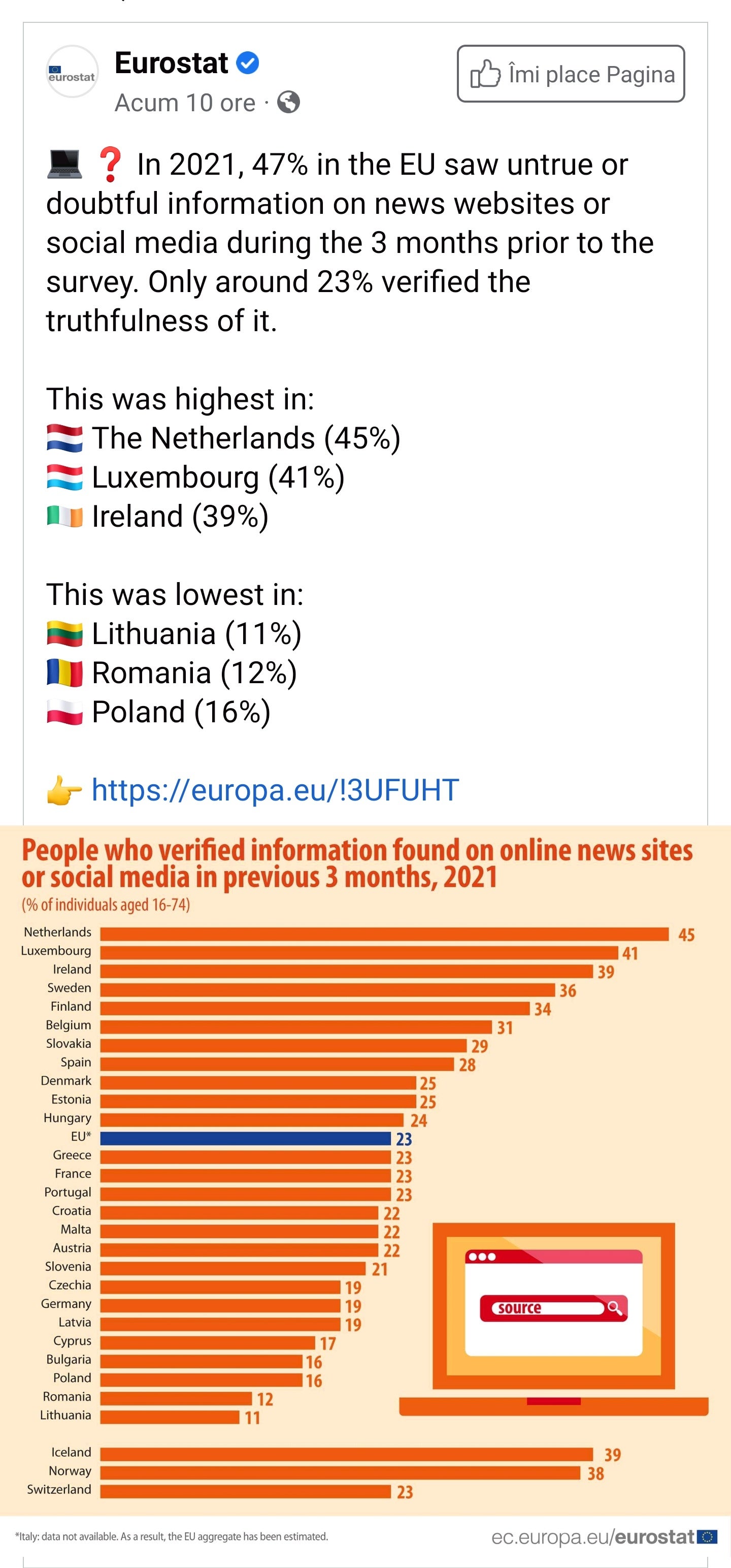
>In the EU, people aged 16-74 years old primarily checked if the information was truthful by checking the sources or finding other information on the internet (20%). People also checked information by discussing it with other persons offline, or using sources not on the internet (12%). The least popular method was checking by following or taking part in an internet discussion regarding the information (7%).

8 comments
>In the EU, people aged 16-74 years old primarily checked if the information was truthful by checking the sources or finding other information on the internet (20%). People also checked information by discussing it with other persons offline, or using sources not on the internet (12%). The least popular method was checking by following or taking part in an internet discussion regarding the information (7%).
https://ec.europa.eu/eurostat/en/web/products-eurostat-news/-/ddn-20211216-3
SUNT STUDII CARE SPUN CA NU E ADEVARAT SI NU IMI INCHIDETI MIE ~~GURA~~ DEGETELE!!!
pai dc sa cauti daca stii deja ca e fake news 😀
Intrebarea e: cine a verificat daca aceste date sunt adevarate?
Olandezii sunt printre cei mai sceptici oameni. Este o chestie culturala ce a fost rafinata in generatii 🙂
Informatia corecta pe Internet e aia verificata de Facebook fact checkers.
po’ să fac și eu o poză d-asta, deci e falsă
Studiile spun ca daca incepi o propozitie cu “Studiile spun ca…”, atunci propozitia ta e din start adevarata.