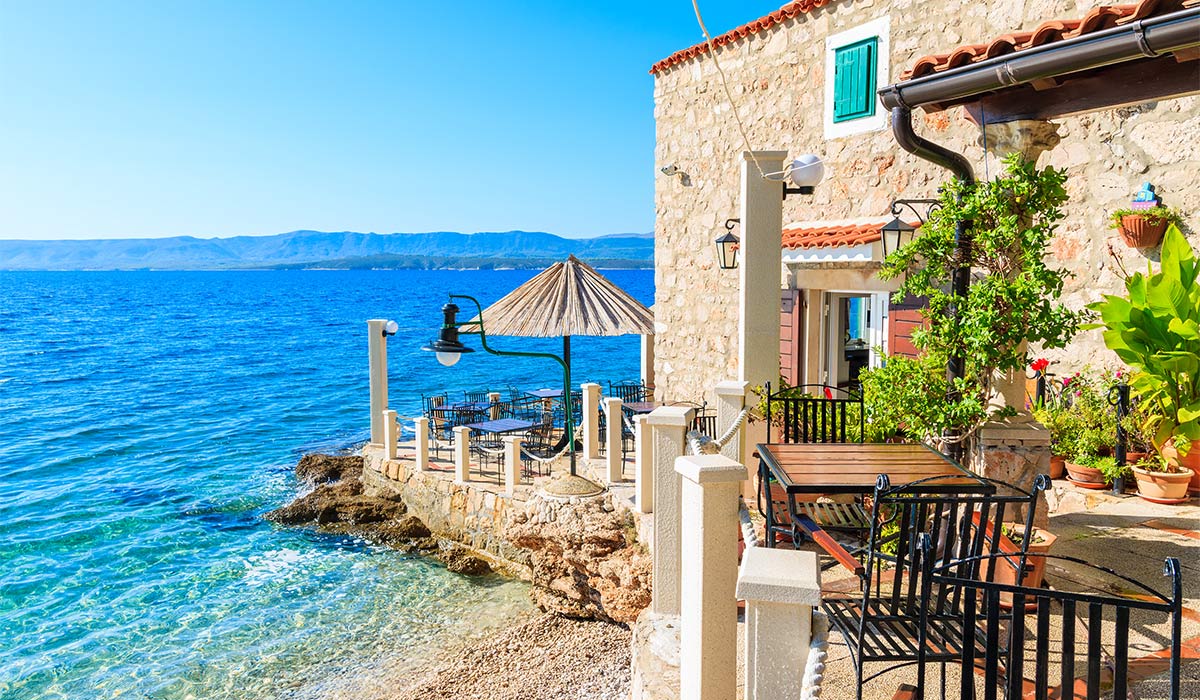
The old man is bent over his bucket of freshly caught fish, cleaning each one patiently. His little wooden boat is moored close by in the crystal-clear water of the harbour in the old town of Trogir, Croatia.
He had been fishing all night, he tells me, and is very happy with his catch, consisting of a local fish called orada, as well as sea bass. The morning is beautiful, a pleasant 21C, as I sit on a bench overlooking the sea, reflecting on a week of sailing among the islands of Dalmatia.
The trip had started in the city of Split, less than half an hour by bus or taxi from the international airport. I was dropped off at the bustling sea-front promenade, among the open-air markets. It was a short walk from there to the famous Diocletian’s Palace, which was built as a retirement home for the Roman Emperor at the turn of the 4th century.
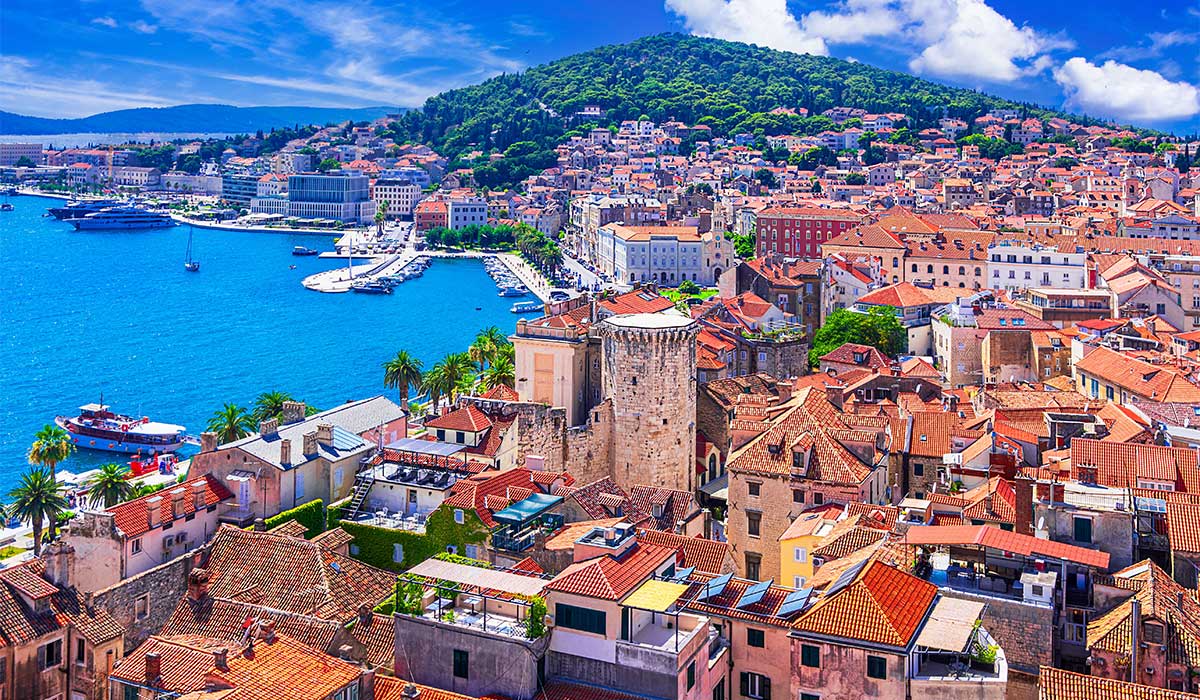 Split, Croatia: Panoramic cityscape of the old medieval city, waterfront and Marjan hill, Dalmatia, Adriatic sea. Pic: Shutterstock
The palace is a listed Unesco World Heritage Monument and is one of the most famous and complete architectural and cultural features on the Croatian Adriatic coast. It is a potent reminder of a rich history.
The impressive ACI marina was at the end of the promenade, and after a quick drink on the yacht club’s terrace overlooking the boats, we were ready to cast off. We slipped our lines and inched out of the marina. Our last glimpse of Split was of the setting sun casting a warm glow over the magnificent limestone pillars of the Palace Cathedral Tower.
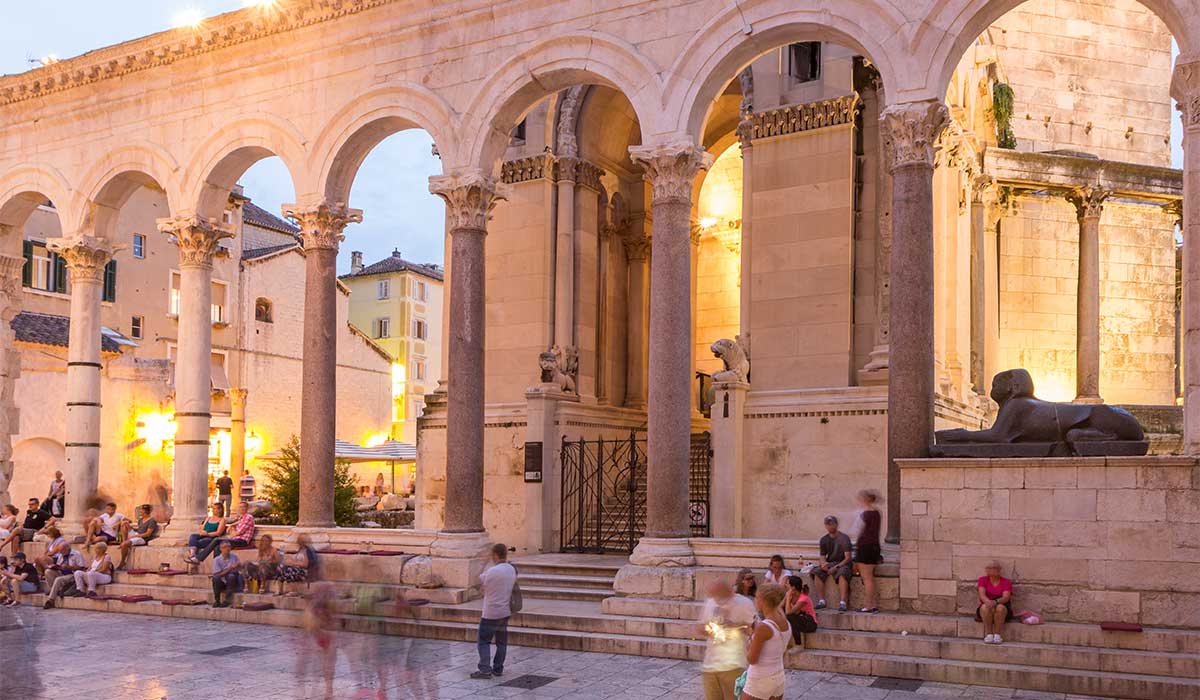 Tourists at the Diocletian’s Palace’s lit peristyle in Split, Croatia. Pic: Getty Images
We headed out to the open sea, on a westerly breeze, and hoisted the sails bound for the island of Brac.
The boat settled comfortably just off the wind, and we were filled with a sense of excitement and anticipation of our adventures ahead, exploring the islands of Dalmatia and on towards our final destination, Trogir.
What made it extra exciting was that we were sailing on a new yacht, just out of the boatyard. Roula is the first of five boats G Adventures has purchased for its new fleet. The 54-footer has sleek lines, beautiful teak decks and a luxurious interior.
Behind this multi- million-euro development initiative is a Cork man, Vince Donnelly, a former architect in the city, who is now global sailing director of G Adventures. He worked closely with the naval architects in getting the interior just right.
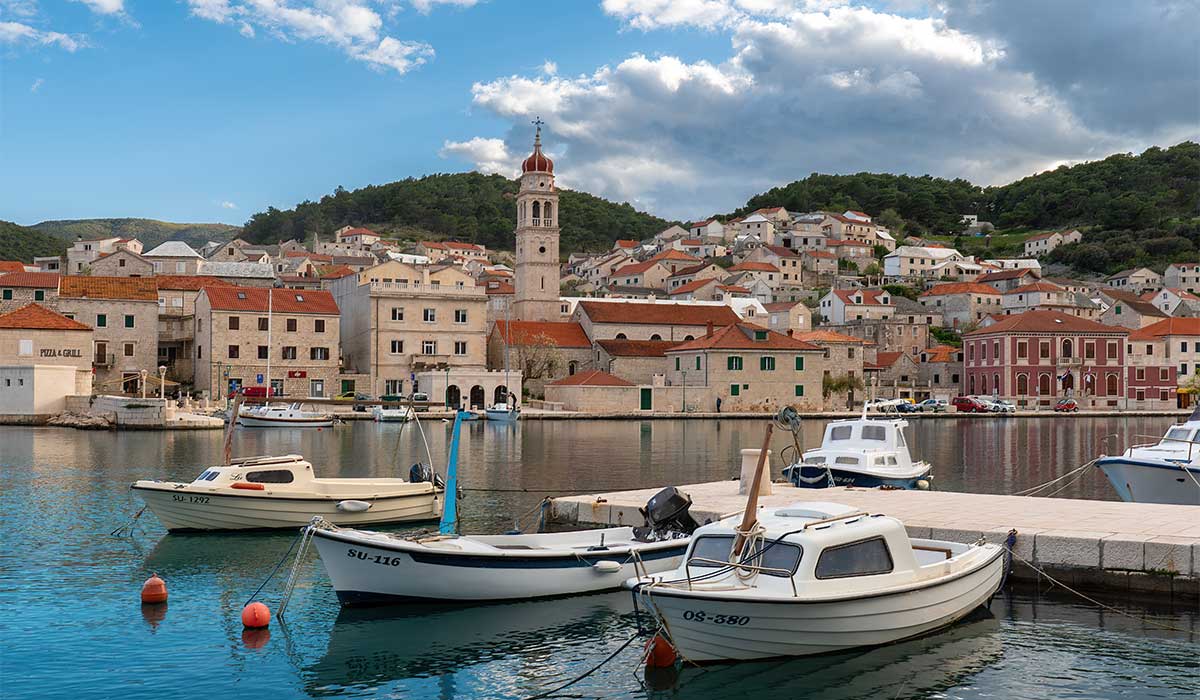 Pucisca, Croatia, Pucisca small city on Island Brac. Pic: Shutterstock
‘After 15 years of running sailing holidays all over the world, I had a fair idea of the yachts’ requirements to make them as comfortable and luxurious as possible for guests,’ he says.
The Kufner 54 yachts are big enough to fit ten guests and a professional skipper.
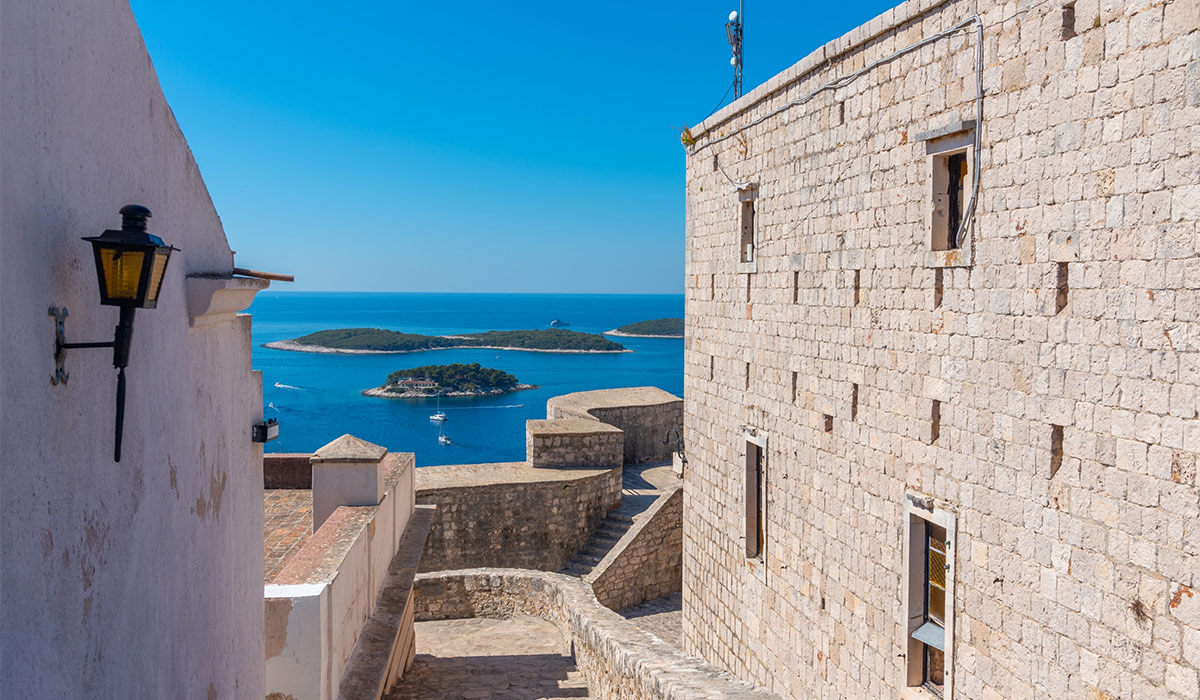 Courtyard of yard of the Spanish fortress in croatian Hvar. Pic: Shutterstock
Our first call on the island of Brac, about an hour away from Split, is the small village of Pucisca. Well known for its culture of stonemasonry, it has the largest quarry company in Europe and rumour has it some of the pure white limestone for the White House came from the quarries here. As we approach, the small port opens up to beautifully built limestone houses with paved red roofs, adding to their charm.
We dock alongside the quay wall in the middle of the small village. A tiny beach nearby is perfect for a swim, not bad considering it’s early November.
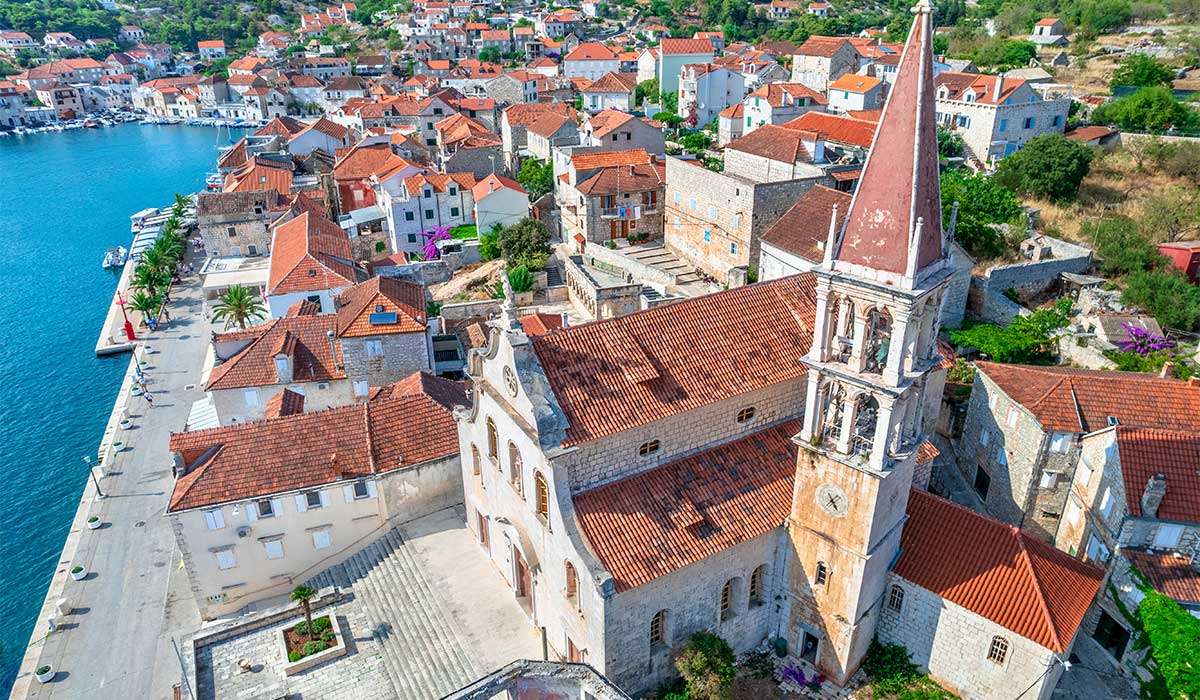 High angle view of the port town of Milna, on the western side of Brac island, in Split-Dalmatia County, southern Croatia. Pic: Getty Images
We rise early the following morning and set sail for the village of Milna on the western side of Brac.
Sailing along, I feel as if I have entered a medieval territory where time has stood still, so preserved and sparsely populated are the islands, dotted with ancient ruins of churches, castles and towers.
The view is rich and colourful, with islands rising from the choppy sea on rocky shorelines, protected by pine trees and olive groves. Not a lot appears to have changed in 2,000 years.
Croatia was ruled by some of the greatest powers and the Greeks, Romans, Venetians, Hapsburgs and others all left their mark both architecturally and culturally.
 Sunrise view of seaside of Croatian town Trogir. Pic: Shutterstock
Milna is larger than Pucisca and has the most beautiful harbour of the entire island. Again, the limestone houses line the port and, in the village, there is a Baroque church with a typical Dalmatian bell tower. Milna is known for shipbuilding and the renowned Dalmatian cargo boat bracera was first made on the island.
The island of Hvar is next. Thanks to its position on the ancient sea route between the exotic East and Europe, Hvar has richer history than any other island on the Adriatic and is the second biggest Croatia.n island.
We dock at the stone pier, close to the town square, and spend the afternoon in the Cathedral of St Stephen, with its 17th century bell tower, and browsing through the archaeological collection in the 16th century Saint Mark’s Church.
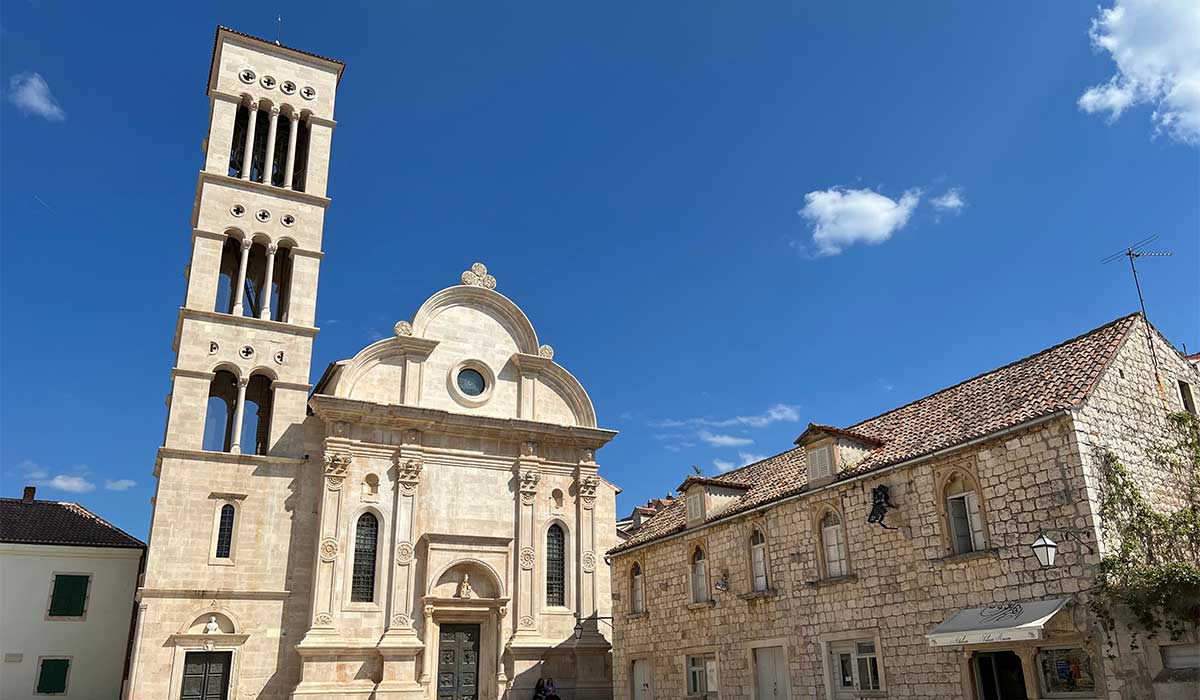 Cathedral of Saint Stephen in Hvar, Croatia. Pic: Shutterstock
Later that evening we find a beautiful open-air restaurant overlooking the harbour, where we have grilled sea bass and tuna fresh from the sea, served with peppers, aubergines and courgettes, and delicious local wine.
Early next morning we hike up to the large 16th century fortress, Spanjola, which stands high above Hvar town. A former medieval castle, the current structure was built by the Venetians. From the ramparts the view overlooking Hvar town and the sea is impressive.
While tourism and fishing are the backbone of the local economy, cultivation of rosemary and lavender are becoming more important. June is the month to see the lavender fields in full bloom. The fragrant herb is used in moisturising creams, balms and oils. It is also great for minor sunburn.
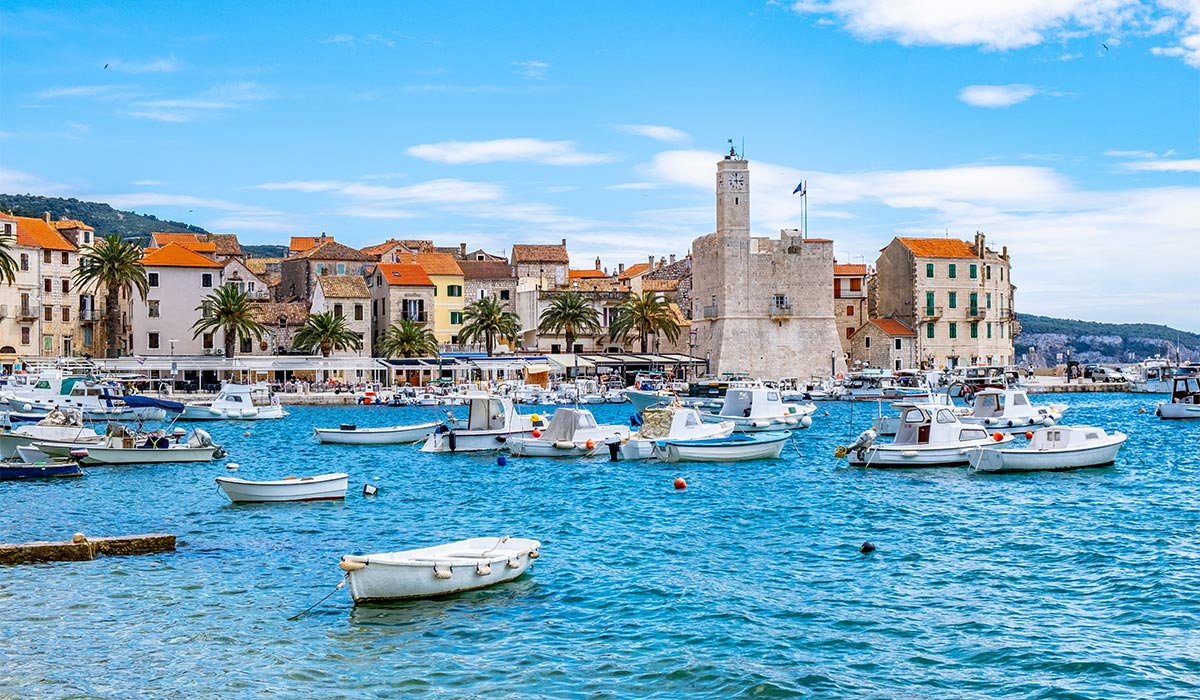 Seafront view at coastal town Komiza on Island Vis, summer travel resort in Croatia. Pic: Shutterstock
Around lunchtime, we depart for the lesser-known and remote island of Vis. It was cut off from the public until the fall in communism in 1989, so it has a certain aura of mystery about it.
Vis was strategically significant in the Adriatic and was fought over in many naval battles. During World War II the island alternated between control by Tito, the Yugoslav dictator, and the British Military Mission, which used it as its headquarters. During the war, Tito ended up hiding in a cave 20km from Vis town. Many of his belongings remained until 1989 and the fall of communism.
Isolation kept the island unspoilt, with farming and fishing remaining important. There are also vineyards.
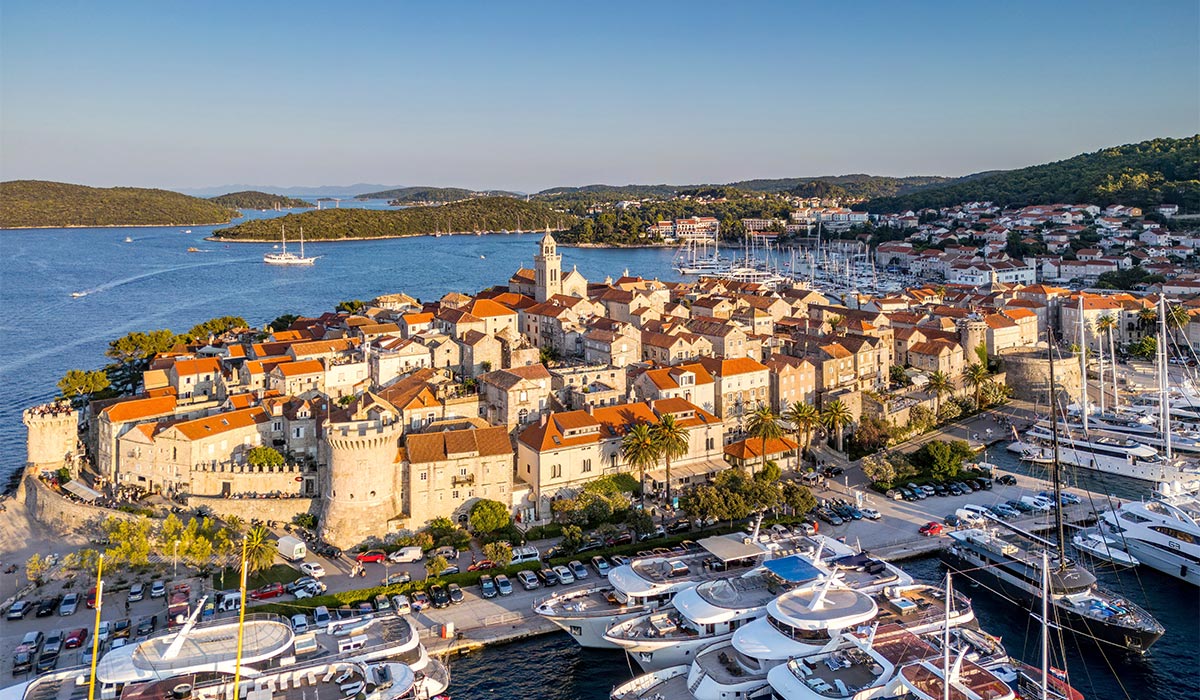 Korcula Island, Croatia, Aerial view of Korcula city in the island of Korcula, Croatia. Pic: Shutterstock
Leaving Vis the next morning we head for Korcula, the birthplace of renowned explorer Marco Polo. After docking, we walk straight to its famous walled old town. From the 10th century, Venice controlled much of Dalmatia, and the old town was mainly influenced by Venetian architecture.
We meander through the narrow limestone streets, where alleyways branched off at intervals leading down to the sea. The Marco Polo tower, where he allegedly lived, is well worth a look, especially for the stunning view over the Peljesac Channel and red-roofed houses.
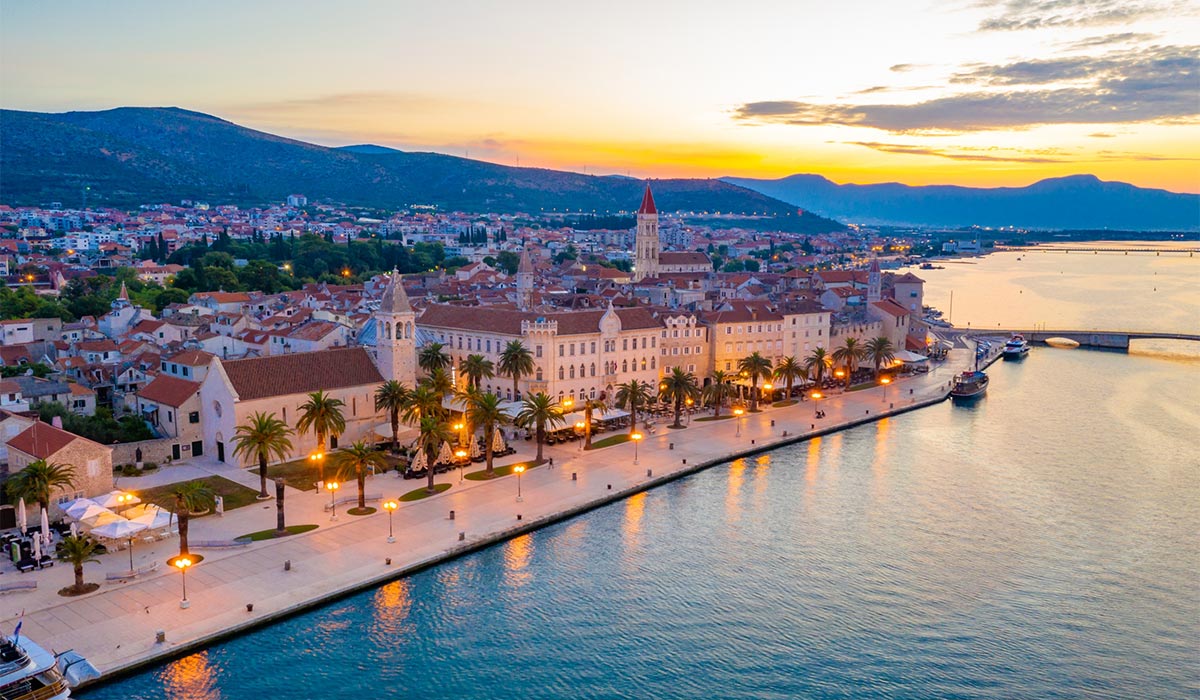
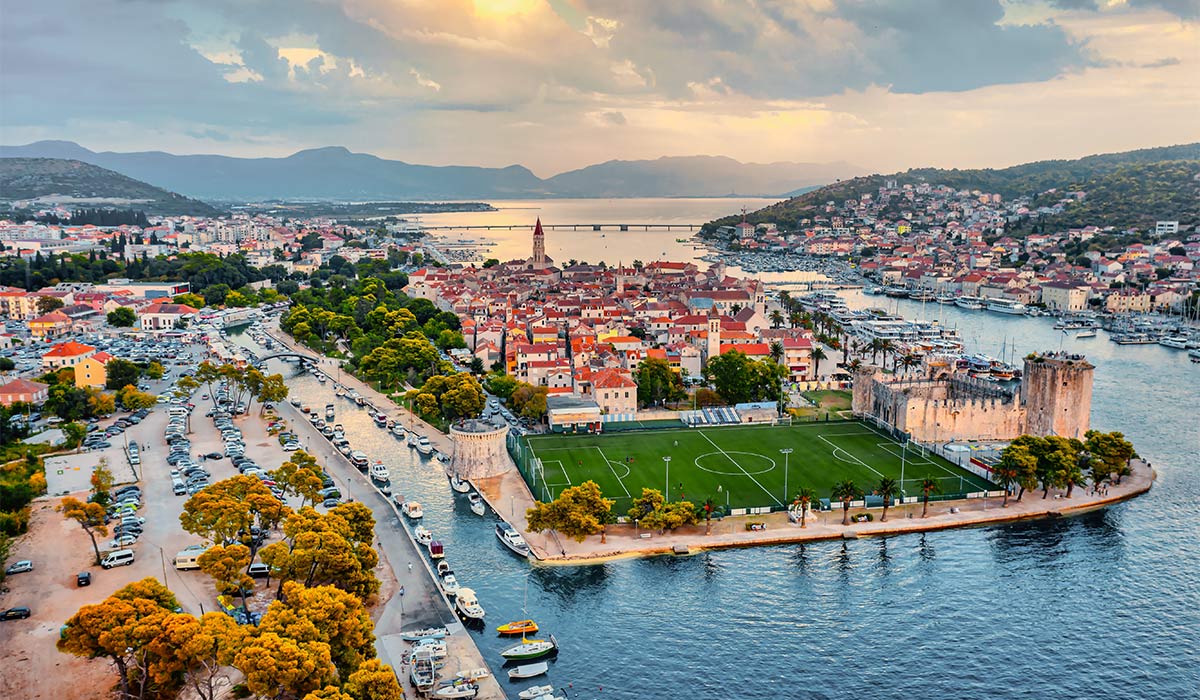 Aerial view of Trogir old town, Croatia. Pic: Shutterstock
The next day we set sail for Trogir on the mainland, our final destination. On the way we stop off for a barbecue at a quiet anchorage before arriving at the beautiful old town in the darkness. We spend the last night ashore wandering around the laneways and alleyways before enjoying one last meal together.
TRAVEL FACTS
G Adventures’ sailing holidays in Croatia and Greece run from May to October and cost between €1,000 to €1,200, see gadventures.com.