One of the less visible roles in energy transition facilitation is the part played by the national export credit agencies (ECA). The Danish Export and Investment Fund is one such ECA and a major provider of credit to energy transition projects worldwide. Denmark is home to leading manufacturers of energy transition-related products, such as wind turbines, thermostats, catalysts and other engineering solutions.
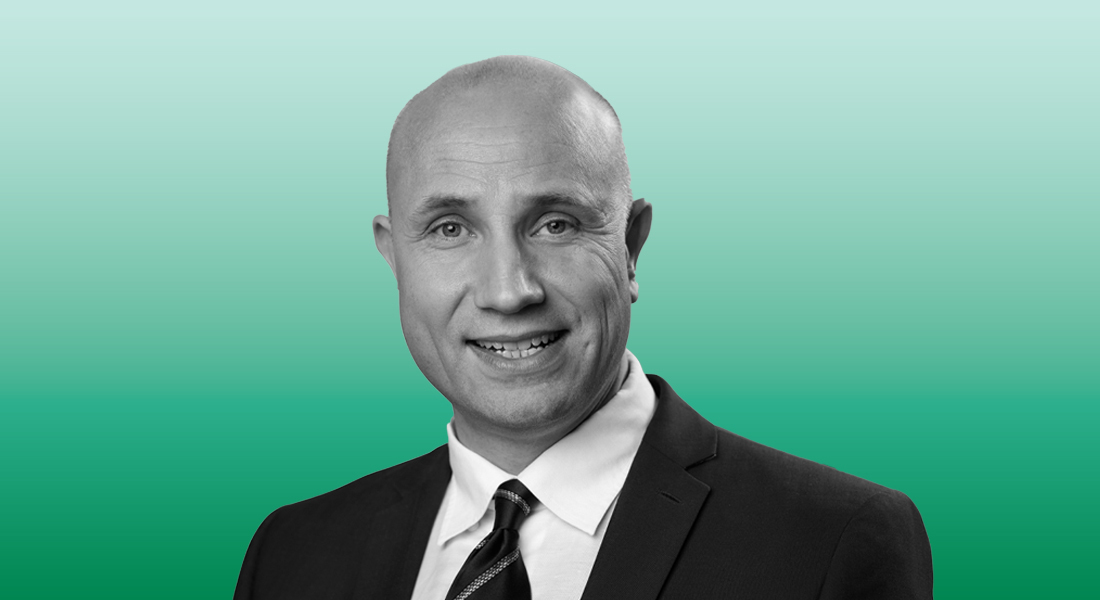
“We have financed a third of offshore wind and storm capacity around the world outside of China,” says Peter Boeskov, chief commercial officer for EIFO’s large corporates division.
EIFO is both an ECA and a national promotional bank. It operates on a commercial basis and its role is to provide the necessary funding facility for projects utilising Danish products.
“We are as keen as ever in the US, so we hope it will work out. It’s good for the US, and it’s good for Denmark… US is an OECD country, an old ally, and all that”
Peter Boeskov
EIFO
In infrastructure, the funding is usually provided on the senior debt side of the capital structure, either through guarantees to the banks providing the debt or by acting directly as lender. In EIFO’s case, the funded projects often involve supporting technology companies such as Danfoss and Topsoe, or wind turbine manufacturers Vestas and Siemens Gamesa. The latter, though headquartered in Germany, has a strong Danish footprint in offshore wind.
On the receiving end of the financial facilities are typically utilities or large GPs. “Some of the projects are owned or co-owned by infrastructure funds such as Copenhagen Infrastructure Partners and Global Infrastructure Partners [part of BlackRock]. We probably have some relation to everyone who’s been involved in developing wind energy generation,” says Boeskov.
EIFO’s relationship with GPs has moved with the times. “As the market changes, its attitude towards risk, some of the structures, terms and conditions have changed slightly,” Boeskov says. “Obviously, as they have grown their AUMs, they do more projects and hence more business with us, so the relationship has grown stronger over time. And we’re covering these clients more actively and more proactively.”
The American outlook
In terms of exposure, the UK is by far the largest market for EIFO, courtesy of the extensive UK offshore wind build-out. Taiwan is also a big market, as is the US, and Boeskov is sanguine about the outlook for North American opportunities.
“We think the US market is very interesting. There have been some communications from the new administration regarding new projects in offshore wind, but we hope the projects that are already approved will move forward, and we are keen to play a role where it makes sense for us. We also look forward to continuing our efforts in the US on the onshore side and will shortly be announcing a new deal in America.”
Assuming that electrification and the build-out of AI will expand the US’s demand for electricity, increasing the region’s capacity for generation is one approach to meeting this demand. Making better use of what’s already available is another.
“You may need some energy efficiency-enhancing equipment. And there’s an enormous number of companies, many of them having manufacturing bases inside the US, that can make this happen. So, we are very optimistic from that point of view,” says Boeskov.
“We are as keen as ever in the US, so we hope it will work out. It’s good for the US, and it’s good for Denmark… US is an OECD country, an old ally, and all that,” he adds.
A greater role for ECAs
More generally, the shift in political risk may also shift the need for ECAs. “To the extent that there’s hesitation, we should step up even more,” says Boeskov. “Our role is basically to help create financing capacity in the market. There’s always a lot of noise, but we must look through the cycle; some of these financings are 15, 20 years long.”
This ties in well with the general picture of more direct governmental support in Europe and elsewhere for infrastructure and critical players in the infrastructure sector.
“We want to be more proactive and that’s going to happen much more for all ECAs going forward. And the role of governments in the economy is on the rise too, in terms of ECAs being an active policy instrument. We could definitely play a role if, in Europe, we decide to pool our resources and make sure that we build much more offshore wind. We’ll have to see how our role plays out. But I think there could be an enhanced role for us going forward,” he says.
As for what EIFO has to offer, Boeskov doesn’t want to appear boastful but agrees that EIFO is one of the top players in the growing field.
“We have an ability to draw in other ECAs to these very large finance structures because of our track record of almost 200 projects. It’s a treasure trove of experience, so we know what to look out for, what to be careful about and how you structure,” Boeskov says. “We stand up well in competition with commercial banks and can write quite large tickets.”
Deal structures vary. “We don’t mind whether it’s a project finance or corporate structure. The important thing is that the customer buys from Vestas or Siemens, if it’s wind, or Danfoss or something else if it’s another type of project. How people decide to structure their financing, that’s up to them,” he says.
Power-to-X and CCS… eventually
The developing hydrogen economy is a strong focus for EIFO, and it is likely to expand alongside CCS, says Boeskov. “We think the hydrogen will be blue before it’s green. Therefore, there’ll be sequestration of carbon in some of the power-to-x transactions. We have a dedicated team for this but, just like power-to-x, it’s been slightly slower to progress than expected.
EIFO is currently involved in the financing of a 42,000 tons-a-year e-methanol PV-powered plant in Denmark. This is comparatively small, and for good reason, explains Boeskov. “We found that smaller projects are the ones that get moving, whereas the large ones are still tricky to progress.”
Indeed, these are seemingly not the best of times for energy transition projects, full stop.
“2024 was difficult for projects because of inflation. I think ‘25 will be difficult too. Some of the projects are stretched. Eventually, we will have to accept that we must pay more for the electricity we develop,” Boeskov says.
“We’ll soon announce a project in the Baltics that is on the same tariff as another project was a couple of years ago, but the capital expenditures are 25-30 percent higher. And that’s just the nature of the game at the moment. But institutions such as ours can carry a big part of that burden; we can go for long tenors, up to more than 20 years. We don’t like to do that every time, but it is sometimes required to get these projects over the line, especially when you have capital expenditure inflation and no sufficient adjustment of the terms.”
He is cautiously optimistic regarding the overall direction of the world’s relationship with energy: “We’re embarking on an enormous transition, and the required mobilisation of resources is one of the biggest in world history. This is not going to happen in a straight line, and it won’t always be a smooth ride. But we’ll get there in the end.”