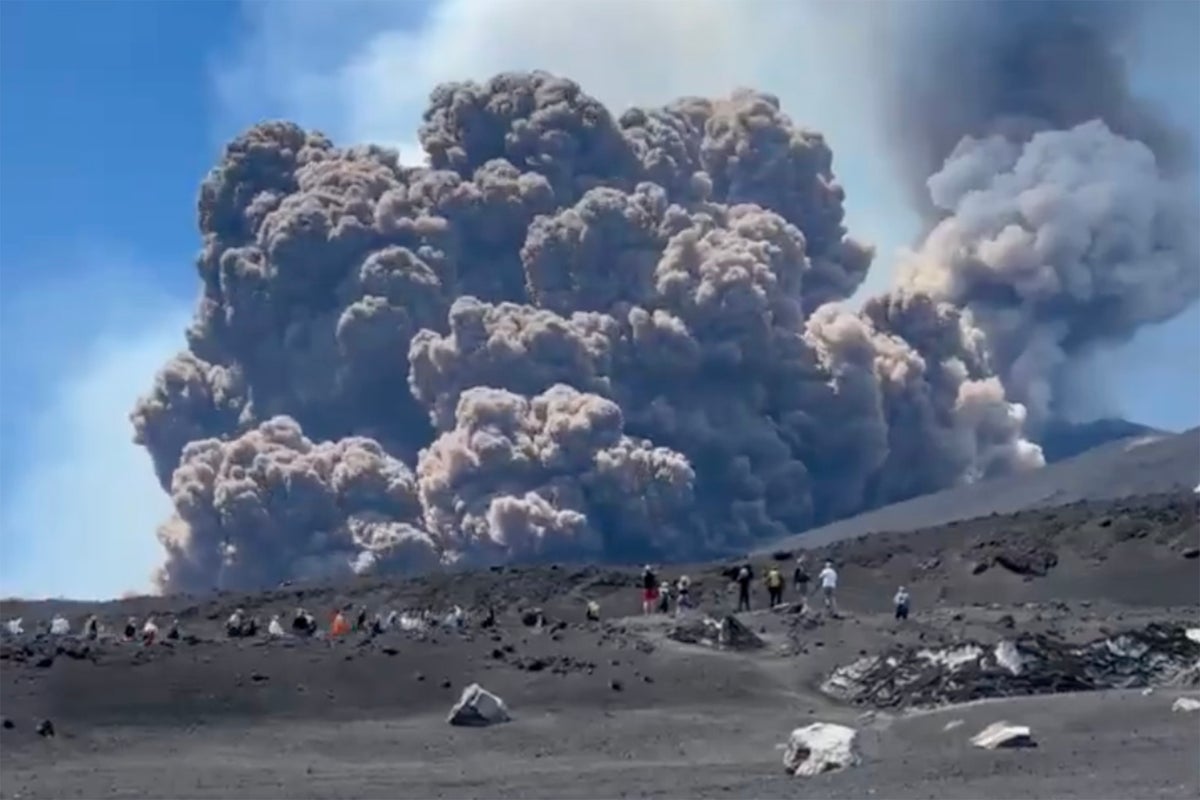
A pyroclastic flow – a powerful avalanche of hot rock, ash, and gas – was witnessed on Mount Etna surveillance cameras at around 11:30am local time, according to Italy’s National Institute of Geophysics and Volcanology.
This was “probably produced by a collapse of material from the northern flank of the South-East Crater”, according to a statement from the institute.
The hot pyroclastic material does not appear to have crossed the edge of the Valle del Leone, it said.
However, the explosive activity from the Southeast Crater has become a lava fountain, the institute said.
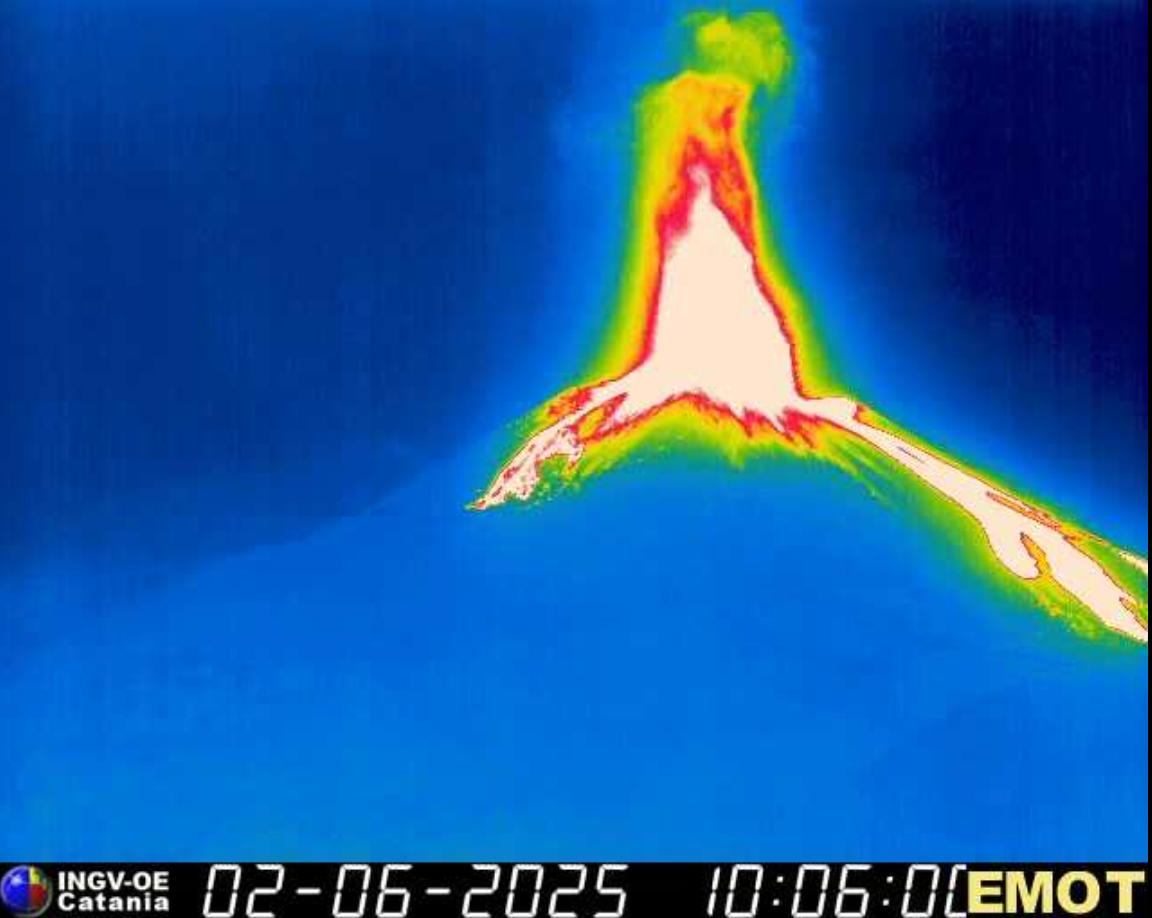
A lava fountain has emerged at Mount Etna’s South East Crater (INGV)
Andy Gregory2 June 2025 13:00
Mount Etna is the tallest and most active volcano in Europe.
While its height fluctuates as a result of frequent eruptions which transform the shape of its craters, Italy’s National Institute of Geophysics and Volcanology said in September that Etna’s Voragine crater had reached a height of 3,403 metres above sea level on its eastern rim.
Previously, Etna’s South East Crater had been the tallest since August 2021, after overtaking an earlier record held by the North East Crater since the 1970s, according to Italian news agency Ansa.
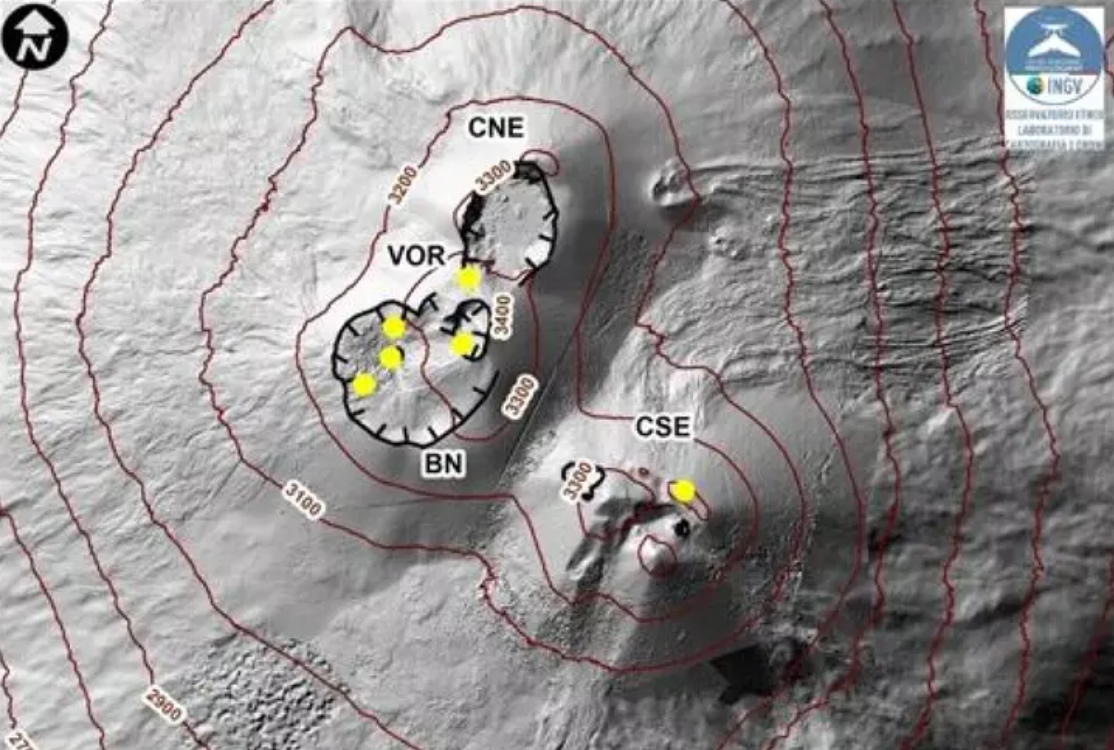
Etna has three major craters at its peak – the Voragine, South East, and North East (Italy’s National Institute of Geophysics and Volcanology)
Andy Gregory2 June 2025 12:43
Andy Gregory2 June 2025 12:27
In addition to the visible plumes of smoke and lava, volcanoes can spew out toxic gases which can be odourless and invisible.
According to the US Centres for Disease Control and Prevention, “breathing in volcanic gases at high concentrations can cause mild symptoms, such as irritation of the eyes, and more severe symptoms, such as difficulty breathing or even death”.
Most of the effects from volcanic particles and gases are short term, according to the US CDC, causing impacts such as irritation to the eyes and airways, vomiting, dizziness, headaches, difficulty breathing and visual disturbances.
Longer exposure to volcanic gases and ash has been linked to the development of other lung conditions and respiratory disorders, the CDC states, adding: “Acute exposures to certain volcanic gases can also lead to unconsciousness within minutes and eventually death.”
Andy Gregory2 June 2025 12:20
Mount Etna is one of the world’s most active volcanoes and eruptions are not uncommon.
The website Volcano Discovery reported in early May that Etna had gone through a dozen eruptive phases over the previous two months.
Andy Gregory2 June 2025 12:11
Italy’s National Institute of Geophysics and Volcanology said the eruption began around 3.50am local time (2.50am BST), following volcanic tremors which began around midnight local time.
The institute said eruption activity has continued since then with “increasing intensity” and were currently “almost continuous”.
“From a seismic point of view, the values of the tremor amplitude are currently high with a tendency to increase further,” the institute said.

(Sicily Civil Protection Agency)
Rachel Clun2 June 2025 12:04
A red aviation alert was issued in response to the eruption at Mount Etna.
The Volcanic Ash Advisory Centre in Toulouse, which monitors aviation risks, said a volcanic ash plume had reached an altitude of around 6,400 metres.
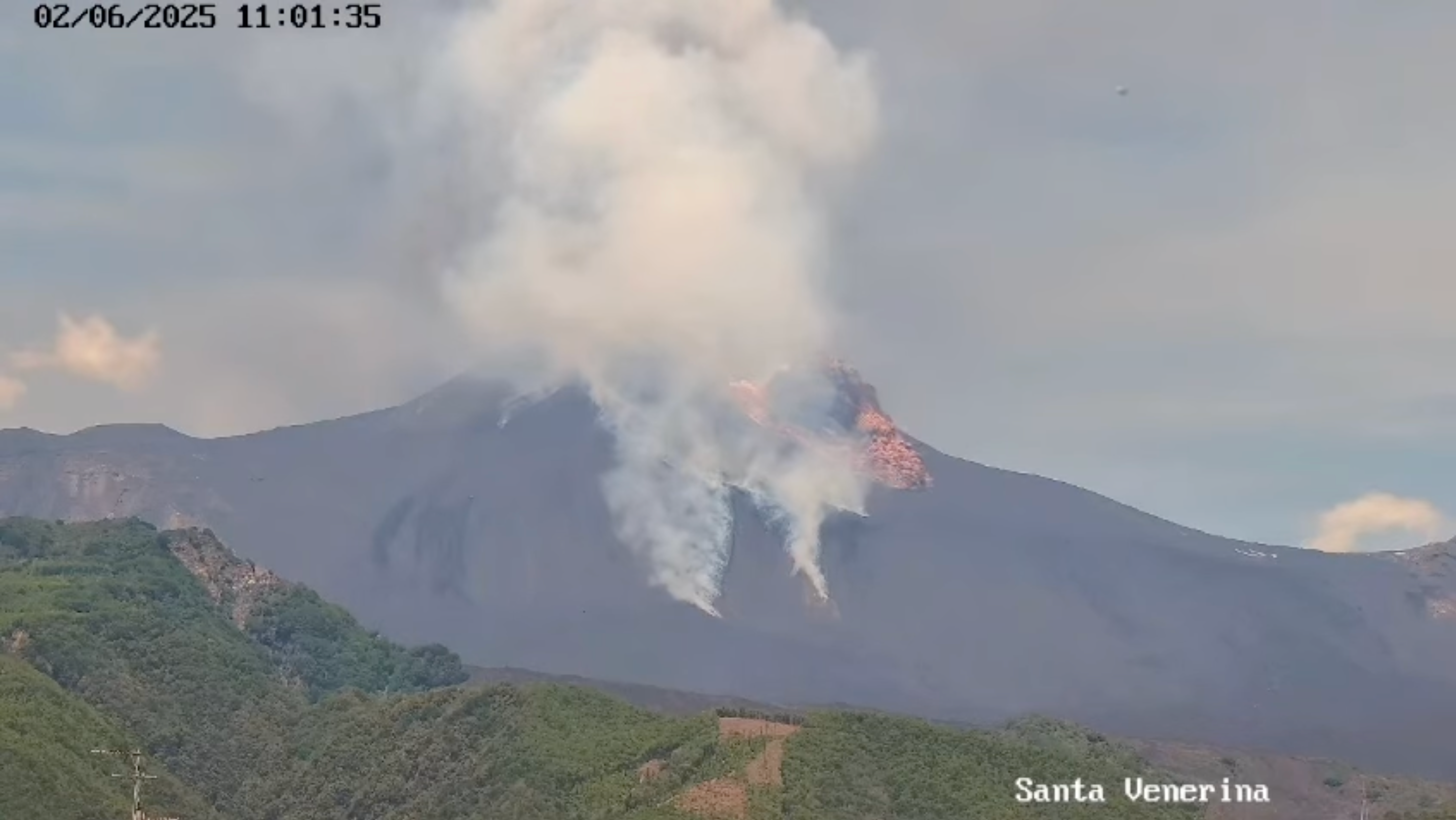
(Sicily Civil Protection Agency)
Andy Gregory2 June 2025 12:00
Etna is one of the world’s most active volcanoes.
It previously erupted on February 11, spewing hot ash and lava from the 3,400m volcano.
The spectacular sight attracted tourists who wanted to catch a glimpse of the eruption up close.

The volcano erupted in February this year (Etna Walk/AFP via Getty Images)
Sam Rkaina2 June 2025 11:43
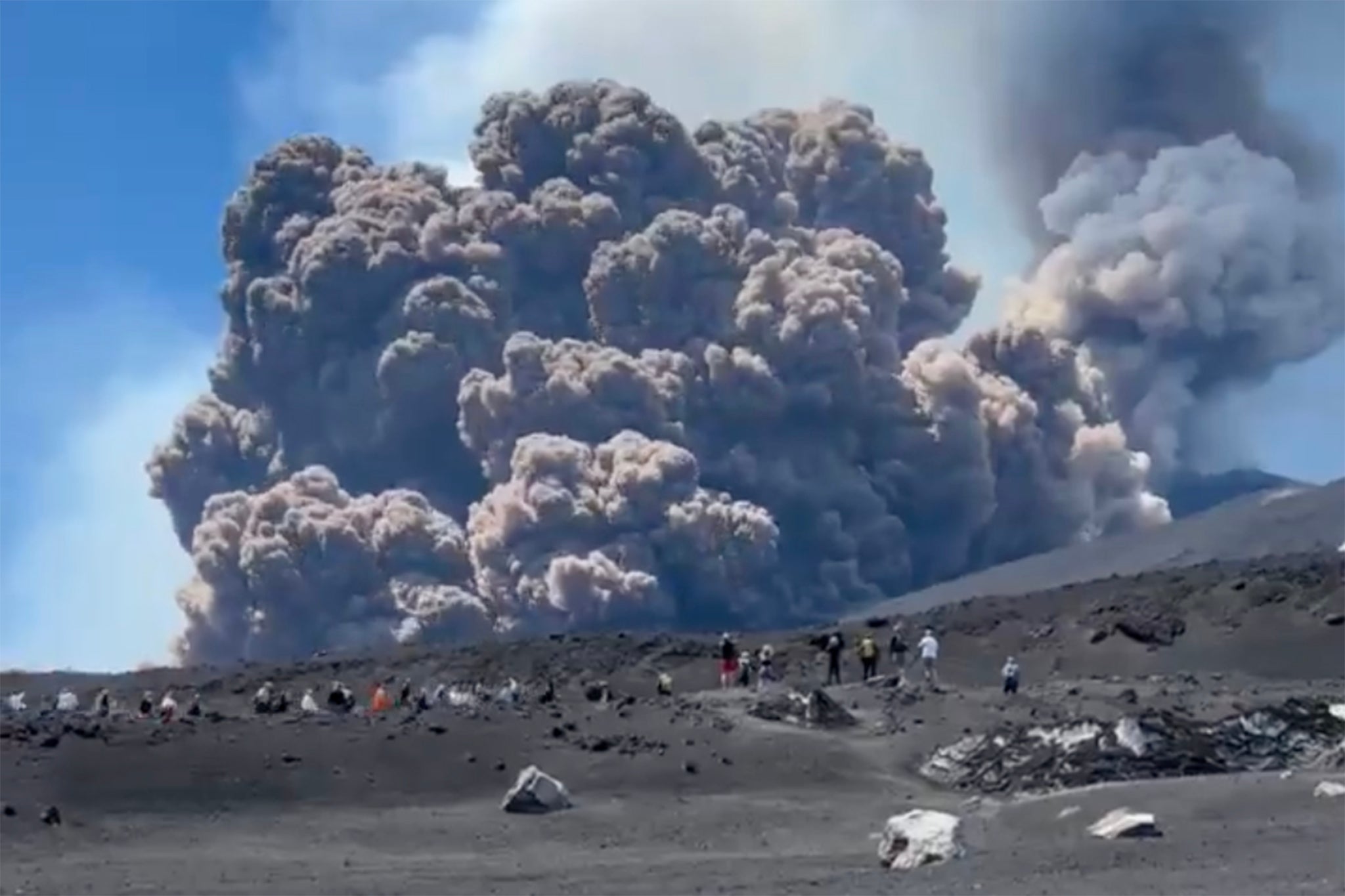
Tourists flee as Etna erupts (Aurelien Pouzin/X)

Huge clouds of smoke can be seen for miles around (Sicily Civil Protection Agency)
Sam Rkaina2 June 2025 11:40