LAS VEGAS—NATO is following the Space Force’s lead in setting up a “Front Door” program for the private sector, to connect vendors with acquirers and analyze their supply chains for potential threats and vulnerabilities, the alliance and Space Force officials say.
The Space Force established its Front Door in 2022 as part of Space Systems Command, the service’s acquisition arm, to be a single point of contact for potential vendors, but also a source of authoritative data about them. NATO’s Commercial Space Strategy, published earlier this year, committed the alliance to a similar single access point model.
“We’re still in some pretty early discussions with NATO,” Space Force Front Door Director Victor Vigliotti told reporters at the ASCEND space industry event July 23, “But it would look like they would build a similar system to what we’ve built here, and we would link those systems together,” so that companies from alliance nations would get added to the database of potential suppliers maintained by the Space Force.
Vigliotti added that he planned to visit NATO “in the next month or so.” Space Systems Command stands ready to assist their NATO allies, he said: “We would look to help them build it.”
A NATO spokeswoman declined to comment.
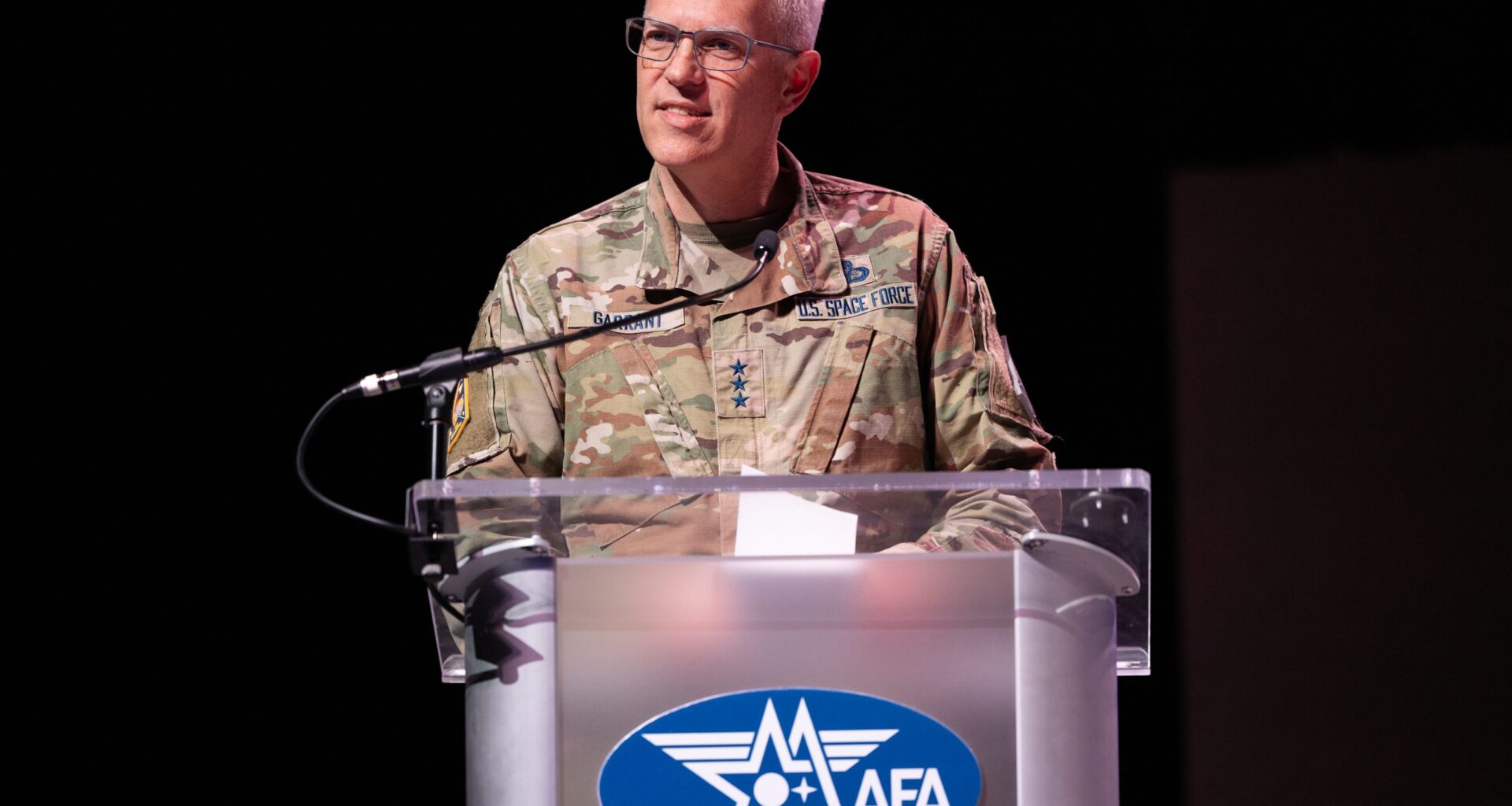
The key to the Front Door concept is “two-way transparency,” Space Systems Command boss Lt. Gen. Phillip Garrant said in a keynote address. “This Front Door is committed to helping all industry partners explore opportunities to collaborate with the Space Force.”
Front Door will hold conventional industry days to “connect [companies] with mission area owners to provide information on upcoming opportunities,” Garrant said, ranging from programs of record to small business innovation research and small business technology transfer contracts.
But Front Door will also host reverse Industry Days, where vendors can explain the technologies they offer. “This provides a two-way transparency, where we can communicate our needs, while industry can communicate their ideas and capabilities,” Garrant said.
That transparency also extends to vendors’ supply chains—the companies they rely on for parts or services—and the viability of their business plan, Garrant told reporters later that day.
“We look at the financial viability of a company that we’re partnering with, we look at foreign influence, and then we look at what I’ll call pedigree. We’ve done pedigree in the launch business for decades, where literally down to the part and sometimes the chip, we know exactly where it came from, who provided it, and any known risks associated with it,” he said.
Garrant said that visibility is “less so on the satellite side” than on launch but is being ramped up. That’s important because supply chain analysis is essential for resilience.
Such analysis has revealed a small number of instances where several different vendors were all reliant on the same supplier, Garrant said. “We might trace through some [supply chain] trees and go ‘Holy Cow! Vendor X is being relied on for this part, for all these different folks!’ And if the [Front Door] team hadn’t done that analysis, we wouldn’t have realized or understood that the entire space enterprise is dependent on this one company. And then what do we really know about that company?”
Front Door is only one piece in the effort to understand and strengthen the supply chain, stretching beyond the Space Force to the DOD and Department of the Air Force, Garrant said, “It’s a multi-faceted team.”
A supply chain assessment had to look “across the spectrum of conflict,” said Vigliotti, understanding how suppliers might be impacted in a shooting war. “We need to be able to do that concurrent level of supply chain analysis to make sure that these vendors are capable of doing business throughout that spectrum of conflict.”
He acknowledged that Front Door’s ability to analyze supply chain risk is “pretty limited,” and said the organization is looking for commercial tools to grow its capabilities.
But Front Door is also able to leverage the resources of the intelligence community to vet potential suppliers, Vigliotti said. “We do our own publicly available information type searches out there,” for companies that simply sign up on the portal, but for vendors whose products are to be integrated into Space Force systems, “we know that we need to do a deeper level of assessment, and we need to work with … those Intel shops, to really understand what the bigger picture is with these vendors.”
Vigliotti said his biggest challenge is that other elements of the Space Force and wider DOD don’t always want to play ball and make Front Door the central repository of authoritative data about space vendors. “It’s been us fighting tooth and nail with every organization across the U.S. government and with our allies and partners to say we need to share this information. We need to communicate what’s available out there.”
The issue isn’t just supply chain security, but market transparency and “understanding what’s available,” he added. Multiple agencies might hold conversations with vendors. “We need to put our data together. We need to mandate that when you speak to a commercial vendor, we’re held accountable, and we’re responsible [for] that information to share it in a system so that the broader government can understand what has been happening with these interactions.”
He likened the process of trying to collect all that information and getting everyone to contribute to “pulling teeth.”
“We haven’t received that kind of top-down direction that this needs,” he said, adding that service headquarters would be a good start.