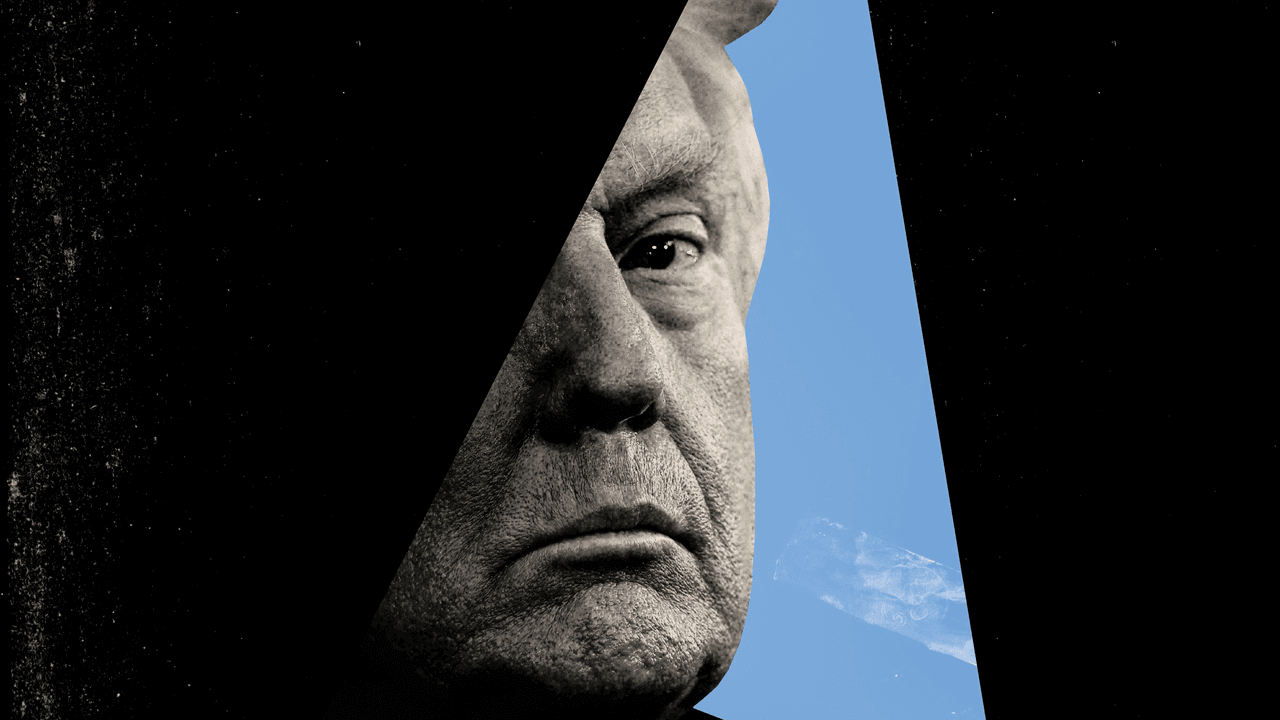
The young Donald Trump was the Nelson Muntz of Jamaica Estates. (Or was he its Draco Malfoy? Scholars will debate such questions for generations.)
In any case, Trump was, from his formative years, a spoiled bully. The Trump family, whose fortune was made in outer-borough real estate, had a cook and a chauffeur, and “Little Donny� was a pigtail puller, an unruly loudmouth who tormented his teachers and hurled insults and rocks at other kids. When Trump was thirteen, his father, Fred, shipped him off to a military school, in Cornwall, New York. This was just the sort of place, it was hoped, where Donald would mature into a young man of rectitude and self-regulation.
That, in fact, did not happen. Trump made it plain that his delight in domination was the immutable core of him. Marc Fisher, who co-authored “Trump Revealed,� an astute early biography and character analysis, once told PBS that, as a cadet, Trump “used a broomstick as a weapon against classmates who didn’t listen to him when he told them what to do. He was in part enforcing the rules of the academy, but he was equally so enforcing the rules of Donald Trump.�
At home, Trump apprenticed with his father, collecting rents and learning the finer points of discriminatory housing. He eventually came under the tutelage of the attorney and sybarite Roy Cohn. What lessons Trump learned from Cohn were entirely malevolent: Never show weakness. Never apologize, never explain. Attack, never defend. Engender loyalty through intimidation. With his curious coif and self-satisfied expression, Trump made himself a presence in Page Six. Indecency and aggression were his brand. Cruel, narcissistic, duplicitous—the list is long and by now so familiar that even some of Trump’s supporters concede that his most poisonous attributes are, to use the D.C. lingo, baked into the cake.
In 1989, Trump took out a full-page ad in the New York papers after the arrest of five Black and Latino teen-agers who became known as the Central Park Five. (Their convictions for rape were eventually overturned.) His screed resonates as a credo today:
The ad led Murray Kempton, New York’s greatest columnist, to consider the spectacle of Trump—“the man demeans anything he touches—�as he moved through the big city:
But not Trump. His insistence on a message of contempt was not something that he concealed. To the contrary, his hunger for attention was, then as now, embodied by his preposterous signature. As a businessman, he was often accused of cheating his contractors; as the star of “The Apprentice,� he was himself only more so, a puffed-up cartoon C.E.O. who relished making his would-be employees stammer, quake, and cry. As a Presidential candidate, he made his world view clear: there was “us� and there was “them.� And, with him in the White House, the fear factor would prevail. (Or, as he once told Bob Woodward, “Real power is—I don’t even want to use the word—fear.�)
“I’m scared,� a twelve-year-old girl in North Carolina told Trump during his first Presidential campaign. “What are you going to do to protect this country?�
“You know what, darling?� Trump said. “You’re not going to be scared anymore. They’re going to be scared.�
Six months into his second term, Trump has made it evident who “they� are; the population of the unnerved is diverse. (If that word is still legal.) It includes immigrants, university presidents, media executives, the heads of cultural institutions, librarians, scholars, scientists, trans people, government contractors, and dedicated federal employees. Some suffer for the President’s pique and are deported in handcuffs and leg-irons. Some are forced to pay millions in tribute in order to go on conducting scientific research or broadcasting the news. Others must hire lawyers to fend off phony accusations of treason. In Congress, fear keeps the Republican majority in line and causes all too many Democrats to mind their language. Trump once derided his own Secretary of State and national-security adviser as “Little Marco,� and he has been an entirely obedient satrap ever since. The Cabinet is a quivering collection of yea-sayers.
This response brings the President no end of titillation. “They’re all bending and saying, ‘Sir, thank you very much,’ � he bragged, after certain law firms started making their pitiful arrangements with the White House. “They’re just saying, ‘Where do I sign?’ �
Fortunately, there are encouraging instances of self-possession in various corners of the country. There are civil-rights groups and judges who have refused Trump’s most blatant challenges to the rule of law. Some artists, too, have set an example. Lately, there is Amy Sherald, who withdrew her solo show scheduled for September at the Smithsonian’s National Portrait Gallery, in Washington, D.C., rather than have her painting “Trans Forming Liberty� “contextualized� by an accompanying video. And then came Trey Parker and Matt Stone’s still vital, still scabrous “South Park,� which recently ran an episode about a naked President, his shortcomings pitilessly exposed.
But, even as Trump’s disapproval ratings climb, the Democratic Party continues to languish; its leadership is woefully scattered and deficient. Still, resolve comes in many forms. Cartoon bullies do not inevitably prevail. If individuals and institutions can muster that resolve in far greater numbers, neither will this President. ♦