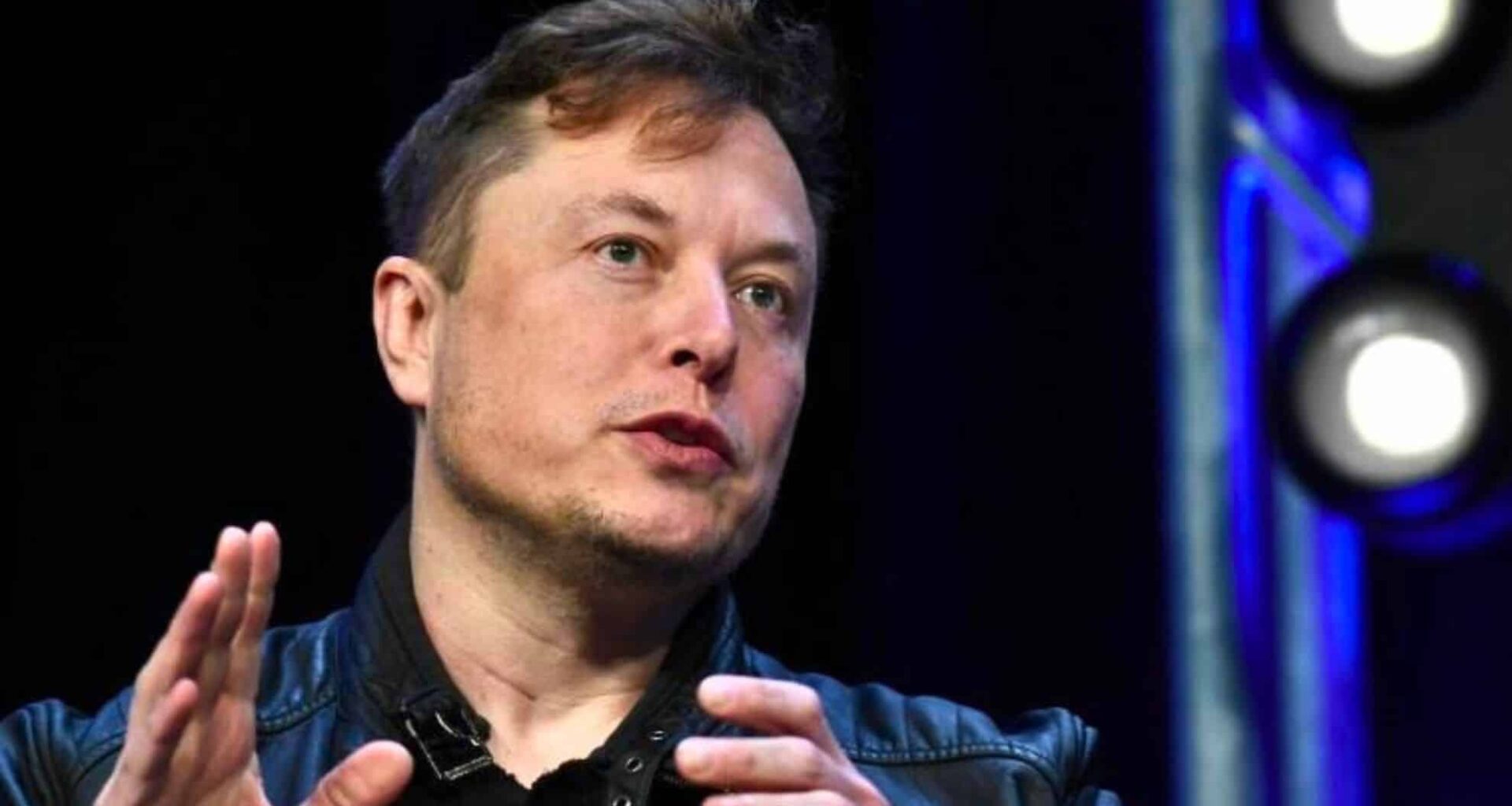
When Mercedes-Benz CEO Ola Källenius raised concerns about Europe’s plan to phase out combustion engine vehicles by 2035, Elon Musk’s response was as blunt as it gets: “Just make good EVs!.” The exchange happened on X (formerly Twitter), where Källenius had argued that banning gas and diesel engines could hurt the economy unless governments introduced strong incentives such as tax breaks and cheaper electricity.
For Musk, the message was clear—success in the transition to electric mobility doesn’t come from subsidies or policy loopholes, but from producing cars that people actually want to drive. His comment carried an implicit critique: if legacy automakers are struggling, perhaps the issue is not regulation, but the quality of their electric offerings.
This isn’t the first time Musk has called out German manufacturers. As early as 2017, he was warning Daimler (Mercedes’ parent company) that their investments in electrification were too timid. Nearly a decade later, the Tesla CEO shows little sign of softening his stance.
Why Musk Targets Mercedes and Other German Giants
Musk’s sharp words strike at the heart of the challenge facing traditional carmakers. While companies like Mercedes, BMW, and Volkswagen have poured billions into developing EVs, they remain tied to their profitable combustion models. Balancing both worlds has slowed their transformation.
By contrast, Tesla’s rapid rollout of new electric models, from the Model 3 to the Cybertruck, has allowed it to set the pace of innovation. That singular focus explains why Musk frames the debate in such stark terms: for him, the solution is not more subsidies but better vehicles.
According to Numerama, Musk’s comments can be read as a direct response to Mercedes’ reluctance to fully commit to electrification. By questioning incentives, Källenius signaled that the company still sees barriers in making EVs profitable. Musk flipped the argument: if the product is good enough, demand will follow.
The Broader Context in Germany
The timing of Musk’s attack is notable. In Germany, Tesla’s own reputation is under strain. Recent reporting from The Guardian and Clean Energy Wire shows that Musk’s political controversies—such as his public support for the far-right AfD and a controversial salute gesture that sparked outrage—have weighed heavily on Tesla’s image. Sales of Tesla vehicles in Germany have dropped sharply in recent months, with surveys suggesting that many German buyers are turning away from the brand.
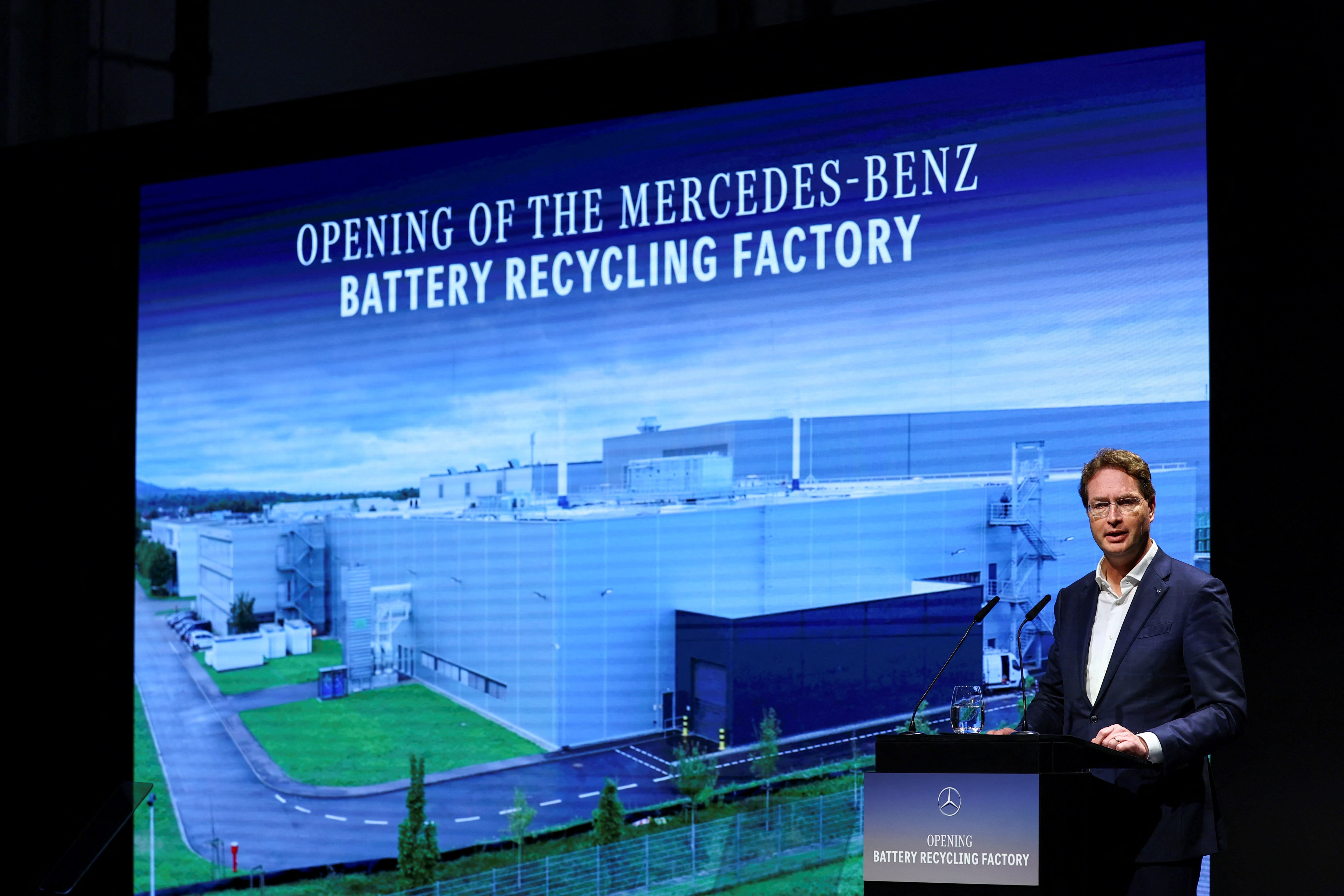 Ola Kaellenius, CEO of Mercedes-Benz, speaks at the opening ceremony of the Mercedes Benz battery recycling factory in Kuppenheim, Germany, October 21, 2024. REUTERS/Kai Pfaffenbach/File Photo
Meanwhile, Tesla’s Gigafactory near Berlin, once hailed as a symbol of Europe’s electric future, has faced criticism over environmental impact, labor practices, and Musk’s personal leadership style. Yet despite the backlash, the factory continues to expand and remains one of the most significant foreign investments in Germany’s auto sector.
In this environment, Musk’s jab at Mercedes carries a double edge. On the one hand, it reinforces Tesla’s image as the uncompromising leader of the EV revolution. On the other, it risks alienating German consumers further by attacking a beloved national brand.