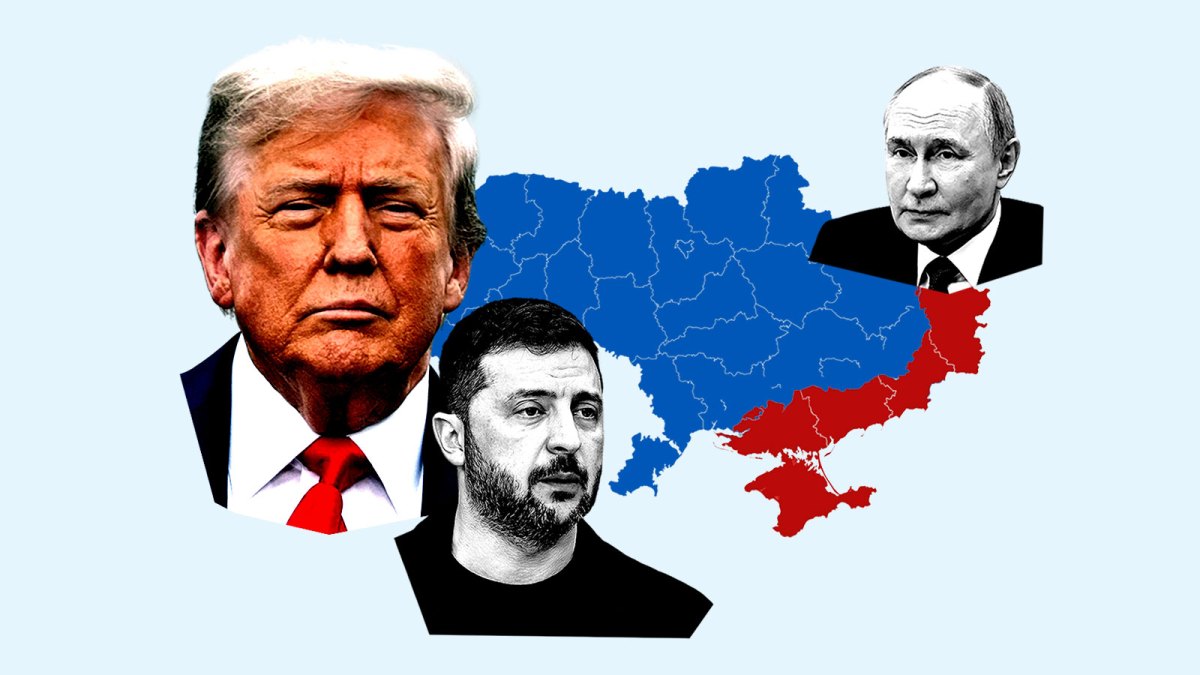
President Trump said American forces would be “involved� in peacekeeping in Ukraine but declined to say how.
The US president said that European countries would be the “first line of defence� in providing security guarantees to Ukraine.
Speaking alongside President Zelensky in the White House, he added: “We’re going to help them out also. We’ll be involved.�
Steve Witkoff, Trump’s special envoy, has said that the US could extend “Article 5-like protection�, but has yet to outline the details. Article 5 refers to Nato’s collective security contingency, whereby if a member is attacked, each member of the alliance will consider it as an attack on all of them.
Trump himself has previously cast doubt on this pledge, once baulking at the idea of coming to the defence of a Nato country “if they don’t pay� enough into their own defence budget.
• Ukraine-Russia live: follow latest news
“[Security guarantees] need to be credible,� said Matthew Savill, director of military sciences at the Royal United Services Institute think tank. “So the problem of basically saying ‘like Nato Article 5, but for Ukraine’ is that I don’t think the Russians believe Nato members will go to war for Ukraine.�
He added that security guarantees need not be wholly military. Russia would be concerned if the US threatened to “obliterate the Russian economy�, he said, and if Europe threatened to stop buying Russian energy if Moscow attacked Kyiv again.

President Putin flew to Alaska last week to discuss the war in Ukraine with President Trump
COVER IMAGES
European diplomats hope that US security guarantees are legally watertight, fearing that if Zelensky is forced to surrender his entrenched positions in Donetsk, Kyiv could be vulnerable to further attack.
A combination of European troops on the ground and US fighter jets stationed in neighbouring Poland and Romania ready to enforce a no-fly zone might be sufficient. “It might work depending on legal status,� said one European diplomat.
But even then, it is not clear how long US security guarantees would last.
In a matter of life and death, Ukrainians would rely on Trump’s word that the US would intervene if Putin tried to reinvade.
While Trump’s unpredictability might dissuade Putin from trying his luck before the next US presidential election in 2028, the frontrunner to succeed him is JD Vance, a consistent critic of military assistance to Ukraine.
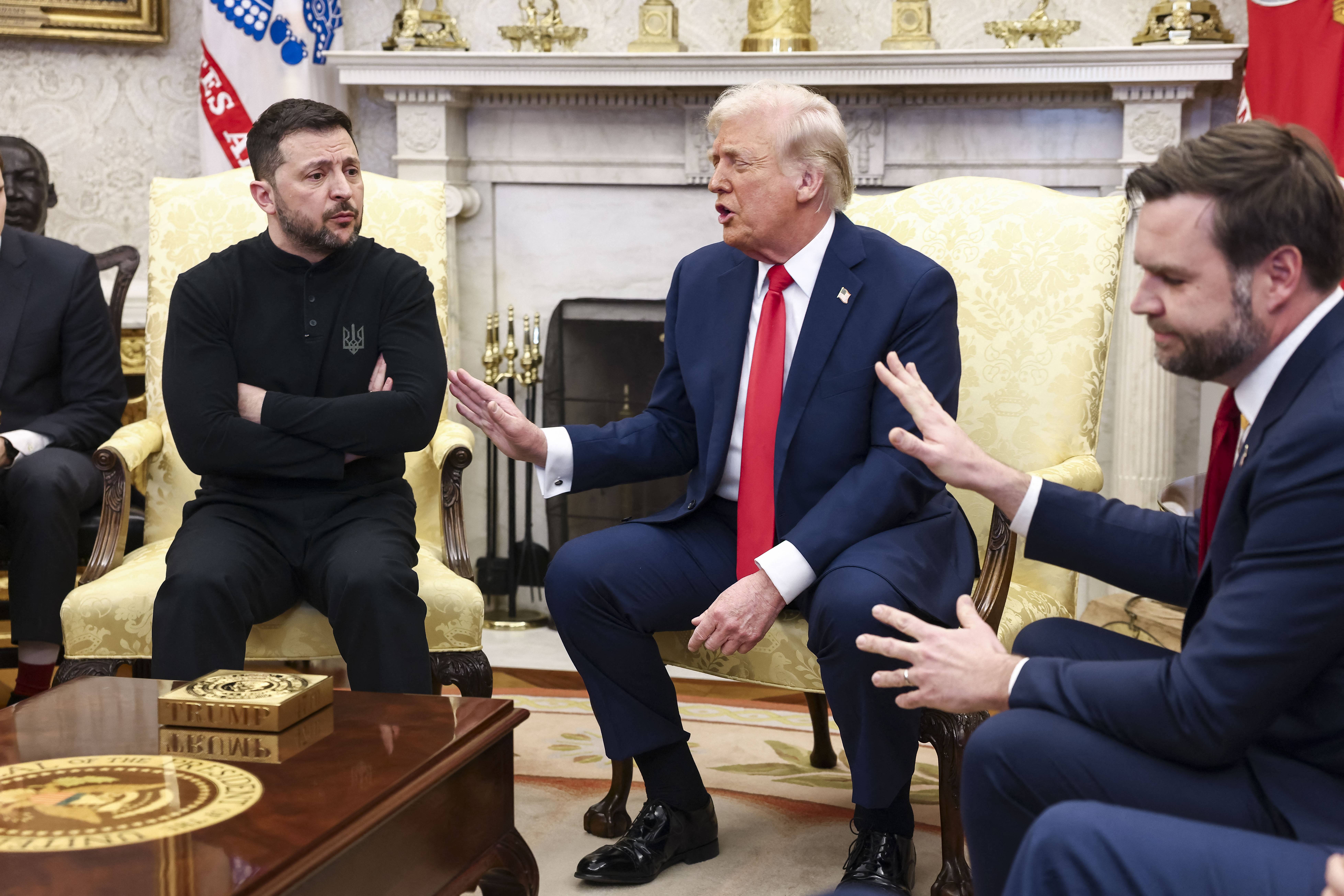
JD Vance, right, during Zelensky and Trump’s disastrous White House meeting in February
THE MEGA AGENCY
With Vance the favourite to succeed Trump, Putin could simply bide his time before mounting a third invasion, betting that the vice-president would be less willing to back Ukraine.
“The biggest vulnerability is what happens with the next administration. Is this deal going to last? Or is it essentially just going to be a really long ceasefire?� said one Republican-aligned thinker.
Ukrainian officials are deeply sceptical of any peace deal that leaves room for Russia to renege without reprisals, haunted as they are by the memory of the Budapest Memorandum of 1994, when the nascent state agreed to give up its Soviet-era nuclear weapons in exchange for promises of security from Russia, the US and Britain.
The lack of specificity in that agreement allowed Russia to attack Ukraine in 2014 without repercussions, critics say.
Solomiia Bobrovska, the deputy head of Ukraine’s delegation to Nato, said that without Nato membership the guarantees were “nothing … a big illusion�.
• Zelensky and Europe must tread carefully to avoid another Trump clash
“No one can explain how it would work,� she said. “We have had this before in our history, 30 years ago.�
Putin is said to have suggested Beijing as a security guarantor, an apparent revival of a proposal made by his negotiators in spring 2022 when they put forward a list of guarantors that included China, Russia and several western states.

Russia is keen on employing China as a security guarantor
RUSSIAN PRESIDENTIAL PRESS OFFICE/AFP/GETTY IMAGES
Given Beijing’s support for Russia’s war effort, China would not be a neutral arbiter, and any arrangement that left Russia as a guarantor “would allow them to claim a breach of the peace deal, and attack while vetoing any assistance,� said John Foreman, the former British defence attaché to Moscow and Kyiv.
“The only thing Russia respects is force, or the threat of force. Anything less than a hard guarantee is worthless,� he said. “There’s no Article 4.5, as I used to point out to the Ukrainians.�
He added: “If the US is thinking about extending bilateral security guarantees to Ukraine, along with, say, the UK and France, then good.
• Ukraine’s border in maps: the options explained
“But no US president has wanted to extend security guarantees to Ukraine since 1991 because of the fear of war with Russia. Ultimately, I don’t trust Trump to follow through should Ukraine be attacked again.�
One measure that Ukraine views as a meaningful guarantee is the presence of western troops in its territory, an idea that Trump has appeared to entertain since the conclusion of last week’s summit with Putin, and which European leaders are expected to press him on today.
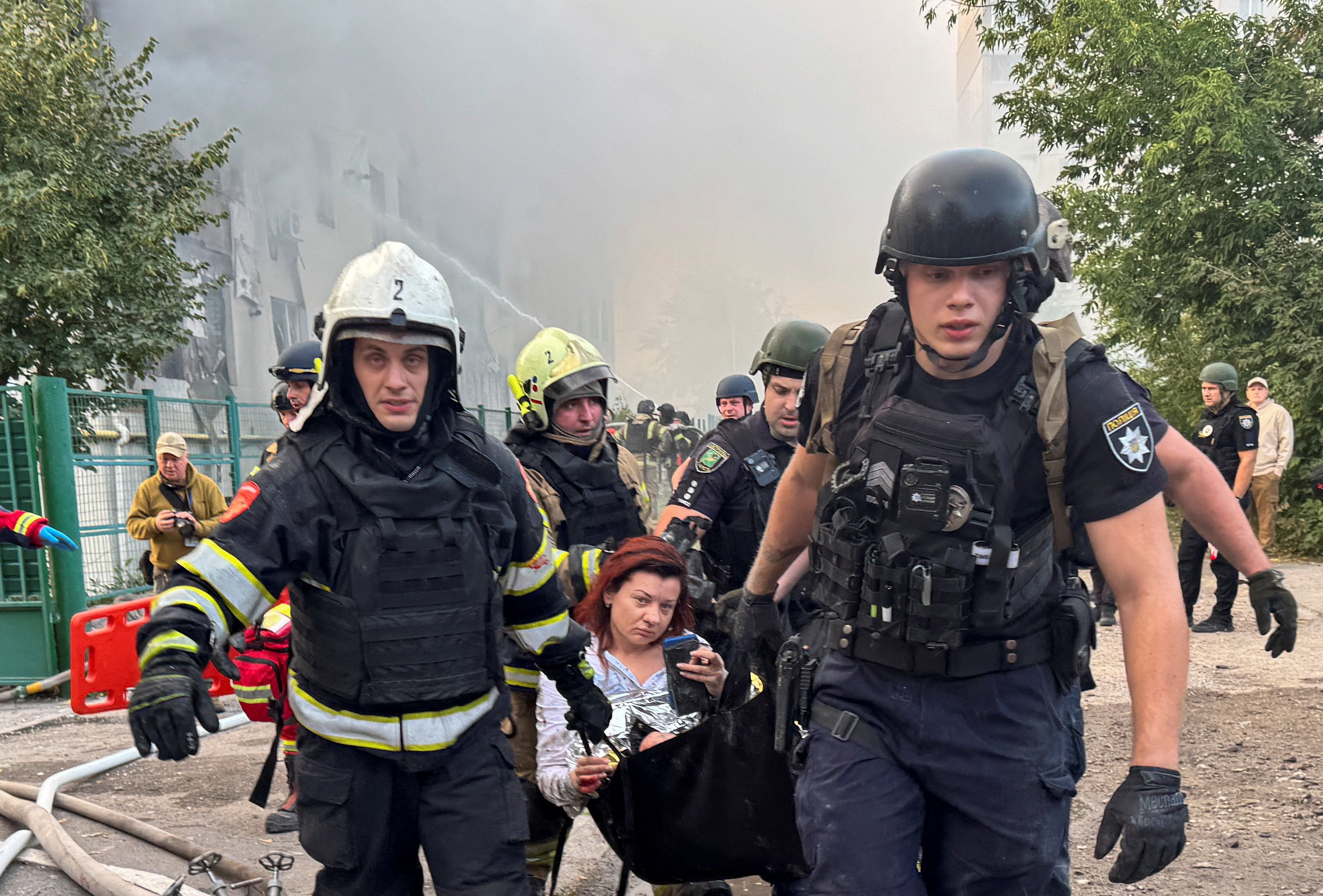
Experts argue that Russia will respect only force, or the threat of force, as it continues its assaults on Ukraine
VITALII HNIDYI/REUTERS
Britain and France have been leading efforts to create a peacekeeping force to be deployed to Ukraine in the event of a ceasefire as part of a “coalition of the willing�. It remains unclear, however, which nations would be willing to contribute.
Even if such a force were to coalesce, a European military presence would lack key capabilities that only the US can provide, such as anti-ballistic missile air defences and spy satellites to observe Russian positions.
“Several countries are ready to provide a presence — from training to logistics in non-conflict zones,� a senior European diplomat said. “Not on the front line and not in disputed territories, but a presence of allied forces alongside Ukraine.
• Europe says it’s rearming, but does it have the stomach to face Putin?
“The European side will present this plan and also ask Trump how far and to what extent the US is prepared to join in, since he has put security guarantees on the table.�
Many in Kyiv, however, believe that arguments over a peacekeeping force are a distraction, with the Ukrainian army having already proved itself capable of repelling Russian attacks along the 600-mile front line that has remained largely static during the past two years.
Valentyn Nalyvaichenko, the deputy chairman of Ukraine’s US inter-parliamentary relations committee and former head of the SBU, the country’s intelligence services, said that the best guarantee of Ukraine’s security was more of what the US had so far provided: intelligence support and weaponry.
Nevertheless, he welcomed the offer of US security guarantees as “a step towards Nato membership and therefore a step in the right direction�.
He said: “As a nation, we must work every day, every week, every month to make ourselves as close to the West as possible.�