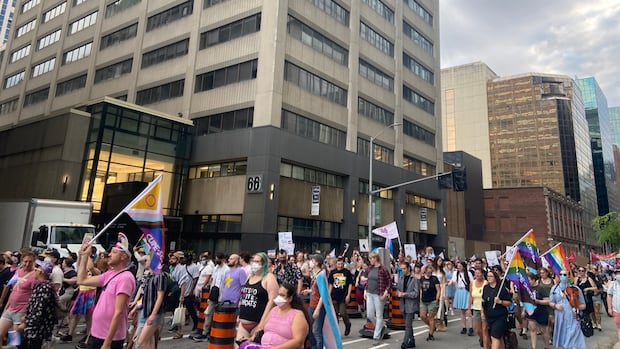
Members and allies of Ottawa’s 2SLGBTQ+ community came out in droves on Friday night to march in support of trans rights.
The overarching message of the evening was a reminder that Pride is inherently political.
“We are organizing to remind folks that we’re human, that we deserve rights, and that … our freedom and equality actually creates a better Canada for everybody,” said Fae Johnstone, one of the organizers of the march.
But the message goes beyond Canada, with members of the community expressing concern for trans and gender-diverse people around the world — and across the border.
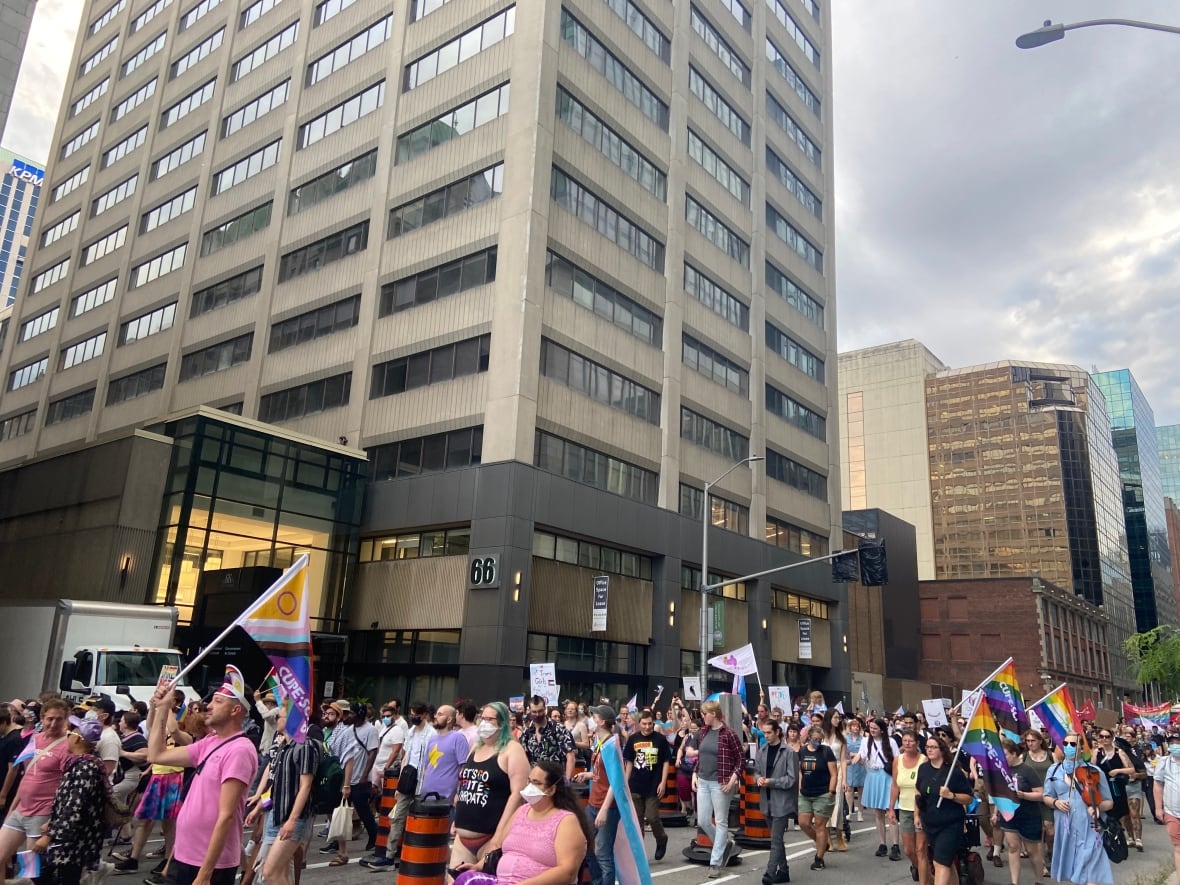 Marchers took to the streets of downtown Ottawa for the city’s annual trans march on Friday evening, starting at Bank and MacLaren streets and ending at Confederation Park. (Anchal Sharma/CBC )’Critically important’
In January of this year, U.S. President Donald Trump introduced sweeping legislative changes targeting trans rights.
Somerset Coun. Ariel Troster said she was marching to prevent that from happening here at home.
“Trans solidarity is critically important right now, especially with the legislative attacks that we’re seeing on trans youth, not just in the United States but also in some Canadian provinces,” she said.
“There’s an attempt to try to legislate trans people out of existence.”
One way advocates in Ottawa’s community are seeking to protect trans rights is by making Canada more welcoming to trans refugees.
“We know that newcomers are just neighbours we haven’t yet met,” Johnstone said. “As we see America stepping backwards from the global stage, defending human rights and LGBTQ equality, we want Canada to step up.”
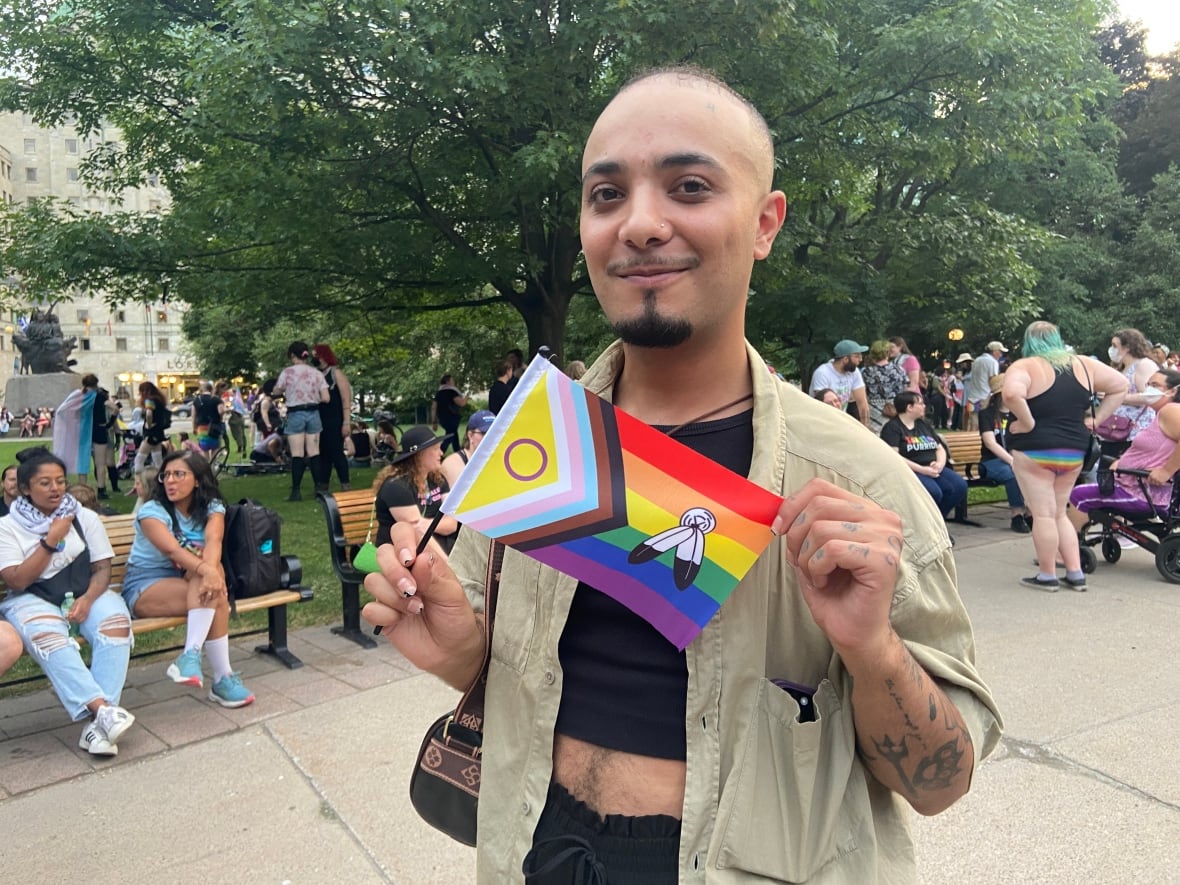 Mo Bourawi moved to Ottawa from Libya two months ago and says he’s looking forward to his first ever Pride parade this weekend. (Anchal Sharma/CBC)
For Johnstone, that means revoking the Safe Third Country Agreement, which prevents people from claiming asylum in Canada when entering at an official land border crossing with the United States.
The idea behind the agreement is that asylum seekers should make their claim in the first safe country they can.
But Johnstone argues that the United States is no longer safe for trans people seeking asylum there.
“Those folks … still need a home. We can be that place,” she said.
In addition, advocates like Johnstone are demanding more support from all levels of government for refugees and asylum seekers once they arrive in Canada to help them get settled.
Mo Bourawi, who was also at last night’s march, hopes that government leaders will take those demands seriously.
An asylum seeker from Libya, Bourawi moved to Ottawa two months ago, and says he’s had trouble finding employment since.
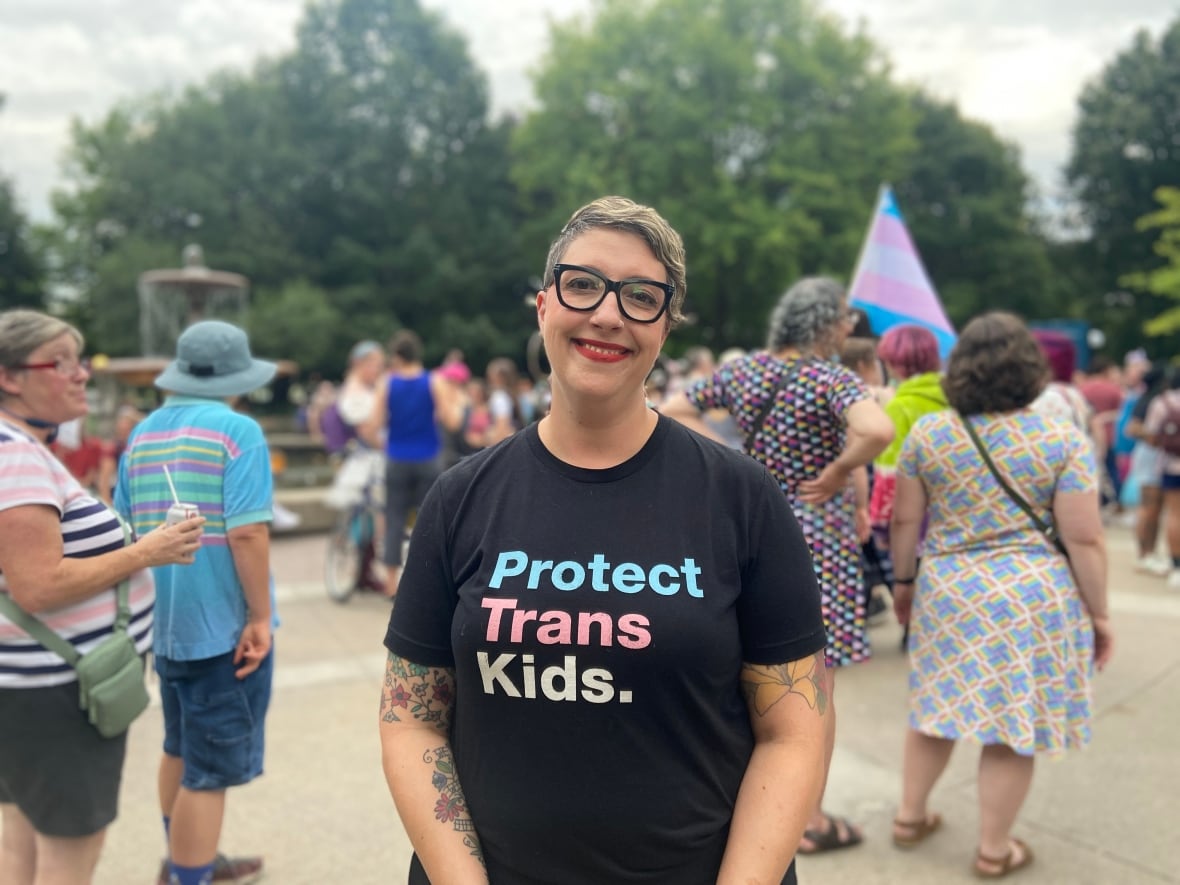 Somerset Coun. Ariel Troster says it’s more important than ever to speak out for trans rights, given the political climate in the United States. (Anchal Sharma/CBC)
Nevertheless, Bourawi said his experience since moving to Canada has been overwhelmingly positive, adding that he’s looking forward to his first ever Pride parade on Sunday.
“In my own country, I cannot be queer and cannot be myself. Since I moved here, I feel more free to become the person I am, the person I have always been,” Bourawi said.