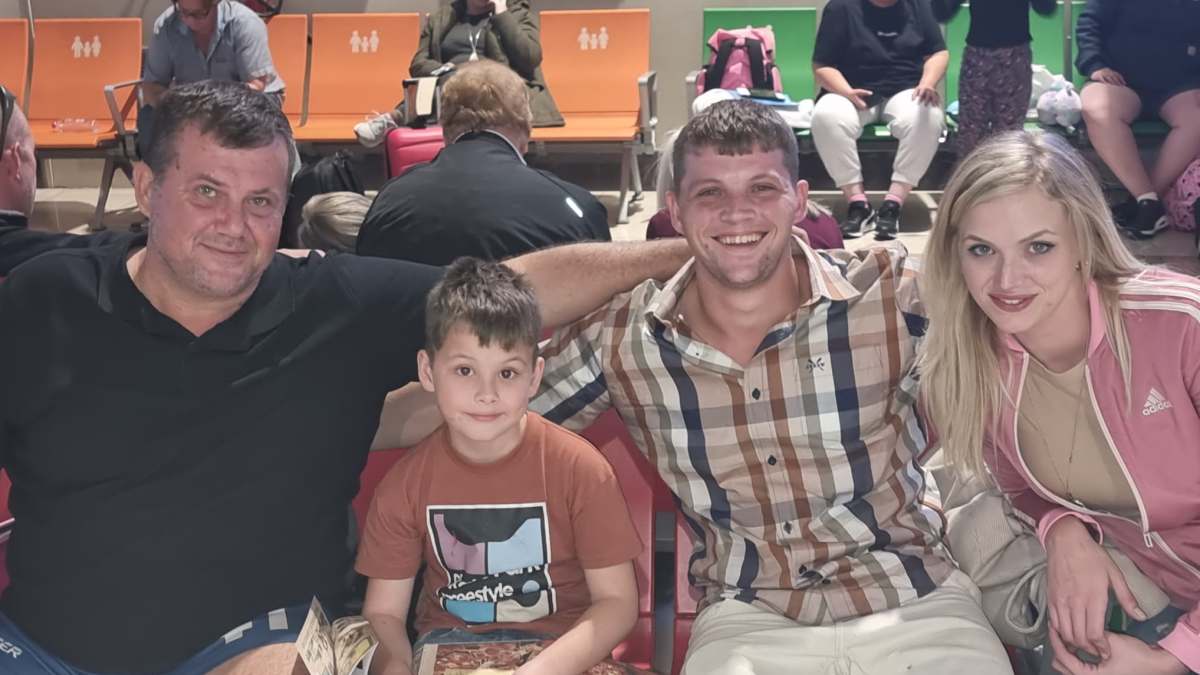
If there’s one thing that has really struck Charl Kleinhaus three months into his new life as an Afrikaner “refugee” in the US, it is the American work ethic — and the lack of cheap labour.
“The farmers here work. I’ve not seen any farm owner who works like American farmers,” Kleinhaus said in a video shared on the Amerikaners Facebook page, a group set up to share information about resettling in the US.
“They really, really work hard, until ten, eleven o’clock at night, early in the morning they start. There’s no hands here that you whistle to come sweep the floors, or wash the tractor … the farmer does it all himself,” Kleinhaus said.
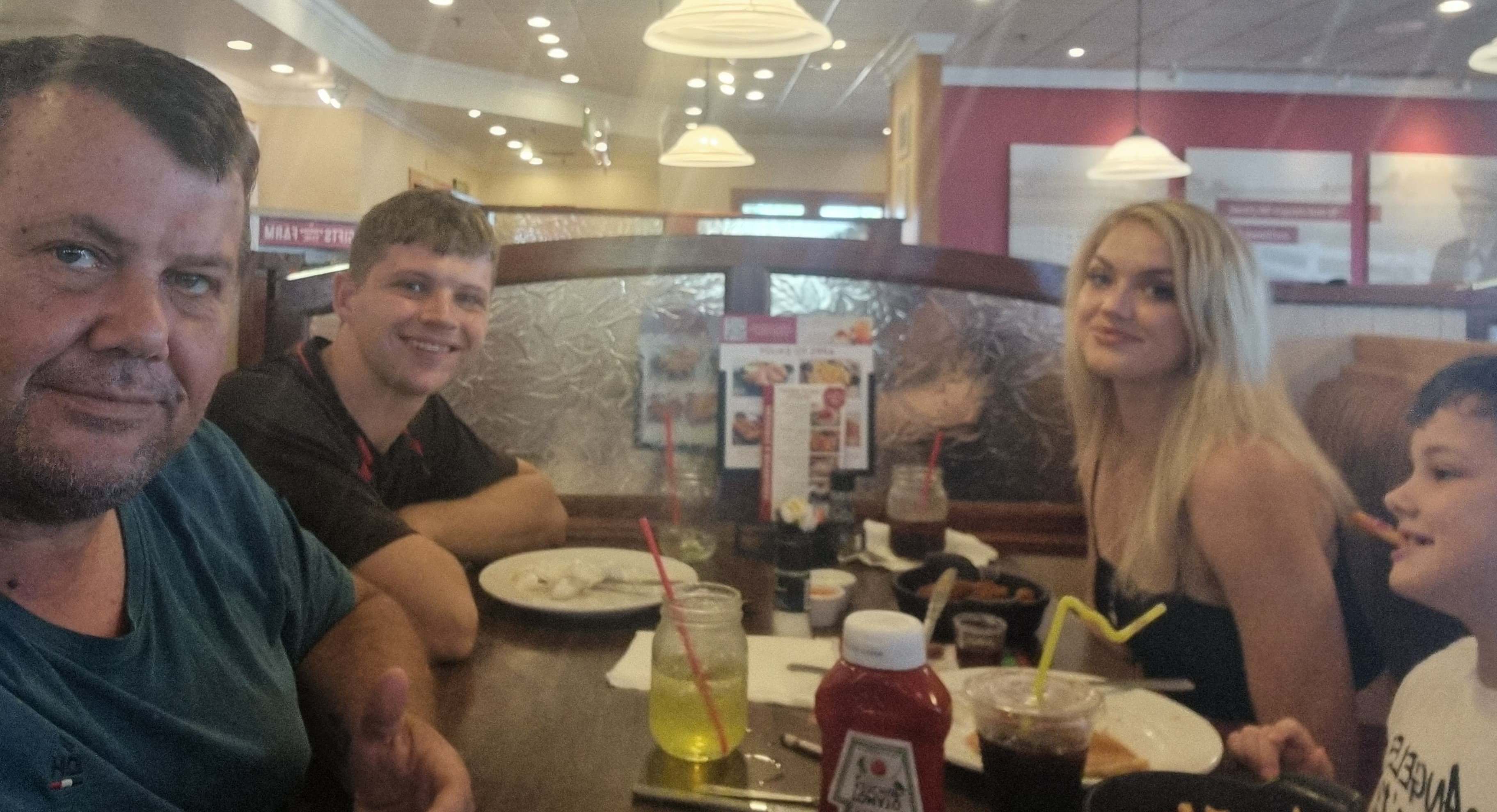
Kleinhaus and his family at a US diner
Kleinhaus added: “There’s no kitchen lady you call to sweep the house, or clean the house, or stuff like that. You do the work yourself.” He said the upside of this was that the maid could not steal from you. “Things at your house don’t disappear. Your sugar doesn’t go away, your coffee doesn’t go away.”
Kleinhaus was speaking with Colonel Chris Wyatt, who says he is a retired US army colonel with experience in Africa. He has become a champion of the “Amerikaners” and a kind of guru to the refugees on all things American.
President Trump has claimed white-minority Afrikaners are being persecuted in South Africa, which the government there denies.
Kleinhaus, a Trump supporter, was part of the first group of 59 Afrikaners to be flown to the US in May. He said shortly after landing that he had run a failed quarry business in Limpopo province and had been “threatened” by black people in the area claiming it belonged to them.
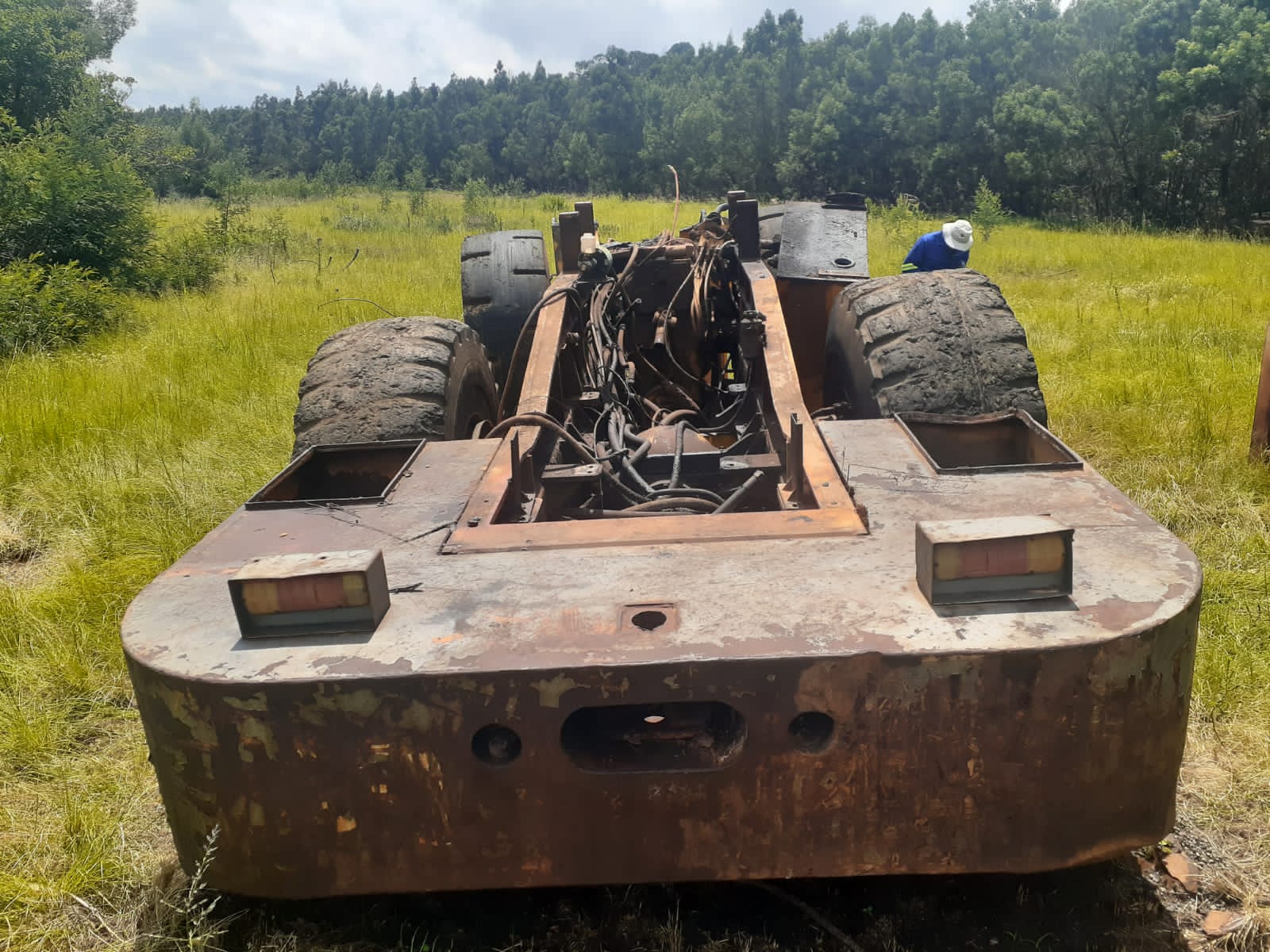
Broken machinery at Kleinhaus’s quarry that he says was ransacked
• Afrikaners seeking refuge in US ‘are the ones who failed at farming’
The claims are difficult to verify but proved sufficient for the US government. The 46-year-old got sent to Buffalo, New York, with his son, daughter and grandson. He told the Times in May he had a case worker, was in the process of applying for his social security card and hoped to soon start looking for work.
But he left the assistance programme after eight days. He was unhappy with having been sent to Buffalo, which is not a farming area, and made contact though the Afrikaner grapevine with a farmer in South Dakota. The farmer flew Kleinhaus and his family out and has put them up in a house on the farm.
Wyatt also talked to another member of the first group of arrivals, Errol Langton, who acknowledged he had “been roasted in South Africa” because he was not a farmer but an IT worker. He is also not Afrikaans.
Langton said it had not all been smooth sailing in the US. “The reality is that we’re resetting our entire lives … there are things that are a little bit difficult, there are some frustrations,” he said, adding that life was expensive in the US.
Back in South Africa, many on the Amerikaners group are undeterred. The group’s Facebook page is full of posts asking for advice on what to say if they get an interview with the US consulate, while others who have applied but not heard back are waiting anxiously.

Afrikaners who arrived at Dulles international airport in May
JULIA DEMAREE NIKHINSON/AP
• Trump’s beloved Afrikaners now face a real threat — from him
It is understood that the refugee programme is still going ahead, although only one other group has arrived in the US since the first 59.
Reuters reported this month that the Trump administration was considering a 40,000-person cap on refugee admissions this year — of which about 30,000 will be Afrikaners.
The US Department of State has outsourced the processing of South Africans seeking refugee status to the Resettlement Support Centre, a Nairobi-based group that functions under the umbrella body of Church World Service, a US faith-based organisation that works with refugees.
Neither the Department of State nor the Church World Service responded to requests for comment.