legalese
A Climate Accountability Win
The International Court of Justice (icj) has finally offered its take on the climate crisis, and the justices aren’t mincing their words: Nations can be held legally accountable for their greenhouse-gas emissions, they said in a unanimous advisory opinion issued in July that has far-reaching implications for international climate law.
 The International Court of Justice’s ruling that nations can be held legally accountable for their carbon emissions was the direct result of advocacy by the youth group Pacific Islands Students Fighting Climate Change (pictured). Photo by Ray Campbell / SPC.
Court president Yuji Iwasawa called climate change “an existential problem of planetary proportions that imperils all forms of life and the very health of our planet.” Nations, the court said, have binding obligations to protect the climate system and prevent significant harm to the environment. If they do not, they can be liable for climate harms, including in the form of reparations.
“This is a truly game-changing, momentous ruling that opens the door for climate justice and accountability and shuts the door on big polluters’ impunity,” Nikki Reisch, director of climate and energy at the Center for International Environmental Law, told PBS News.
The ruling was the direct result of advocacy by the youth group, Pacific Islands Students Fighting Climate Change (pisfcc). In 2019, backed by the island nation Vanuatu, the youth requested the icj issue an advisory opinion on climate obligations and liabilities under international law. In 2023, the icj agreed, and in 2024 the court heard arguments on the issue.
In its opinion, the court cites requirements under the Paris Agreement and the Kyoto Protocol, among other environmental treaties, as well as international human rights law. Though the opinion is non-binding, the Stockholm Environment Institute notes that it does provide vulnerable nations with new leverage and legal arguments to demand robust climate action and hold polluting nations accountable.
“The icj’s decision brings us closer to a world where governments can no longer turn a blind eye to their legal responsibilities,” said Vishal Prasad, director of pisfcc. “It affirms a simple truth of climate justice: those who did the least to fuel this crisis deserve protection, reparations, and a future.”
policy watch
New Pope Preaches Creation Care
On July 9, as much of Europe sweltered under a record-breaking heatwave, Pope Leo XIV delivered the Vatican’s first Mass centered on care for the environment. It included prayers, readings, and hymns that “reflect the importance of caring for creation,” according to a Vatican press release.
 Pope Leo XIV delivered the Vatican’s long-awaited first Mass on care for the environment in July. Critics say it failed to acknowledge humankind’s kinship with all life on Earth. Photo by Mazur/cbcew.org.uk.
While the new head of the Catholic Church has long signaled an interest in environmental issues and climate action, the development of the new Mass was set in motion during the tenure of his predecessor, Pope Francis, who died in April this year. Francis made the environment a major theme of his papacy. In his 2015 encyclical, Laudato Si, he criticized consumerism and irresponsible development, and lamented global warming.
Ten years later, the Church has formally integrated some of these ideas into its new Mass, Pro Custodia Creationis (For the Care of Creation), which is now part of a collection of 17 special Masses for social issues. But, unlike Laudato Si, the newly-selected liturgy does not acknowledge humanity’s “ecological sin” or complicity in global climate change, notes Daniel P. Horan, director of the Center for the Study of Spirituality at Notre Dame University.
In an opinion column in the National Catholic Reporter, Horan honored the intent of the Mass but criticized its persistent anthropocentrism. “What also appears glaringly absent is any recognition of our inherent dependence on the rest of creation for the sustaining of our lives,” he wrote.
Legalese
Big Oil Sued for Wrongful Death
On the afternoon of June 28, 2021, as an oppressive heat dome blanketed the Pacific Northwest, Juliana (Julie) Leon, 65, was found unresponsive in her car on a street in Seattle, Washington. Temperatures had climbed to 108 degrees that day, the highest ever recorded in Seattle’s history. Leon died of hyperthermia with an internal body temperature of 110°F. Now, her daughter, Misti Leon, is suing seven fossil fuel companies for their role in her death.
The groundbreaking lawsuit is the first to target fossil fuel companies for a climate-related death. The case argues ExxonMobil, Chevron, Shell, ConocoPhillips, Phillips 66, BP, and BP-subsidiary Olympic Pipeline Company have long known their products would heat the atmosphere and lead to deaths like Julie Leon’s, yet failed to warn the public, and are thus liable for her death.
Leon was among the nearly 200 people who died during the June-July 2021 Pacific Northwest heatwave that scientists say would have been “virtually impossible without human-caused climate change.”
Misti Leon is seeking damages and a public-education campaign to counteract decades of misinformation sowed by the defendants. The suit adds to the growing roster of climate-accountability cases, many of which have been brought by cities and states across the United States, that seek damages from corporations that have knowingly contributed to the climate crisis.
“Big Oil’s victims deserve accountability,” Richard Wiles, president of the Center for Climate Integrity, which tracks climate-accountability litigation, said in a statement about the case.
table talk
Shark on the Menu
Across Brazil, preschoolers, military staff, prisoners, hospital patients, and public employees are being exposed to high levels of heavy metals in government-provided meals. The exposure, according to a recent Mongabay investigation, comes in the form of shark meat, raising concerns not only about public health, but also marine conservation.
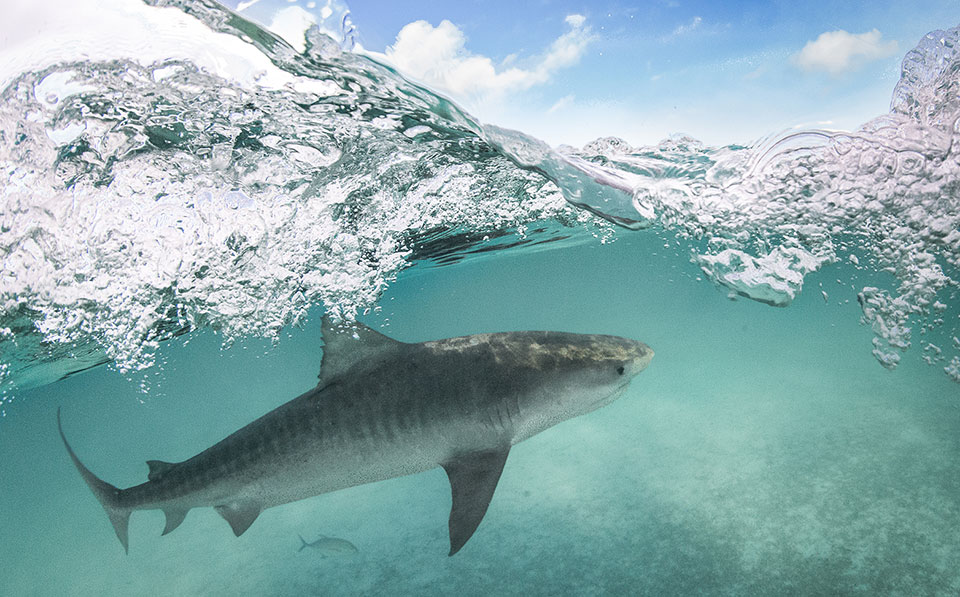 Brazilian public institutions have been serving meals containing shark meat, raising concerns not only about public health, but also marine conservation. Photo by Koa Matsuoka.
In a July report, Mongabay documented 5,900 public institutions — the vast majority of them schools — which may have received shark meat from the Brazilian government over the past two decades. Government procurement records indicate that Brazil has purchased some 5,400 metric tons of shark meat worth at least $20 million since 2004. While shark meat is commonly sold in Brazilian stores, students being offered the meat in public settings have little choice over what they are eating.
“You see high levels of consumption of this food, and people are consuming it without knowing it may be harmful,” Solange Bergami, an educator in Rio de Janeiro’s metropolitan area, said.
Because sharks are at the top of the marine food chain, shark meat can be particularly high in toxins like mercury and arsenic, which bioaccumulate in their tissue. Mercury is a known neurotoxin, and arsenic consumption can cause kidney and liver damage and increase cancer risk, among other things. The risk of consumption is particularly high for children and pregnant women.
Most of the meat being sourced by Brazil comes from Spain and Taiwan, where sharks are targeted for their fins. The fins are sold primarily to Asian markets at a high cost. The meat, a byproduct of this industry, is then sold cheaply around the world.
This practice has steep ecological consequences as well. More than 70 percent of the global shark population has been lost over the past 50 years, primarily due to overfishing. More than half of the 31 shark and ray species that live in the open ocean are listed as endangered or critically endangered by the International Union for the Conservation of Nature.
findings
Unsheltered
To find those most impacted by extreme heat in a warming world, look to those most exposed: the homeless. A new study of heat-related illness among US patients found that unhoused people visited emergency departments at a rate 27 times greater than others.
Led by Harvard Medical School graduate student Taylor Weckstein, researchers analyzed nationwide emergency department visits from May to September of 2021 and 2022, a dataset including more than 60,000 incidents of heat-related illness. The team found that unhoused people received treatment for heat at a rate of 604 per 100,000 individuals, while the rate for non-homeless people was just 22 per 100,000. “That difference was much higher than even I expected,” Weckstein told The Washington Post. “That felt pretty striking to me.”
Writing in the journal JAMA Internal Medicine, the researchers suggest that increased exposure isn’t the only factor associated with higher risk of heat-related illness among people experiencing homelessness. They also cite “multimorbidity,” or the presence of two or more long-term health conditions, and frequent “involuntary displacement,” for example from shaded parks, sometimes with a loss of essential items.
Weckstein noted the need for more affordable housing and better access to shelters and cooling centers to reduce exposure. The study “points to the disproportionate impact of climate change on vulnerable groups … and the need for policies that protect those at greatest risk,” she said.
toxics
Drilling and Kids’ Cancer
It’s been well-established that living near oil and gas wells increases the risk for a wide range of neurological, developmental, and respiratory problems. It also increases the risk of certain cancers, including childhood leukemia. New research indicates that dense drilling operations are especially hazardous when it comes to this last risk.
 Children with leukemia are more than twice as likely to live within 5 kilometers of dense oil and gas development than healthy children. Photo by Sarah Craig / Faces of Fracking.
A study published recently in Cancer Epidemiology, Biomarkers & Prevention found that children diagnosed with leukemia between the ages of two and nine were more than twice as likely to live within 5 kilometers of dense oil and gas development than healthy children. Children living within 13 kilometers of such developments also had heightened risk.
The researchers came to the findings after analyzing the medical records of more than 3,000 Colorado children, 451 of whom had leukemia. They assessed both the number of wells near their homes from conception through diagnosis (or early childhood for healthy children) as well as how much oil and gas the wells produced.
The findings could inform public-health protections, including state setback laws, which mandate how far new wells must be from places like homes, schools, and hospitals, but currently do not take into consideration well density.
“I would really encourage policymakers to consider the cumulative impacts of everything going on around homes or in areas where new oil and gas development is going [in order] to protect vulnerable populations like young children,” Lisa McKenzie, lead author of the study and an associate professor at Colorado School of Public Health, told Environmental Health News.
call OF the wild
Horns Off
For more than three decades, wildlife managers across southern Africa have dehorned wild rhinos to deter poachers. Evidence of the intervention’s success has been limited. Now, a new study in the journal Science suggests that not only does dehorning work, it’s also more effective than other common protective measures like fences, security cameras, dogs, and guards — and cheaper.
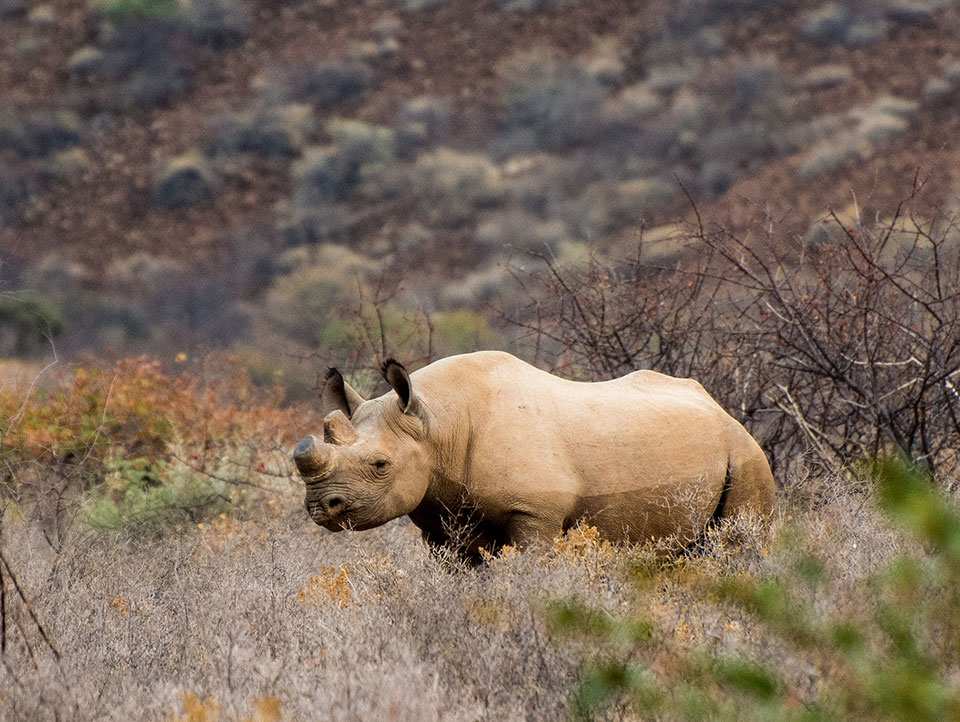 Dehorning is proving to be the most effective way to protect rhinos from poaching, but it might have some unintended side effects. Photo by Alex Derr.
The researchers focused on 11 reserves in and around South Africa’s Kruger National Park, documenting some 1,985 rhino-poaching incidents and 2,284 dehornings between 2017 and 2023. Comparing data from eight reserves that dehorned rhinos with three that did not, as well as data from before and after reserves dehorned rhinos, they found that “reducing poacher reward” through horn removal led to a 78 percent reduction in poaching. All other interventions tested, while “plausibly consistent with a positive effect,” were “not associated with any significant change in poaching across the study,” despite generally costing much more.
“Our results bring into sharp focus the limitations of reactive approaches to rhino poaching when poachers have already entered reserves,” write the study’s authors, who represent several universities, private game reserves, conservation groups, and the South African National Parks department.
The study, published in June, comes as southern Africa continues to face a poaching crisis. Poachers killed more than 100 rhinos in South Africa alone during the first three months of 2025. Demand for horns is driven mostly by traditional Chinese medicine and their value as a status symbols or trophies.
But dehorning is not without its detractors. Rhino horns are made of keratin, like fingernails, and their removal, which takes about ten minutes, does not physically harm the animals. However, it may result in less obvious impacts on social behavior. Rhinos use their horns to defend themselves, to compete for territory, and, in some cases, to look for food.
A 2023 study in the journal PNAS found that dehorned black rhinos reduced their home ranges and social interactions, potentially a sign they had retreated into smaller territories to avoid confrontations with competitors. Conservationists have also expressed concerns about possible impacts on breeding behavior, though this has not yet been substantiated.
In any case, dehorning is not a one-time solution. Horns regrow fairly quickly and need to be removed every one to two years. Earlier this year, wildlife managers in South Africa reported that poaching of dehorned rhinos for their remaining stumps, which can still be ground up and sold as medicine, had become a growing problem.
Trans Rights
Climate Deniers Funding Hate
The connections between the anti-trans movement and climate denialists may not be glaringly obvious, but according to a recent analysis, one need only follow the money to find the links.
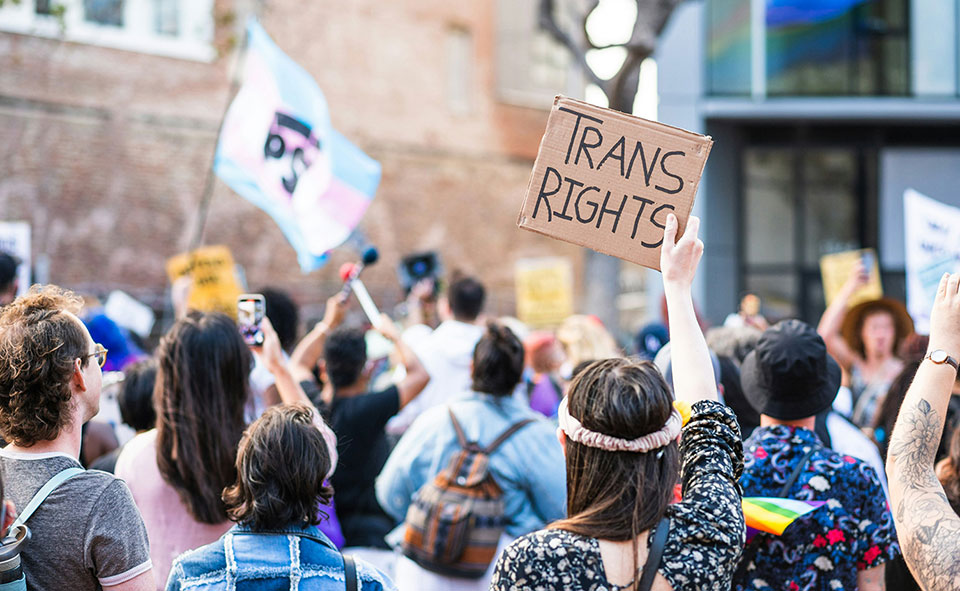 Some 80 percent of anti-trans groups have received funding from Big Oil or oil barons. Photo by Patrick Perkins.
Researchers recently tracked donations for 45 conservative groups that have advocated against trans rights and found that 80 percent of them have received funding from fossil fuel companies or billionaires who have made their fortunes in the industry.
The analysis, which was conducted by Vivian Taylor, a climate policy expert and leadership member of Duke University’s Stand Up for Trans Women at Duke, and Philip Newell, communications working group co-chair for the Climate Action Against Disinformation Coalition, has not been peer reviewed.
The findings, published by Atmos and the Heated newsletter in June, have real-world implications for the climate-movement, the researchers say. For one, the fight over transgender rights has gained national traction, distracting from the climate fight. For another, opposition to trans rights has brought momentum to the far right.
The research is rife with examples. Take fossil fuel billionaire Phil Anschutz, who has channeled funds to no fewer than 10 transphobic organizations, including Colorado Christian University, the Family Research Council, and Alliance Defending Freedom. The latter has been a leader in the anti-trans movement. The Koch brothers, well-known for their fossil fuel-derived wealth and their climate denialism, have contributed to the transphobic American Enterprise Institute and American Legislative Exchange Council. And fracking titans Dan and Farris Wilks helped get the conservative and transphobic media company The Daily Wire off the ground.
“Even if you were unmoved by the humanity, just at a purely tactical political level, the opposition to climate action is using anti-trans rhetoric to build its base,” Newell said. “If you want climate action, you’re going to have to fight back.”
call OF the wild
You Scratch My Back…
In the first recorded evidence of tool-making by marine mammals — killer whales have been seen massaging each other by rubbing lengths of bull kelp between their bodies. Scientists spotted this behavior in drone footage of endangered Southern Resident killer whales in the Salish Sea, in Washington. Their findings were published in Current Biology.
Several whale species are known to engage in “kelping” — moving kelp with their bodies — likely for play, or possibly to remove parasites and to maintain healthy skin. But the new discovery — dubbed “allokelping” — is different because the orcas are seen placing kelp bits onto the back of a companion and working together to manipulate it.
“What I find remarkable about this behavior is just how widespread it is in the population,” Dr. Michael Weiss, research director at the Center for Whale Research, which led the study with the University of Exeter, said in a statement. “Males and females of all life stages and from all three Southern Resident pods were seen using kelp in this way. All evidence points to it being an important part of their social lives.”
Only 73 Southern Resident killer whales now remain and this critical population faces multiple threats, including plummeting populations of their key food, salmon, and climate chaos. “If we lose them… we lose a complex society and a deep, unique set of cultural traditions,” Weiss said.
around the world
Weather Weirding
Some 90 percent of climate disasters are related to water — either too much or too little of it. Large cities are often on the frontlines of these disasters, and of climate-related changes more broadly. Those changes include climate “whiplash” — where both extreme wet and dry periods are increasing in frequency, and “climate flips” — when a historically dry city moves towards extremely wet conditions, or vice versa.
A new report by international nonprofit WaterAid offers a glimpse of just how widespread these precipitation-related changes are. Looking at 112 cities — the biggest 100 plus 12 where WaterAid works — the researchers found that 15 percent are experiencing increased climate whiplash, 20 percent are experiencing climate flips, and 95 percent are showing a trend towards either wetter or drier weather.
“Most places we looked at are changing in some way, but in ways that are not always predictable,” Michael Singer, report coauthor and a professor at Cardiff University, told The Guardian. “And given that we’re looking at the world’s largest cities, there are really significant numbers of people involved.”
Currently, half of the world’s population lives in cities. By 2050, it’s likely to be two thirds. This makes addressing and adapting to these climate changes, especially in lower-income and more vulnerable nations, a particularly urgent task. Here are some of the cities experiencing the greatest climate “weirding” so far.

SOURCES: Malay Mail, Texas Tribune, The Guardian, Washington Post, WaterAid
1 Hangzhou, China
When it comes to climate whiplash — the intensification of both floods and droughts — Eastern China’s Hangzhou tops the list. The city of 13 million had a record-breaking 60 days of extreme heat last year, and also experienced intense flooding that led to the evacuation of tens of thousands of residents, highlighting the challenges of contending with both extremes.
Asia is overrepresented when it comes to intensification of both wet and dry conditions. Nine of the 17 cities experiencing climate whiplash are in Asia, four of them within China. None are in South America or Europe.
2 Jakarta, Indonesia
Jakarta faces a complicated set of intertwined climate risk factors. The low-lying coastal city of 11 million is experiencing rapid subsidence due to groundwater withdrawals, along with rising sea levels, making it particularly vulnerable to flooding. It is also ranked second on the climate whiplash list due to intensifying periods of both extreme drought and extreme wet. The combination of both extremes is difficult to adapt to, particularly for lower-income countries like Indonesia.
3 Cairo, Egypt
In Cairo, the climate is flipping. The Egyptian city, which lies along Africa’s Nile River, is one of ten that have experienced a dramatic shift from wet conditions to dry conditions over the past four decades. In other words, the city is now experiencing more “extremely dry” conditions and fewer “extremely wet” conditions than it previously did. This type of shift makes the city of 10 million vulnerable to a new set of hazards, ones they may not be well prepared for.
4 Madrid, Spain
All of the European cities analyzed by WaterAid are drying up. Two — Madrid and Barcelona — are experiencing a more dramatic shift, moving from a predominance of extremely wet conditions to a predominance of extremely dry ones. Of all 10 global cities flipping from wet to dry conditions, Madrid ranked highest.
Infrastructure in European cities is more vulnerable to these types of shifts than in cities in other high-income nations because, well, they are old. Which means cities like Madrid may require costly upgrades to adapt to the changing climate.
5 Kampala, Uganda
Though drought has had a predominant presence in East Africa in recent decades, flooding is also becoming more frequent in the region. And three East African cities — Addis Ababa, Kampala, and Nairobi — are experiencing an intensification of both, qualifying them as some of the world’s most climate-whiplashed urban areas. Among these three, Kampala and Nairobi rank particularly high when it comes to vulnerability. Indeed, they fill the number two and number three spots on WaterAid’s vulnerability assessment, behind only the Indonesian city of Surabaya.
6 Dallas, United States
It’s not hard to find examples of how changing water cycles are impacting Dallas, Texas, one of only two US cities, the other being Chicago, that made the “whiplash” list. In the summer of 2022, for example, the city was experiencing one of its worst droughts on record, and nearly a third of Texas was in an “exceptional” drought that led to water restrictions, among other things.
Then, in late August, Dallas experienced extreme rainfall. Some 13 inches fell over a few hours, breaking city records, and causing flash flooding and significant damage across the city.
call OF the wild
Empty skies
First, it was the “insect apocalypse” in 2018. Now, a team of scientists in the United Kingdom is warning of a “bird extinction crisis.” In a June study in Nature Ecology and Evolution, researchers predict that more than 500 bird species could go extinct in the next 100 years. That’s three times the number of recorded bird extinctions since 1500 CE.
The researchers based their projections on modeling that incorporated threats faced by each of about 10,000 bird species listed by the International Union for the Conservation of Nature. They found that even with complete protection from human-caused threats like habitat loss, hunting, and climate change, about 250 bird species could still die out.
“Many birds are already so threatened that reducing human impacts alone won’t save them,” lead author Kerry Stewart of the University of Reading said in a statement. “These species need special recovery programs, like breeding projects and habitat restoration, to survive.”
While stopping habitat destruction would save the most birds overall, reducing hunting and preventing accidental deaths would save birds with more unusual features, which are especially important for ecosystem health, the study says. “Prioritizing conservation programs for just 100 of the most unusual threatened birds could save 68 percent of the variety in bird shapes and sizes,” said Manuela Gonzalez-Suarez, senior author of the study.
IN memoriam
Joanna Macy
(1928–2025)
Beloved teacher, deep ecologist, anti-nuclear activist, and Buddhist practitioner Joanna Macy died peacefully at home in Berkeley on July 19. She authored or co-authored 21 books, among them Widening Circles, Active Hope, and World as Lover / World as Self. Her Work That Reconnects workshops touched thousands of people around the world and taught us how to accept grief and transform it to action.
 “Do not look away. Do not avert your gaze. Do not turn aside.” — Joanna Macy. Photo by Toby McLeod.
Joanna Macy was a bodhisattva, an awakened being, full of compassion, intrinsically joyful, always happy to be alive — even in the face of the cruelty and suffering that permeate our world. She embraced each moment with childlike wonder — and made everyone she encountered feel seen, heard, and loved.
In 2015, five Earth Island project directors approached Joanna and asked if we could meet with her to help cope with the sadness and anxiety we encounter in our work on climate change, endangered species, Indigenous rights, and other environmental issues. This led to ten years of monthly meetings in Joanna’s living room, which continued until this past June. Joanna’s late husband Fran Macy (1927-2009), directed Earth Island’s Center for Safe Energy. Her son Jack joined our group along with Earthjustice attorneys and other activists. Together we shared our fears, opened our hearts, and celebrated the love we share for Mother Earth.
A week after our last meeting, our 96-year-old friend and teacher fell, broke her hip and, due to complications, gracefully breathed her way out of this world. Our group spent these past months talking about death, finding meaning in community, and seeking the courage to resist fascism. After Joanna passed away, hundreds of people came to her home to pay homage.
Joanna’s work lives on, but she will be profoundly missed.
There will be a Celebration of Joanna’s Life at Grace Cathedral in San Francisco on Friday, October 3, from 7 to 9 p.m.
Tickets at Eventbrite are free, but limited.
The event will also be live streamed.
— Toby McLeod