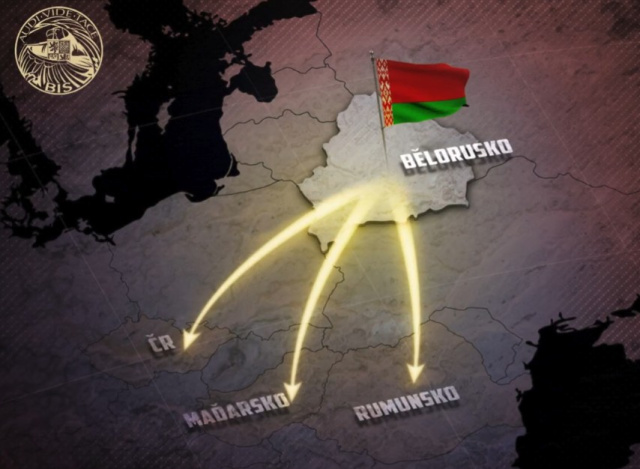
Authorities in Romania, Czechia, and Hungary have jointly uncovered and dismantled a Belarusian espionage network that had been operating across Europe, officials confirmed on Sept. 8. The operation was carried out with support from Eurojust and included cooperation from Moldovan institutions.
According to the Czech Security and Information Service (BIS), the network was organized by Belarus’s State Security Committee (KGB) and aimed at recruiting agents and collecting classified intelligence across several European states. The network’s ability to operate widely was attributed to the freedom of movement within Europe, which allowed its agents to travel largely unhindered.
Rozbili jsme bÄ›loruskou zpravodajskou sÃÅ¥ v EvropÄ›!
BezpeÄ�nostnà informaÄ�nà služba spoleÄ�nÄ› se zpravodajskými službami Rumunska a Mad’arska úspěšnÄ› zasáhly a rozbily bÄ›loruskou zpravodajskou sÃÅ¥ budovanou v EvropÄ“. V souvislosti s touto mezinárodnà operacà rozhodlo @mzvcr o… pic.twitter.com/XFvUii3VVf
— BIS (@biscz) September 8, 2025
One of the most significant revelations of the investigation was the involvement of Alexandru Bălan, a former deputy head of Moldova’s Intelligence and Security Service (SIS). Bălan allegedly provided sensitive information to the Belarusian KGB and acted as a link between operatives. Romanian prosecutors reported that he passed Romanian state secrets to Belarus beginning in 2024 and continuing into the present. Authorities further suspect him of organizing meetings in Budapest with Belarusian intelligence officers, where he is believed to have given instructions and received payment for his collaboration. Bălan has since been arrested on charges of treason, a development confirmed by Moldova’s SIS through the national press agency IPN.
As part of the coordinated response, the Czech Foreign Ministry expelled a Belarusian intelligence officer who had been operating under diplomatic cover in Prague. The ministry stressed that it would not tolerate the misuse of diplomatic immunity for espionage activities.
Czech counterintelligence chief Michael Koudelka highlighted that the dismantled network is a clear example of how hostile intelligence services benefit from unrestricted movement across the Schengen area. He called for stronger measures to limit such activities, particularly by restricting the travel of Russian and Belarusian diplomats. Foreign Minister Jan Lipavský echoed this position, underscoring the need for coordinated European action to prevent intelligence operatives from abusing diplomatic privileges.
The exposure of this espionage ring comes as Belarus continues to act as a key ally of Russia in its full-scale war against Ukraine. Minsk has provided its territory for Russian military operations and deepened cooperation with Moscow as both regimes remain isolated from the West since 2022.